
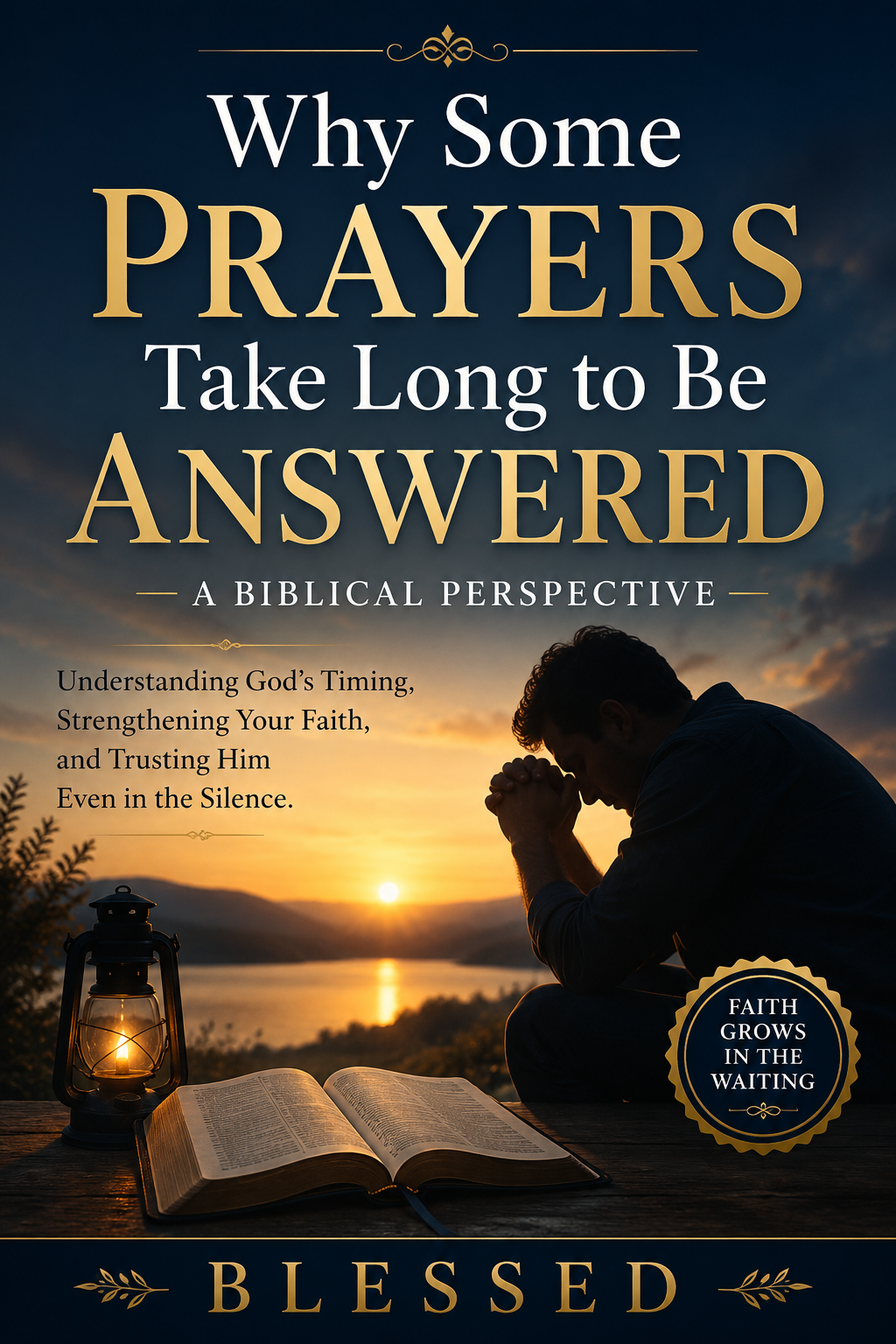
Introduction: The Silence That Tests Faith
Few things challenge faith more deeply than praying sincerely and hearing nothing back immediately.
You ask God for help.
You cry during prayer.
You fast.
You believe.
You wait.
But the situation remains unchanged.
The illness continues.
The financial pressure remains.
The opportunity does not come.
The door stays closed.
And slowly, difficult questions begin forming in the heart:
“Did God hear me?”
“Am I doing something wrong?”
“Why are other people receiving answers while I keep waiting?”
“Has heaven become silent concerning me?”
Many believers quietly carry these questions but rarely speak about them openly. In church, people often celebrate testimonies of instant breakthroughs, sudden miracles, and quick answers to prayer. Yet the Bible also contains many stories of faithful people who waited months, years, and sometimes decades before seeing God move in the way they hoped.
Abraham waited years for the promised son.
Joseph waited years between the dream and the palace.
Hannah prayed for a child through deep emotional pain.
David was anointed king long before he ever sat on the throne.
Even Jesus experienced seasons of waiting before His ministry fully began.
The truth is simple but important:
A delayed answer does not always mean a denied prayer.
Sometimes God works immediately.
Sometimes He works gradually.
Sometimes He works silently before He works visibly.
This article is not meant to offer shallow religious clichés or pretend waiting is easy. Waiting can be emotionally exhausting. It can stretch faith, create confusion, and expose hidden fears inside the heart.
But Scripture shows that God is still present even in seasons where answers seem delayed.
Understanding why some prayers take longer than expected can help believers remain faithful instead of discouraged.
1. Sometimes God Is Preparing You Before Releasing the Answer
One of the hardest truths to accept is that God often prepares the person before releasing the blessing.
Many people focus only on the thing they are praying for:
the marriage,
the promotion,
the ministry,
the financial breakthrough,
the opportunity.
But God also focuses on who they are becoming while they wait.
A blessing received before maturity can become destructive instead of helpful.
Joseph is a powerful example of this principle.
God showed him dreams of leadership while he was still young. But the fulfillment did not happen immediately. Before reaching the palace, Joseph passed through betrayal, slavery, false accusation, and prison.
Those painful years developed:
- wisdom
- patience
- emotional strength
- leadership ability
- dependence on God
Without preparation, the palace might have destroyed him.
Ecclesiastes 3:11 says:
“He has made everything beautiful in its time.”
Not merely eventually.
In its proper time.
Sometimes the delay is not a punishment.
Sometimes it is preparation.
2. Some Prayers Require Persistence
Many believers stop praying too soon.
The Bible repeatedly emphasizes the importance of persistence in prayer.
Jesus shared the parable of the persistent widow in Luke 18 to show “that men always ought to pray and not lose heart.”
The woman kept returning.
Kept asking.
Kept pressing.
Eventually, her persistence produced results.
Persistent prayer does not mean God is unwilling to help. Often, persistence develops spiritual endurance, faith, and dependence on God.
Some breakthroughs are connected to consistency rather than quick emotion.
Daniel experienced this reality.
In Daniel 10, he prayed and fasted for understanding. The answer did not arrive immediately. Later, an angel explained that the response had been released from the first day Daniel prayed, but spiritual resistance delayed the manifestation.
This passage reminds believers that not every delay means inactivity in heaven.
Sometimes spiritual battles exist beyond human visibility.
3. Wrong Timing Can Produce Wrong Results
A child may want to drive a car immediately, but wisdom understands that timing matters.
In the same way, some prayers are delayed because the timing is not yet right.
God sees dimensions of life we cannot fully see:
- future consequences
- hidden dangers
- unprepared relationships
- opportunities we are not yet ready to manage
What we call delay may actually be protection.
Imagine receiving a major opportunity before developing discipline.
Imagine entering a relationship before emotional healing.
Imagine gaining influence without wisdom.
Certain blessings become dangerous when they arrive too early.
Psalm 84:11 says:
“No good thing does He withhold from those who walk uprightly.”
If God is withholding something temporarily, it may not be rejection. It may be wisdom.
4. Sometimes God Wants a Deeper Relationship, Not Just a Quick Request
Many people approach prayer mainly as a way to obtain things.
But prayer is also about relationship.
Sometimes God allows seasons of waiting because He desires deeper intimacy with you rather than shallow dependence based only on results.
A person who only speaks to God during emergencies may know His power but never truly know His heart.
Waiting seasons often reveal:
- what we truly trust
- What controls our emotions
- whether our faith depends only on quick results
- whether we still seek God when answers are slow
Jeremiah 29:13 says:
“You will seek Me and find Me when you seek Me with all your heart.”
Some people begin praying for one thing and eventually discover something greater:
a stronger relationship with God Himself.
“While many delays are part of spiritual growth, Scripture also teaches that certain attitudes and behaviours can affect a believer’s spiritual life.
5. Unresolved Disobedience Can Affect Prayer
The Bible also teaches that certain behaviours can interfere with spiritual growth and prayer life.
This does not mean every delay is caused by sin. Many faithful people in Scripture experienced long waiting seasons.
However, there are times when God calls believers to address areas of disobedience, bitterness, unforgiveness, pride, dishonesty, or unhealthy living.
Psalm 66:18 says:
“If I regard iniquity in my heart, the Lord will not hear.”
God is loving, but He also cares about transformation.
Sometimes people ask God to change their situation while resisting God’s effort to change their hearts.
Growth often requires honesty.
Instead of asking only:
“Lord, why is this prayer delayed?”
it can also help to ask:
“Lord, is there anything in my life You want me to surrender or correct?”
6. Delayed Answers Can Build Stronger Faith
Faith is easiest when answers come quickly.
But faith becomes deeper when trust survives uncertainty.
Anyone can praise God during visible success.
The real test comes when prayers continue without immediate evidence.
Abraham waited years for Isaac.
Hannah prayed through deep sorrow before Samuel was born.
David spent years running before becoming king.
Yet many of these people emerged with stronger faith because of the waiting process.
Romans 5:3–4 says:
“Suffering produces perseverance; perseverance, character; and character, hope.”
Waiting can produce spiritual depth that comfort alone never develops.
How to Remain Strong While Waiting for Answers
1. Keep Praying Honestly
God is not intimidated by honest emotions.
The Psalms are filled with real prayers:
- confusion
- grief
- frustration
- hope
- questions
Talk to God sincerely instead of pretending everything feels perfect.
2. Continue Growing During the Waiting Season
Do not put life completely on hold while waiting for one answer.
Continue:
- learning
- improving yourself
- serving others
- developing spiritually
- building discipline
Waiting seasons should not become wasted seasons.
3. Avoid Comparing Your Journey to Others
Comparison destroys peace quickly.
Some people receive answers immediately.
Others walk through longer processes.
God works differently with different people.
Focus on your own relationship with God instead of measuring your timeline against someone else’s testimony.
4. Remember Past Faithfulness
When discouragement comes, remember previous moments where God helped, protected, or provided for you.
Past faithfulness becomes strength for present waiting.
If God carried you before, He is still able to carry you now.
5. Trust That Silence Is Not Abandonment
One of the enemy’s greatest lies during waiting seasons is:
“God has forgotten you.”
But throughout Scripture, God remained active even when people could not immediately see what He was doing.
The silence may feel painful, but silence does not always mean absence.
Conclusion: God Is Still Working Even When You Cannot See It
Waiting is difficult.
Long seasons of unanswered prayer can test emotions, challenge faith, and create deep discouragement. But the Bible repeatedly shows that delay does not automatically mean rejection.
Sometimes God is preparing you.
Sometimes He is protecting you.
Sometimes, He is strengthening your character.
Sometimes, He is building deeper faith.
Sometimes, He is arranging circumstances beyond what you can currently see.
The story is not finished simply because the answer has not arrived yet.
Galatians 6:9 says:
“Let us not grow weary while doing good, for in due season we shall reap if we do not lose heart.”
Keep praying.
Keep trusting.
Keep growing.
God still hears sincere prayers.
And even in seasons of silence, He is still able to work in ways greater than we understand right now.
“God’s silence is not proof that your prayers are being ignored. You may also find encouragement in our article, The Power of Prayer: How to Pray Effectively and Get Results, which explains how to pray with clarity, faith, and spiritual understanding while waiting for answers.