
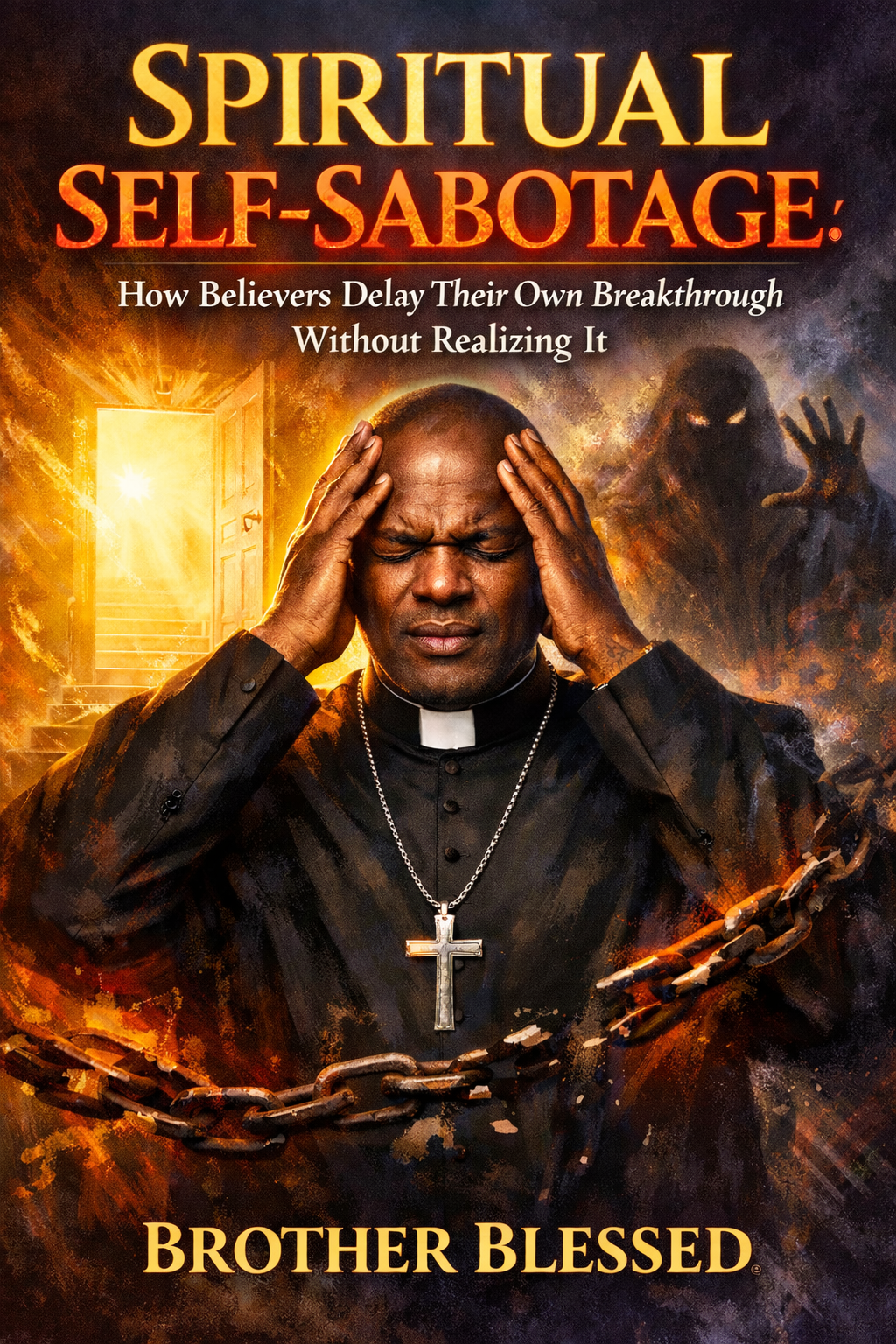
The Most Dangerous Obstacle Might Not Be the Enemy — It Might Be You
Let’s begin with an honest and uncomfortable question:
What if the breakthrough you have been praying for is not delayed because God ignored your prayers — but because something in your own life keeps quietly resisting the very thing you are asking Him to do?
That is not a condemnation.
It is an invitation to examine yourself honestly.
Most people find it easier to blame timing, circumstances, spiritual attacks, or other people than to confront the unhealthy patterns they continue repeating.
But spiritual self-sabotage is real.
It is common.
It is subtle.
And most of the time, it is completely unintentional.
That is exactly what makes it dangerous.
This article is about recognizing those hidden patterns before they continue delaying what God wants to do in your life.
What Spiritual Self-Sabotage Really Means
Spiritual self-sabotage is the disconnect between what you pray for and the way you actually live.
It happens when your habits, mindset, decisions, or fears quietly oppose the breakthrough you are asking God to bring.
For example:
- Praying for a financial breakthrough while continuing reckless spending habits
- Asking God for healthy relationships while refusing to heal emotionally
- Praying for opportunities while avoiding the risks required to grow
- Asking God for change while remaining deeply attached to comfort
Most believers who self-sabotage genuinely believe in God.
The issue is not always unbelief.
The deeper issue is often resistance to change.
Sometimes people want the breakthrough but fear the responsibility that comes with it.
Sometimes they want a new season while still clinging to the safety of the old one.
Scripture says:
“You ask and do not receive, because you ask wrongly…” — James 4:3
Sometimes the problem is not that God refuses to move.
Sometimes the problem is that our daily patterns are moving in the opposite direction of our prayers.
Patterns That Quietly Hold People Back
1. Delayed obedience disguised as wisdom
God places something clearly on your heart.
A conversation.
A decision.
A step of faith.
A change you need to make.
But instead of moving, you delay.
You tell yourself:
- “I’m waiting for confirmation.”
- “I need better timing.”
- “I’m still praying about it.”
Sometimes wisdom requires patience.
But sometimes delay is simply fear wearing spiritual language.
The longer people delay obedience, the easier it becomes to remain stuck.
“To him who knows to do good and does not do it, to him it is sin.” — James 4:17
2. Negative words that fight against your prayers
Many people pray one thing but speak the complete opposite afterward.
They ask God for healing but constantly speak of hopelessness.
They pray for growth but continuously call themselves failures.
They ask God for open doors while repeatedly convincing themselves that nothing good will happen.
Words matter.
“Death and life are in the power of the tongue.” — Proverbs 18:21
Your everyday conversations shape your mindset more than you realize.
The things you repeatedly say eventually become the things you expect.
And expectations influence behavior.
3. Choosing comfort over growth
Breakthrough often requires discomfort.
Growth stretches people beyond what feels safe and familiar.
That is why many people pray for change but resist the process required to experience it.
The uncomfortable conversation gets postponed.
The new skill never gets developed.
The unhealthy relationship remains tolerated.
The fear remains unchallenged.
Comfort feels safe, but comfort can quietly imprison people.
Nothing changes when fear controls every decision.
4. Refusing to release what God already asked you to let go of
Some people are asking God to move them forward while still holding tightly to things connected to their past.
Old relationships.
Old habits.
Old mindsets.
Old bitterness.
Old identities.
But God cannot fully fill hands that refuse to let go.
“Forget the former things; do not dwell on the past.” — Isaiah 43:18
Sometimes breakthrough begins with release.
Biblical Examples of Self-Sabotage
The Israelites in the wilderness
The Israelites witnessed extraordinary miracles.
God delivered them from Egypt.
He parted the Red Sea.
He protected them repeatedly.
Yet after experiencing freedom, they constantly complained and longed to return to what was familiar.
Not because slavery was good.
But because freedom felt unfamiliar.
A journey that should have taken days lasted forty years because their mindset never fully changed.
“They always go astray in their heart.” — Hebrews 3:10
Their greatest battle was not Egypt anymore.
It was the mindset they carried after leaving it.
Jonah
Jonah ran from God’s assignment.
Not because he doubted God’s power, but because he resisted God’s direction.
His fear, discomfort, and personal feelings delayed his obedience.
As a result, he created unnecessary suffering for himself.
Many believers do the same thing today.
They delay difficult obedience and unintentionally prolong seasons they were supposed to move through faster.
King Saul
King Saul is one of the clearest examples of partial obedience.
He obeyed God halfway.
But partial obedience is still disobedience.
Saul wanted the appearance of obedience without the full surrender obedience requires.
Eventually, that pattern cost him everything.
“To obey is better than sacrifice.” — 1 Samuel 15:22
Honest Signs You May Be Self-Sabotaging
Take these questions seriously:
- Do you keep praying for the same thing while refusing to change your habits?
- Do you delay actions you already know God wants you to take?
- Do you become afraid whenever real change starts happening?
- Do you sabotage opportunities because you feel unworthy or afraid?
- Are you more comfortable dreaming than actually building?
- Do you constantly wait until fear disappears before acting?
Fear rarely disappears completely before growth begins.
Most breakthroughs happen while people are still uncomfortable.
How to Break the Pattern
1. Return to the last instruction God gave you
Many breakthroughs begin with unfinished obedience.
Go back to the thing God already placed on your heart.
Start there.
2. Pay attention to your words
For one week, carefully observe how you speak about:
- Yourself
- Your future
- Your possibilities
- Your struggles
Notice whether your words align with your prayers.
3. Take one uncomfortable step
You do not need to change your entire life overnight.
But you do need movement.
Send the application.
Start the project.
Have the conversation.
Set the boundary.
Small acts of obedience create momentum.
4. Release what no longer belongs in your next season
Ask God honestly:
“What am I still holding onto that is keeping me stuck?”
Then trust Him enough to let it go.
“Cast your burden on the Lord, and He shall sustain you.” — Psalm 55:22
5. Stop isolating yourself
Self-sabotage grows best in secrecy.
Trusted mentors, wise friends, counselors, and spiritual leaders can often see unhealthy patterns that you cannot recognize alone.
Healing becomes easier when honesty enters the room.
“Plans fail for lack of counsel, but with many advisers they succeed.” — Proverbs 15:22
What Happens When You Stop Working Against Yourself
Everything begins to shift when your habits, mindset, and obedience finally align with your prayers.
You gain clarity.
You gain peace.
You recognize opportunities more clearly.
You stop resisting the growth God is leading you toward.
Most importantly, you stop living like a passive observer waiting for life to change.
Instead, you begin cooperating with God intentionally.
And often, you realize something powerful:
God was never refusing to bless you.
He was waiting for you to stop resisting the process that would prepare you for the breakthrough.
“In all your ways acknowledge Him, and He shall direct your paths.” — Proverbs 3:6
God is not asking for perfection.
He is asking for surrender, honesty, and obedience.
And sometimes the breakthrough begins the moment you stop standing in your own way.
Which of these patterns resonated most with you? Be honest in the comments — your transparency might be the exact thing someone else needed to read today.