
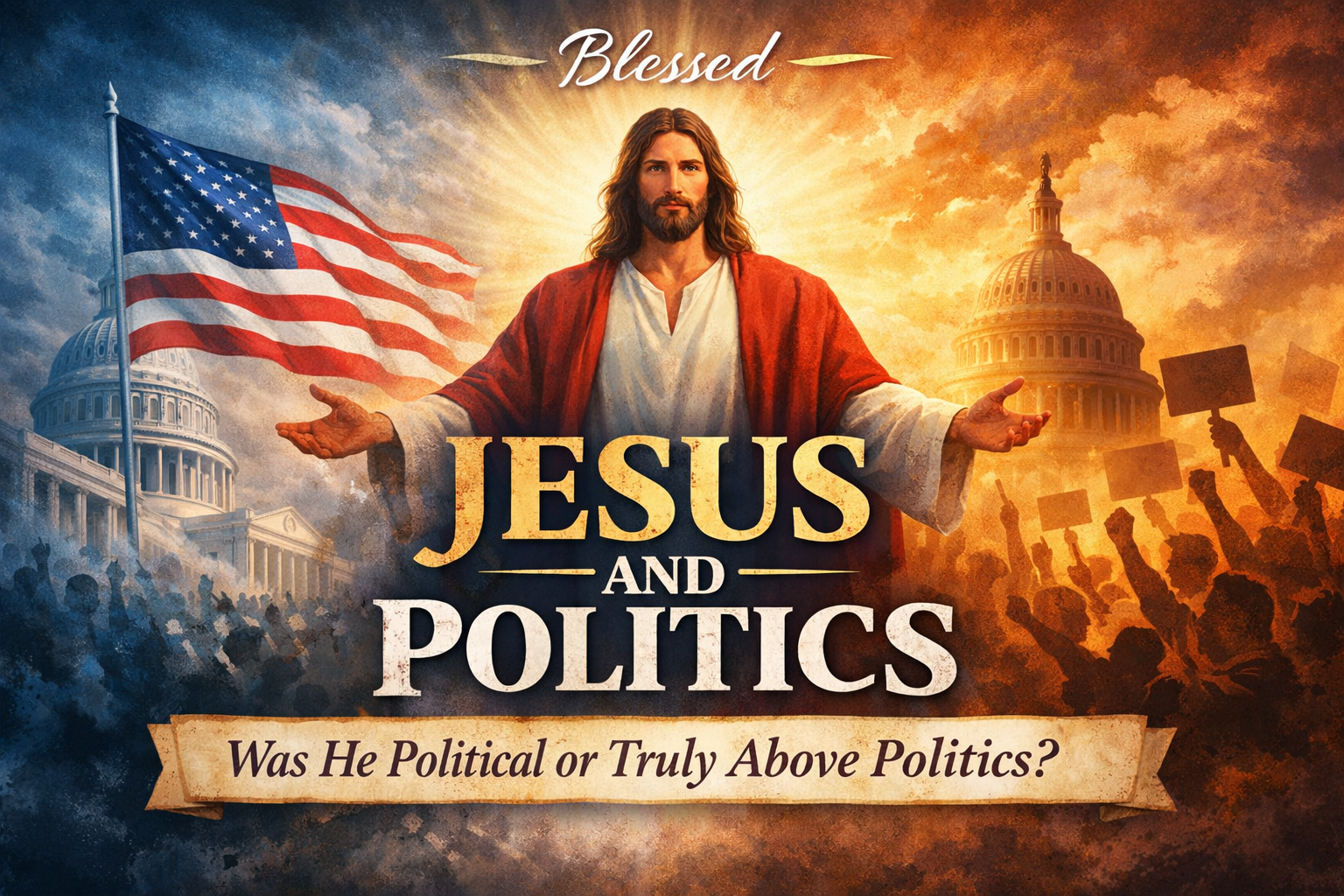
Jesus and Politics: Was He Political or Truly Above Politics?
In every generation, one question continues to stir the hearts of believers:
Was Jesus political, or was He truly above politics?
In today’s world, where elections, power struggles, ideologies, and public debates dominate conversations, many Christians sincerely wonder where faith and politics meet.
Some people try to fit Jesus into a political ideology.
Others believe faith should stay completely separated from public affairs.
But the truth is deeper than both extremes.
Jesus was never partisan, yet He was never silent about truth, justice, leadership, righteousness, or the condition of society.
His mission was spiritual, but its impact reached every area of life—including how people govern, lead, and treat one another.
The Struggle Many Believers Feel Today
Let’s be honest: politics can be emotionally draining.
It divides families.
It creates tension in churches.
It breaks friendships.
It often turns faith into argument.
Many believers quietly ask:
- Should Christians be involved in politics?
- Would Jesus have taken sides?
- Would he speak about leadership and government today?
These are important questions because they touch conviction, conscience, and discipleship.
To understand the answer, we must begin with one powerful truth:
Jesus did not come to establish an earthly political kingdom.
When He stood before Pilate, Jesus said:
“My kingdom is not of this world.” — John 18:36
This statement reveals something profound.
Jesus made it clear that His authority did not come from earthly systems, governments, empires, or human institutions.
His kingdom is heavenly, eternal, and higher than every political structure.
Yet being above politics did not mean being silent about justice and truth.
Jesus Was Not Partisan, But He Cared Deeply About Society
Jesus did not run for office.
He did not campaign.
He did not align himself with any earthly political group.
Yet he consistently challenged systems that oppressed people.
He confronted hypocrisy among leaders.
He defended the poor and marginalized.
He exposed corruption.
He challenged greed.
He uplifted truth above tradition.
This was not political in the modern sense.
This was kingdom-centered leadership.
When Jesus declared His mission, He said:
“The Spirit of the Lord is upon me, because he hath anointed me to preach the gospel to the poor… to heal the brokenhearted, to preach deliverance to the captives…” — Luke 4:18–19
This shows that His ministry had deep spiritual and social implications.
Wherever truth enters, society is affected.
Wherever righteousness is preached, systems are challenged.
Jesus may not have been political by party standards, but His teachings transformed public life.
“Render Unto Caesar”: Jesus’ Wisdom on Authority
One of the most direct political questions Jesus was ever asked concerned taxes.
People asked Him whether it was right to pay taxes to Caesar.
It was a trap.
If He said yes, people might accuse Him of supporting oppression.
If He said no, Rome could accuse Him of rebellion.
But Jesus answered with divine wisdom:
“Render therefore unto Caesar the things which are Caesar’s; and unto God the things that are God’s.” — Matthew 22:21
This response was brilliant.
Jesus acknowledged the role of earthly authority while making it clear that God remains the highest authority.
Government has its place.
Leadership has its role.
But our ultimate loyalty belongs to God.
This is a powerful lesson for believers today:
You can respect earthly authority without making it your god.
Jesus Challenged Leadership Without Seeking Power
Many people believe power is the primary way to change society.
Jesus showed something different.
He showed that truth transforms hearts before systems change.
He confronted religious leaders when they abused authority.
He challenged legalism.
He rebuked pride and hypocrisy.
Yet He never sought earthly power.
He never pursued political influence for personal gain.
He sought hearts, not thrones.
That is why His message threatened corrupt systems.
Even His crucifixion carried political significance, because Roman authorities saw Him as a threat to established power.
This teaches believers an important truth:
Kingdom truth often confronts unjust systems without becoming enslaved to them.
What This Means for Christians Today
As believers, we are not called to blind loyalty to human systems.
We are called to live by kingdom principles.
This means we must:
- pursue truth
- seek justice
- defend the vulnerable
- reject hatred
- walk in wisdom
- show compassion
- keep Christ above ideology
The Bible says:
“Learn to do right; seek justice. Defend the oppressed.” — Isaiah 1:17
This means Christian engagement in society should be driven by righteousness, not rage.
Before taking a position, ask:
- Does this reflect Christ’s heart?
- Does this promote truth and justice?
- Am I acting from love or from anger?
These questions protect faith from becoming captive to ideology.
Our Higher Citizenship
One of the most transformative truths for believers is this:
“But our citizenship is in heaven.” — Philippians 3:20
Yes, we live in nations.
Yes, we participate in society.
But our deepest identity is not political.
It is spiritual.
We belong first to God’s kingdom.
That reality should shape how we think, speak, vote, lead, and respond to public issues.
Final Thought: Above Politics, Yet Never Above People
So, was Jesus political or truly above politics?
The most honest answer is this:
Jesus was above partisan politics, yet deeply engaged with the moral realities that shape human life and society.
He never bowed to party lines.
He never chased earthly power.
He never compromised the truth.
He stood for justice.
He spoke the truth.
He represented the kingdom of God.
And that same kingdom still calls believers today:
not to worship politics,
not to run from society,
but to bring light, truth, wisdom, and compassion wherever they are.
That is the way of Christ.
❓ Frequently Asked Questions (FAQs)
1. Was Jesus involved in politics?
Jesus was not involved in partisan politics or political parties. However, He often addressed issues of justice, leadership, and righteousness, which indirectly influenced society and challenged corrupt systems.
2. What did Jesus say about government and authority?
Jesus taught respect for earthly authority but made it clear that God’s authority is supreme. He said, “Render unto Caesar the things which are Caesar’s; and unto God the things that are God’s” (Matthew 22:21).
3. Should Christians participate in politics today?
Christians can participate in politics, but their actions should be guided by biblical principles such as truth, justice, love, and integrity—not hatred, corruption, or blind party loyalty.
🙏 Call to Action
As believers, we are called to represent Christ in every area of life—including society, leadership, and decision-making. Let your voice, your values, and your actions reflect the Kingdom of God wherever you are.
If this message has helped you understand Jesus and politics more clearly, take a moment to reflect on your own convictions and choose to stand for truth, justice, and righteousness in your daily life.
👉 Share this article with someone who struggles with understanding faith and politics.
👉 And stay committed to living out Kingdom values above all else.