
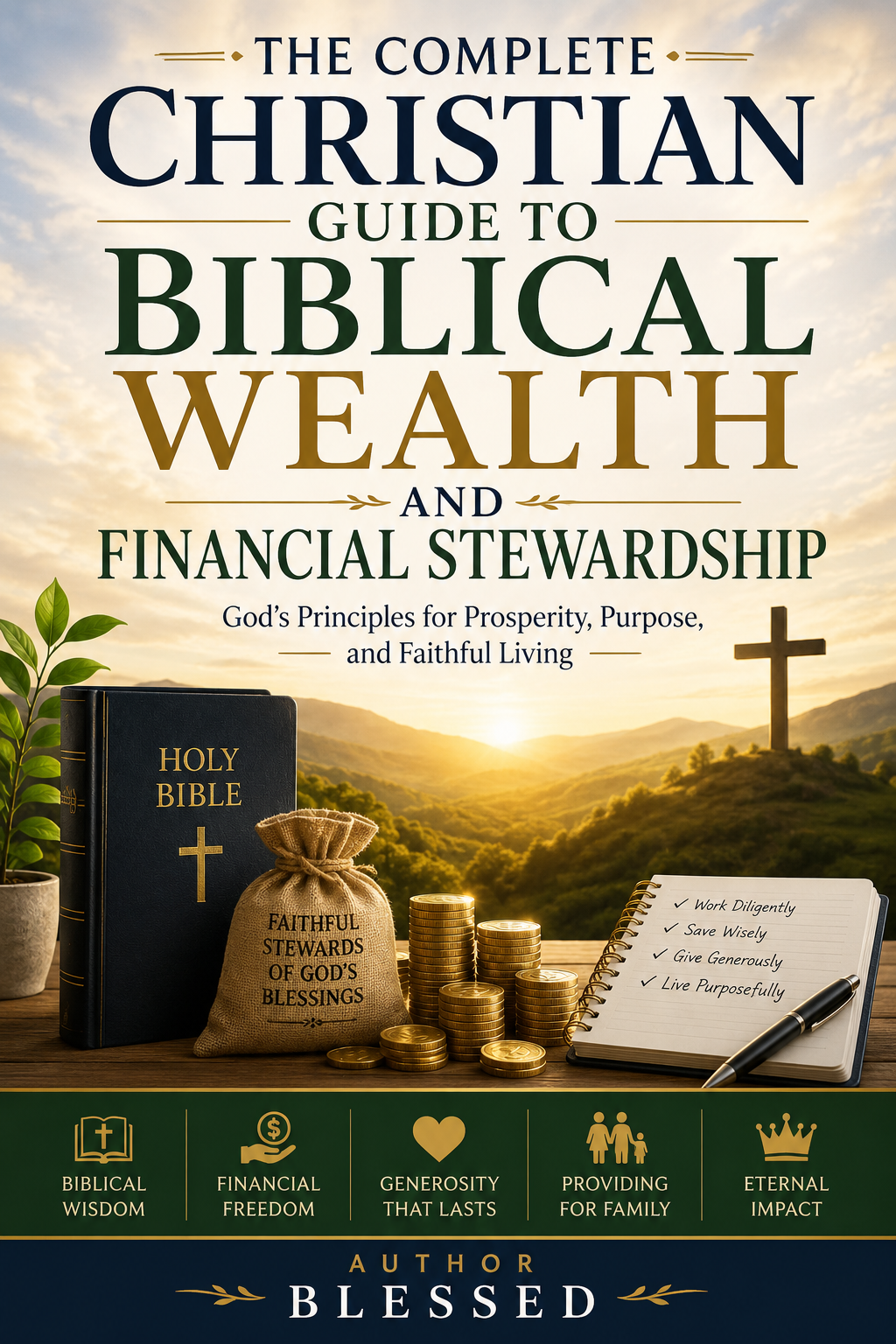
Discover God’s Purpose for Money, Prosperity, and Faithful Living
Introduction: Money Is More Than Currency—It Is a Test of the Heart
Money affects nearly every area of life. It influences the choices we make, the opportunities we pursue, the security we feel, and even the relationships we build. For many Christians, however, money is also one of the greatest sources of confusion.
Some believers think wealth is inherently evil. Others believe that financial prosperity is guaranteed if they simply have enough faith. Both views miss the balanced teaching of Scripture.
The Bible does not condemn wealth. Neither does it encourage greed or the reckless pursuit of riches. Instead, God teaches His people how to become faithful stewards—people who manage His blessings wisely, generously, and with eternal purpose.
Biblical wealth is not measured merely by the amount of money in your bank account. It is measured by your faithfulness, integrity, contentment, generosity, and obedience to God.
If you desire financial peace, freedom from debt, wisdom in managing resources, and the ability to bless others while honoring God, this guide will help you build a biblical foundation that lasts.
What Is Biblical Wealth?
Biblical wealth is every resource God entrusts to you for His glory and the good of others.
This includes:
- Money
- Skills and talents
- Wisdom
- Opportunities
- Time
- Relationships
- Influence
- Property
- Spiritual gifts
God owns everything.
“The earth is the LORD’s, and everything in it.” — Psalm 24:1
We are not owners.
We are managers.
Everything placed in our hands is a stewardship assignment.
That mindset changes everything.
Instead of asking,
“How much money can I make?”
A faithful believer asks,
“How can I glorify God with everything He has entrusted to me?”
Understanding Biblical Stewardship
Stewardship means faithfully managing what belongs to someone else.
God has entrusted each believer with resources, expecting accountability.
Jesus emphasized stewardship repeatedly.
Luke 16:10
“Whoever can be trusted with very little can also be trusted with much.”
Faithfulness always comes before increase.
Many people pray for more money while neglecting what they already have.
God often tests our character before increasing our responsibilities.
God’s Purpose for Wealth
God blesses people for purposes far greater than personal comfort.
Biblical wealth enables believers to:
- Provide for their families
- Meet personal needs
- Help the poor
- Support ministry
- Advance God’s Kingdom
- Create employment
- Leave godly inheritance
- Demonstrate God’s goodness
Notice something important:
The purpose of wealth is service—not selfishness.
The Difference Between Wealth and the Love of Money
This distinction changes everything.
The Bible never says money is evil.
It says:
“The love of money is a root of all kinds of evil.” — 1 Timothy 6:10
Money is simply a tool.
Like fire, it can either build or destroy.
When money becomes your identity, security, or god, it becomes dangerous.
When money becomes a servant rather than a master, it becomes a blessing.
Ask yourself honestly:
- Would I still trust God if I lost everything?
- Does money control my emotions?
- Am I willing to obey God even when it costs me financially?
These questions reveal the condition of the heart.
Biblical Principles for Building Wealth
1. Work Diligently
God honors productive work.
Proverbs 14:23
“All hard work brings a profit.”
Laziness produces poverty.
Hard work creates opportunities.
Excellence attracts favor.
Whatever your profession, work as if Jesus Himself were your employer.
2. Develop Valuable Skills
Your income often follows your usefulness.
Learn.
Improve.
Study.
Practice.
Read.
Acquire new skills.
The more value you create, the greater your opportunities become.
Daniel excelled because he possessed exceptional wisdom.
Joseph prospered because he solved problems.
Your skills can become God’s channel of provision.
3. Live Below Your Means
Many people earn more but never become financially stable because their lifestyle expands faster than their income.
Biblical wisdom teaches contentment.
Spend less than you earn.
Avoid unnecessary debt.
Delay unnecessary luxuries.
Financial peace often comes from wise decisions rather than larger paychecks.
4. Save Consistently
Scripture praises preparation.
Proverbs 21:20
“The wise store up choice food and olive oil.”
Saving is not fear.
Saving is wisdom.
Even small amounts saved consistently grow over time.
5. Avoid Waste
Jesus instructed His disciples after feeding thousands:
“Gather the pieces that are left over. Let nothing be wasted.” — John 6:12
Waste silently destroys financial progress.
Avoid impulsive spending.
Repair what can be repaired.
Use what you already have before buying more.
Small habits produce significant long-term results.
6. Give Generously
Giving is one of the greatest demonstrations of trust in God.
Generosity reflects God’s character.
The generous heart understands that God is the true Provider.
Giving should never be motivated by manipulation or greed.
Instead, it should flow from gratitude and love.
God delights in cheerful givers.
7. Plan Before Spending
Many financial problems begin with poor planning.
Jesus taught counting the cost before building.
Create a monthly budget.
Track every expense.
Review your spending honestly.
A budget does not restrict freedom.
It creates freedom.
Seven Financial Mistakes Christians Should Avoid
1. Living Beyond Your Income
Trying to impress others often leads to unnecessary debt.
Contentment protects financial health.
2. Ignoring Financial Planning
Without direction, money disappears quickly.
Plan before spending.
3. Depending Only on Miracles
God performs miracles.
But he also expects responsibility.
Prayer and planning work together.
4. Refusing to Learn About Money
Financial ignorance can become expensive.
Read books.
Learn investing.
Understand budgeting.
Improve continuously.
5. Allowing Greed to Grow
Greed never says “enough.”
Contentment protects the heart.
6. Neglecting Generosity
Closed hands rarely experience the joy of giving.
Generosity transforms both the giver and the receiver.
7. Separating Faith From Finances
God cares about every area of life—including money.
Your financial decisions are spiritual decisions.
Practical Steps to Become a Better Financial Steward
Start where you are.
Pray About Every Major Financial Decision
Invite God into your financial life.
Seek wisdom before making commitments.
Create a Written Budget
Know:
- Income
- Expenses
- Savings
- Giving
- Debt
If you cannot measure it, you cannot improve it.
Build an Emergency Fund
Unexpected expenses happen.
Preparation reduces panic.
Even small savings create stability.
Eliminate Unnecessary Debt
Debt limits future opportunities.
Develop a repayment plan.
Celebrate every milestone.
Freedom comes one payment at a time.
Increase Your Knowledge
Read one financial book every month.
Take online courses.
Learn from wise mentors.
Knowledge often becomes income.
Give Regularly
Generosity keeps money in its proper place.
A generous believer is less likely to become controlled by wealth.
Review Your Finances Monthly
Ask yourself:
- Where did my money go?
- What can I improve?
- Did my spending honor God?
- Am I preparing for the future?
Growth comes through regular evaluation.
Signs You Are Becoming a Faithful Steward
You know you’re growing when:
- You spend intentionally.
- You save consistently.
- You give joyfully.
- You avoid unnecessary debt.
- You seek wisdom before purchases.
- You are content without comparing yourself to others.
- You use your resources to help people.
- Your financial decisions reflect biblical values.
- You trust God without becoming irresponsible.
- Money serves your purpose instead of controlling your life.
The Eternal Perspective on Wealth
Earthly wealth is temporary.
Kingdom investments are eternal.
Jesus taught believers to store treasures in heaven through faithful obedience, compassion, generosity, and righteous living.
One day, every believer will give an account of how they managed God’s resources.
The question will not simply be:
“How much did you earn?”
It will be:
“Were you faithful with what I entrusted to you?”
Faithfulness is Heaven’s measure of success.
Action Plan: Start Today
Transformation begins with simple, consistent steps. Don’t wait for the “perfect” financial situation before honoring God with your resources.
This week, commit to the following:
- Pray and dedicate your finances to God.
- Write down all your sources of income and monthly expenses.
- Identify one unnecessary expense to reduce or eliminate.
- Set a realistic savings goal, even if it’s small.
- Create a plan to pay down debt consistently.
- Invest time in learning one new income-producing skill.
- Perform one intentional act of generosity.
- Review your financial progress at the end of the week and thank God for every step forward.
Small, faithful actions repeated over time produce remarkable results.
Final Thoughts
God is not merely interested in increasing your income—He is interested in transforming your character.
Financial stewardship is ultimately about worship. Every financial decision reflects what we value most. When Christ becomes the center of our finances, money loses its power to control us and becomes a tool for serving God’s purposes.
You don’t need to be wealthy to begin practicing biblical stewardship. You only need to be faithful with what God has already placed in your hands.
Remember Jesus’ promise:
“Well done, good and faithful servant.” — Matthew 25:21
May that be the testimony of every believer—not because we accumulated the most wealth, but because we faithfully managed every blessing for the glory of God.
Frequently Asked Questions (FAQs)
Is it wrong for a Christian to be wealthy?
No. Scripture includes many faithful people who were wealthy. The issue is not possessing wealth but whether wealth possesses your heart. God calls believers to use their resources with humility, generosity, and integrity.
What does biblical stewardship mean?
Biblical stewardship is faithfully managing everything God has entrusted to you—including money, time, talents, relationships, and opportunities—for His glory and the benefit of others.
Does God want Christians to prosper?
God desires His people to flourish spiritually, emotionally, and materially according to His will. However, biblical prosperity is not measured by riches alone but by faithfulness, godly character, contentment, and purposeful living.
Should Christians save and invest?
Yes. The Bible commends wise planning, diligent work, and preparing for the future. Saving and investing responsibly are consistent with good stewardship when done without greed or misplaced trust.
How can I become a better financial steward?
Begin by honoring God with your finances, creating a budget, avoiding unnecessary debt, saving consistently, giving generously, increasing your financial knowledge, and making decisions guided by biblical principles rather than impulse or comparison.