
Inroduction
In today’s interconnected world, societies are more diverse than ever. People from different cultures, religions, and ethnicities live, work, and interact together on a scale never seen before. While this diversity brings enormous benefits—creativity, economic growth, and cultural richness—it also presents challenges. Balancing multiculturalism is crucial for social harmony, mutual respect, and long-term stability. But how can modern societies achieve this balance?
Understanding Multiculturalism
Multiculturalism refers to the coexistence of multiple cultural groups within a single society, where each group maintains its unique identity while contributing to a shared social framework. Unlike assimilation, which expects minority groups to fully adopt the dominant culture, multiculturalism celebrates diversity while encouraging cooperation.
The goal is not simply to tolerate differences but to create an environment where everyone can thrive, feel respected, and contribute meaningfully.
Why Balancing Multiculturalism Matters
- Prevents Social Fragmentation: Without balance, cultural groups can become isolated, leading to tension or mistrust.
- Promotes Innovation: Diverse perspectives foster creativity in business, education, and governance.
- Enhances Global Competitiveness: Societies that successfully integrate multiple cultures are better positioned in global markets.
- Supports Civic Harmony: Shared values and respect for human rights reduce conflict and strengthen social cohesion.
Practical Steps to Balance Multiculturalism
1. Promote Shared Civic Values
While celebrating cultural uniqueness, societies must identify common values that unite everyone. These can include:
- Respect for human rights
- Rule of law
- Freedom of expression
- Equal opportunity
By focusing on shared principles, communities can prevent division while maintaining diversity.
2. Encourage Integration Without Forcing Assimilation
Integration means creating pathways for all groups to participate fully in society while preserving their cultural identity. Actionable steps include:
- Language education programs
- Inclusive workplaces
- Community engagement initiatives
- Cultural exchange programs
The key is to help people connect and collaborate rather than erasing their identity.
3. Education for Cultural Competence
Schools and universities play a critical role. Teaching students about different cultures, religions, and worldviews fosters empathy and understanding. Actionable ideas include:
- Introducing multicultural curricula
- Celebrating cultural events
- Promoting cross-cultural teamwork
- Training teachers in cultural sensitivity
Well-informed citizens are less likely to fall into stereotypes and prejudice.
4. Promote Dialogue and Conflict Resolution
Disagreements are inevitable in multicultural societies. To maintain balance:
- Establish safe spaces for dialogue
- Encourage civic forums and town halls
- Mediate conflicts with trained facilitators
- Use inclusive policymaking to consider diverse perspectives
Open communication prevents resentment and builds trust.
5. Enforce Fair Policies and Legal Protections
Governments must ensure equality under the law. Actionable strategies:
- Anti-discrimination legislation
- Equal access to healthcare, education, and employment
- Support for minority-owned businesses
- Fair immigration policies
Balanced multiculturalism thrives when all citizens feel protected and valued.
6. Leverage Technology to Connect Cultures
Digital tools can bridge cultural gaps:
- Social media campaigns promoting inclusivity
- Online forums for cultural exchange
- Apps for language learning
- Virtual events showcasing global traditions
Technology allows people to share ideas, learn, and appreciate differences on a global scale.
Challenges to Be Aware Of
Balancing multiculturalism is not without obstacles:
- Cultural clashes or misunderstandings
- Nationalist or populist political movements
- Economic inequality between groups
- Social segregation or ghettoization
Being aware of these challenges allows societies to proactively address them rather than react after conflicts arise.
Conclusion: A Dynamic Balance
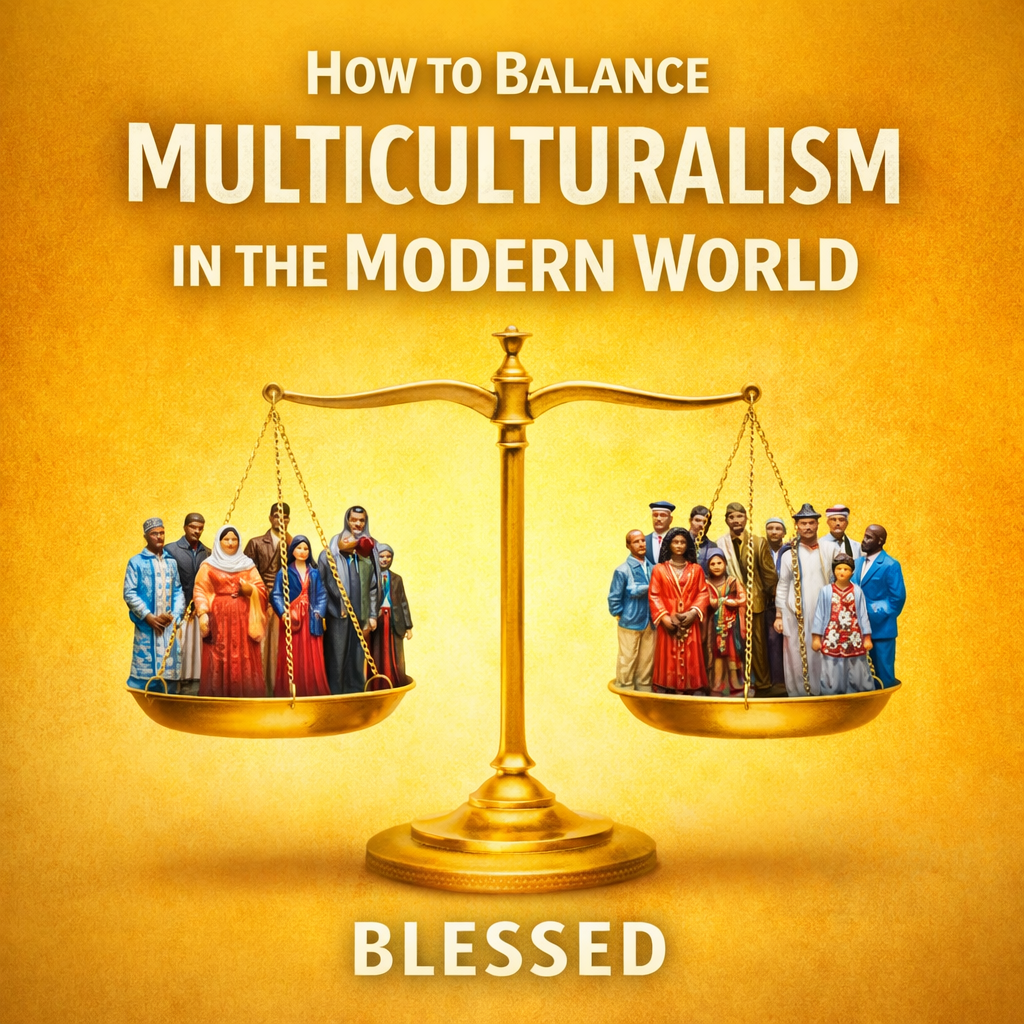
Balancing multiculturalism in the modern world requires intentional effort from individuals, communities, and governments. It is not about erasing differences but about building a society where diverse cultures coexist, interact, and enrich one another.
For believers, this conversation goes even deeper — culture can quietly influence what we believe about God. See: The Influence of Culture on Identity: Even in the House of God.
Actionable steps like promoting shared values, integrating without assimilation, education, dialogue, fair policies, and technology use can transform diversity into a powerful asset rather than a source of conflict.
In an era of global connectivity, balancing multiculturalism is not just a moral imperative—it is a strategic necessity for peace, prosperity, and progress.
Frequently Asked Questions (FAQs)
1. What is multiculturalism in simple terms?
Multiculturalism means people from different cultures, religions, and ethnic backgrounds living together in the same society while respecting each other’s differences and contributing to a shared community.
2. What is the difference between multiculturalism and assimilation?
Multiculturalism allows people to keep their cultural identity while participating in society. Assimilation, on the other hand, expects people to abandon their original culture and fully adopt the dominant one.
3. How can a country successfully balance multiculturalism?
A country can balance multiculturalism by:
- Promoting equal rights for everyone
- Encouraging cultural understanding
- Supporting education and dialogue
- Creating fair laws and opportunities
- Helping different communities interact peacefully
4. What are the benefits of multiculturalism in modern society?
Multiculturalism offers many advantages, such as:
- More creativity and innovation
- Economic growth through diverse talents
- Better cultural understanding
- Stronger global connections
- More inclusive and vibrant communities
5. What challenges come with multiculturalism?
Some common challenges include:
- Cultural misunderstandings
- Language barriers
- Social division between groups
- Economic inequality
- Political tension related to identity or immigration
These challenges can be reduced through education, communication, and fair policies.
6. How does education help balance multiculturalism?
Education helps people understand different cultures, respect diversity, and avoid stereotypes. Schools and universities can teach empathy, cooperation, and cultural awareness from an early age.
7. Can multiculturalism lead to social conflict?
Yes, multiculturalism can sometimes lead to tension if differences are misunderstood or unfairly treated. However, open dialogue, inclusive policies, and mutual respect can help prevent conflict and build unity.