
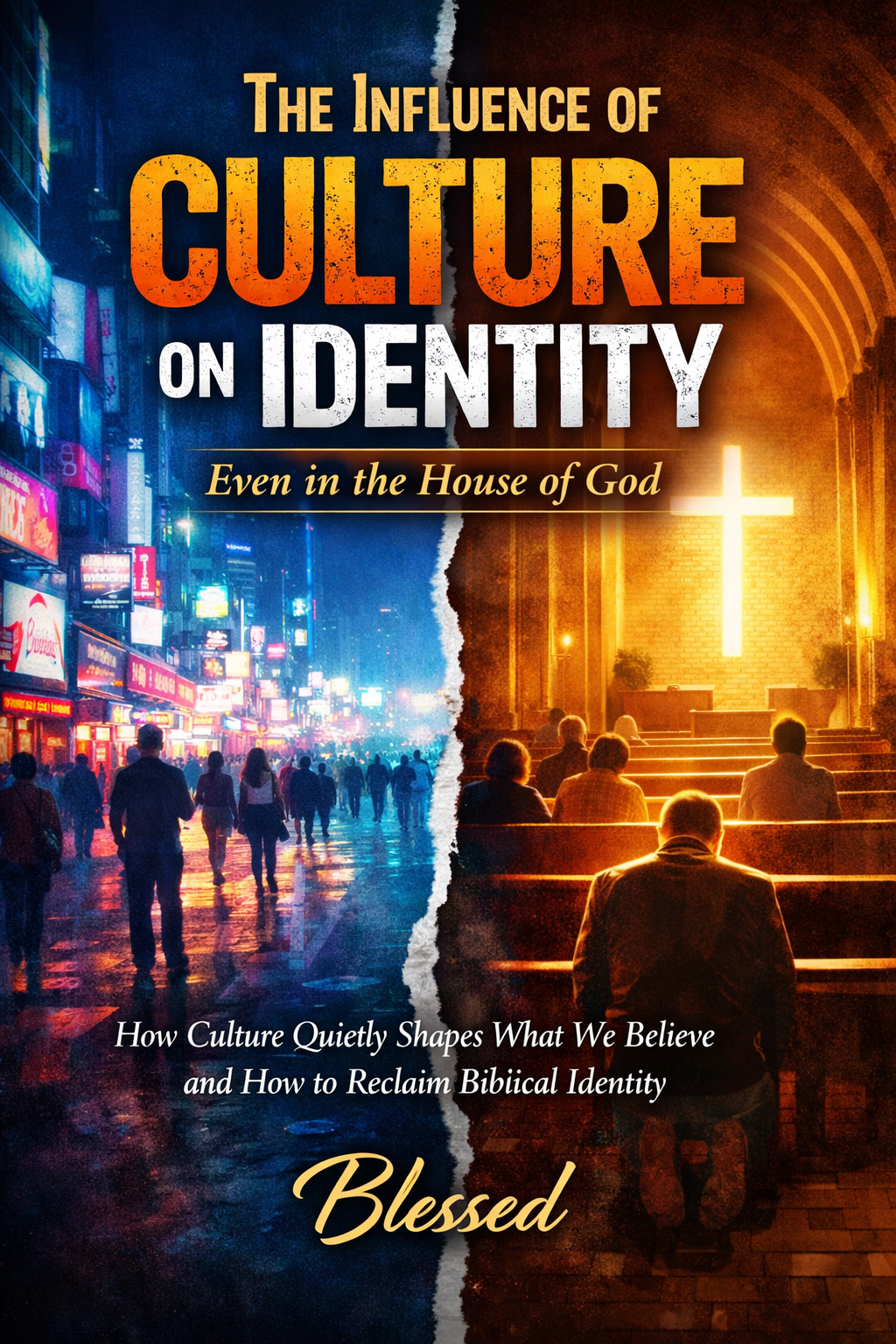
Introduction: When Culture Speaks Louder Than Conviction
Every human being is shaped by something.
Your family, your environment, your nation, your generation, and even your church all play a role in forming who you become.
Even when we do not notice it, culture is constantly speaking—telling us what to wear, how to think, what success should look like, what is considered “normal,” and even what to believe about God.
But here is a deeper truth many people overlook:
Culture does not only influence society—it also influences identity, even within the church.
This means it is possible to sincerely love God and still be more shaped by culture than by Scripture.
This is not a condemnation—it is a wake-up call.
Because when identity is confused, destiny becomes unstable.
1. Understanding Culture: The Invisible Teacher of Identity
Culture is not limited to music, fashion, or language.
Culture is a system of shared beliefs, habits, values, and behaviors that shapes how people interpret life.
It teaches people:
- What is right or wrong
- What is acceptable or shameful
- What success looks like
- What spirituality should feel like
The danger of culture is that it is often silent but deeply influential.
You may not notice it shaping you, but it is always working in the background.
Even within the church, cultural influences can quietly reshape:
- Worship expressions
- Leadership expectations
- Personal values
- Spiritual priorities
Over time, many begin to confuse cultural Christianity with biblical Christianity.
2. When Culture Enters the House of God
The house of God is meant to be a place where Kingdom identity is formed and strengthened.
However, culture can subtly enter through different channels:
a) Entertainment-driven Christianity
When spiritual depth is replaced with performance, believers begin to chase emotional experiences more than truth.
b) Social media influence
Ministry begins to look like branding instead of calling. Visibility replaces spiritual depth, and popularity begins to overshadow purity.
c) Societal pressure
People begin to adjust truth to fit modern opinions rather than remaining anchored in Scripture.
d) Tradition without understanding
Sometimes religious practices become empty routines that carry cultural weight but lack spiritual depth.
The result is that people may still attend church, sing, and serve, yet their identity is more influenced by the world than by the Word of God.
3. The Identity Crisis in Modern Believers
One of the greatest struggles today is not a lack of faith, but confusion of identity.
Many believers silently struggle with questions such as:
- “Who am I really?”
- “What defines me—God or society?”
- “Why do I feel spiritually empty even while active in church?”
This happens when cultural influence overrides divine identity.
Because when a person does not understand who they are in God, they will begin to look to culture for identity.
But culture is an unstable source of identity.
It shifts constantly.
What is accepted today may be rejected tomorrow.
God’s identity, however, is stable, eternal, and unchanging.
4. Biblical Identity vs Cultural Identity
Let us clearly distinguish the two:
Cultural Identity says:
- You are what you achieve
- You are what people think of you
- You are your appearance, status, or influence
Biblical Identity says:
- You are created in the image of God
- You are chosen, called, and loved by Him
- You are defined by God’s truth, not public opinion
When culture defines you, you become unstable.
When God defines you, you become unshakable.
5. The Danger of Blending Faith Too Deeply with Culture
Blending faith with culture without spiritual discernment leads to compromise.
Not all cultural trends are harmful, but not all are harmless either.
The danger begins when believers stop asking:
“Does this align with God’s Word?”
and instead begin asking:
“Is this what everyone else is doing?”
This shift is subtle but powerful.
Over time, truth becomes relative instead of absolute.
And identity shifts from purpose to performance.
6. How to Reclaim Your Identity in God
Awareness alone is not enough—transformation is the goal.
Here are practical steps to restore biblical identity:
1. Return to Scripture as your identity mirror
Do not read the Bible only for motivation—read it to understand who you are in God.
2. Evaluate your influences
Ask yourself honestly:
- What do I watch most?
- Who do I listen to most?
- What voices are shaping my mindset?
3. Separate conviction from culture
Not everything popular is spiritually beneficial. Learn to distinguish truth from trend.
4. Build consistent spiritual discipline
Prayer, worship, and meditation on God’s Word help realign your inner identity.
5. Stay rooted in a Christ-centered community
Surround yourself with people who value truth over trends and depth over appearance.
7. A Call to Deep Spiritual Awareness
The greatest battle in this generation is not only sin—it is identity distortion.
When people forget who they are, they begin to live below their divine potential.
God is not only interested in church attendance.
He is deeply concerned with identity transformation.
He desires that you become:
- Not just religious, but rooted
- Not just active, but anchored
- Not just informed, but transformed
Conclusion: Do Not Let Culture Rewrite Your Identity
Culture will always exist.
It will continue to evolve.
It will continue to speak loudly.
But as a believer, you are called to something higher.
You are called to be shaped by the Kingdom, not by culture.
Because when God defines you, no culture can confuse you.
And when your identity is rooted in Him, your life becomes stable, purposeful, and unshakable.