
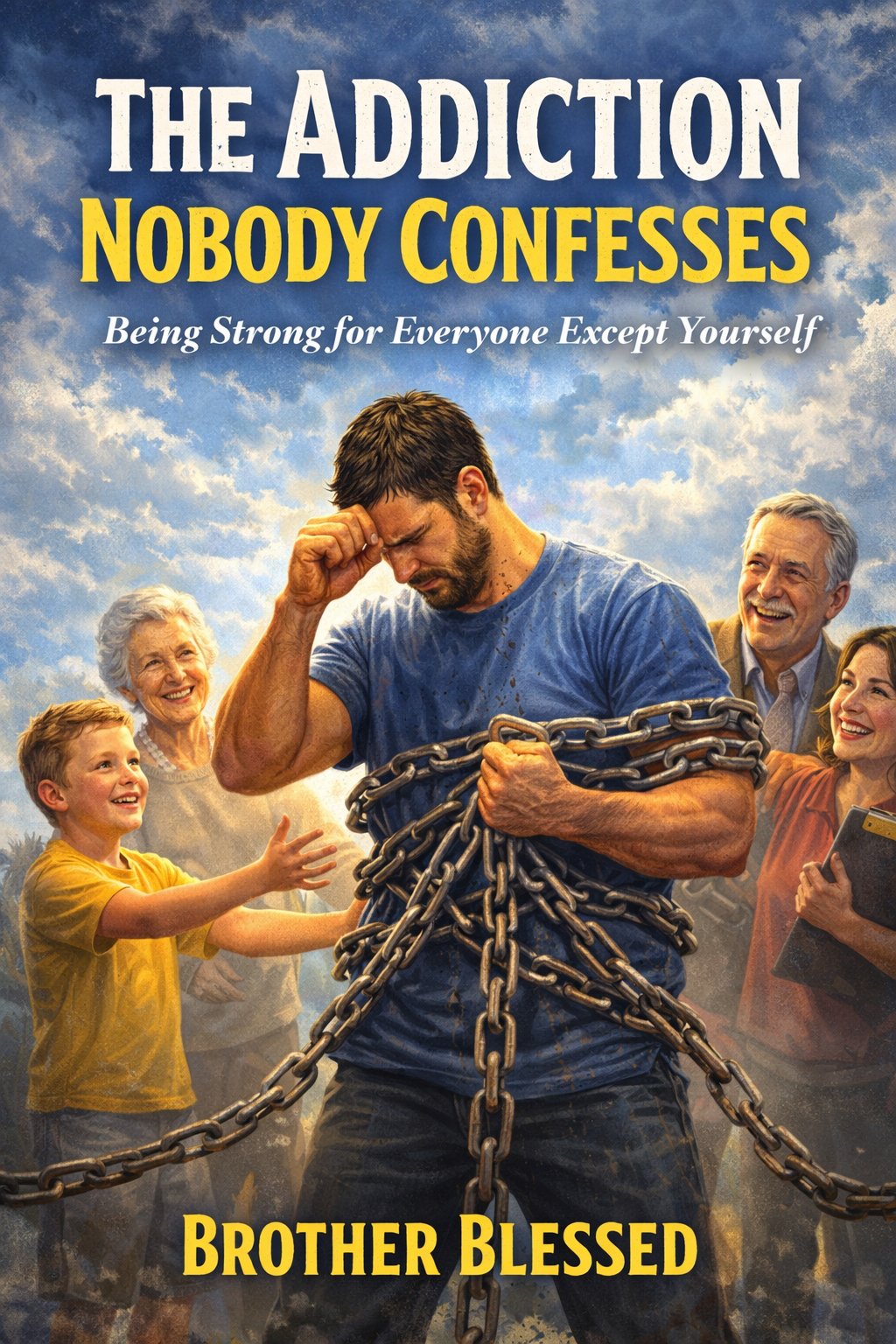
Introduction
Some struggles are easy to recognize.
People can see the effects of unhealthy habits, destructive behaviors, or obvious addictions. But there is another struggle that often goes unnoticed because it wears a respectable disguise.
It is the habit of being strong for everyone else while neglecting your own emotional, mental, and spiritual well-being.
From the outside, it looks admirable. People see someone who is dependable, responsible, resilient, and always available when others need support.
But beneath that appearance, many people are carrying burdens they never discuss, wounds they never address, and exhaustion they never admit.
What begins as strength can slowly become a prison.
And because society often rewards this behavior, many people never realize how much it is costing them.
When Strength Becomes a Hiding Place
There are seasons in life when strength is necessary.
Challenges arise. Responsibilities increase. Difficult circumstances require perseverance. During these moments, pushing forward is often the right thing to do.
The problem begins when strength stops being a response to life’s challenges and becomes the only way you know how to live.
Instead of processing pain, you hide it.
Instead of acknowledging your struggles, you suppress them.
Instead of asking for support, you convince yourself that you must carry everything alone.
Over time, strength becomes more than a character trait—it becomes a mask.
And behind that mask, unresolved emotions quietly accumulate.
Why This Pattern Feels So Normal
Unlike most unhealthy habits, this one is often celebrated.
People admire those who never complain.
They praise those who always have answers.
They depend on those who seem capable of handling everything.
As a result, you may hear things like:
- “You’re so strong.”
- “I don’t know how you do it.”
- “You always hold everything together.”
- “Everyone can count on you.”
While these compliments may be sincere, they can also create pressure.
The stronger people perceive you to be, the harder it becomes to admit when you are struggling.
Eventually, others stop asking how you are doing because they assume you are always fine.
And you begin to assume the same thing.
The Hidden Cost of Always Being Strong
The consequences rarely appear overnight.
Instead, they develop gradually, often unnoticed.
You may experience:
- Emotional exhaustion that sleep cannot fix
- A sense of emptiness despite staying busy
- Frustration that never finds a healthy outlet
- Increased stress and anxiety
- Difficulty connecting deeply with others
- Loneliness, even when surrounded by people
You become skilled at caring for everyone else while becoming disconnected from your own needs.
The more you ignore what is happening inside, the more difficult it becomes to understand what you are truly feeling.
Strength Without Honesty Cannot last
Human beings were never designed to carry every burden alone.
Even the strongest individuals need rest, encouragement, and support.
Throughout Scripture, Jesus demonstrated a balanced model of strength. He served people tirelessly, yet He also withdrew to pray, rest, and spend time alone with the Father.
His example reminds us that true strength includes vulnerability, dependence on God, and healthy renewal.
Endurance without honesty eventually becomes exhaustion.
When you refuse to acknowledge your weakness, you do not become stronger—you become disconnected.
Disconnected from your emotions.
Disconnected from meaningful relationships.
And sometimes, disconnected from the grace God wants you to receive.
Why Asking for Help Feels So Difficult
For many people, this pattern began as a survival strategy.
Perhaps vulnerability was ignored.
Perhaps expressing emotions was criticized.
Perhaps you learned early in life that showing weakness felt unsafe.
As a result, you developed beliefs such as:
- “I should handle this on my own.”
- “I don’t want to burden anyone.”
- “People depend on me.”
- “If I stop, everything will fall apart.”
These beliefs may have helped you navigate difficult seasons.
But what once protected you can eventually prevent healing.
The habits that helped you survive may not be the habits that help you thrive.
How This Affects Your Relationship With God
This pattern can quietly influence your spiritual life.
You may continue praying.
You may continue serving.
You may continue attending church and fulfilling responsibilities.
Yet deep inside, you may still be carrying every burden as though everything depends entirely on you.
Faith was never intended to eliminate human weakness.
Rather, faith teaches us to bring our weakness to God and receive strength from Him.
God does not expect perfection.
He invites honesty.
He is not only interested in your service, your accomplishments, or your sacrifices.
He also cares about the burdens you carry, the pain you hide, and the struggles you rarely discuss.
Your honesty matters to Him.
Breaking the Pattern: Steps Toward Healing
1. Recognize What Is Happening
The first step toward healing is awareness.
Pay attention to the moments when you automatically choose appearance over honesty.
Notice how often you hide what you are really feeling.
Awareness opens the door to change.
2. Name the Burdens You Carry
Unspoken burdens tend to grow heavier.
Write down your concerns.
Talk to God about them.
Share them with a trusted friend, mentor, or counselor.
Bringing hidden struggles into the light often reduces their power.
3. Learn to Receive Support
Many strong people are comfortable giving help but uncomfortable receiving it.
Yet healthy relationships involve both.
Allow others to support you when needed.
Accepting help is not a weakness.
It is part of being human.
4. Create Places Where You Can Simply Be Yourself
Find spaces where you are not expected to perform, lead, solve problems, or carry everyone else’s concerns.
Every person needs environments where authenticity is safe.
You do not have to earn your value through constant productivity.
5. Redefine Strength
Real strength is not pretending that nothing affects you.
Real strength includes:
- Rest
- Honesty
- Emotional awareness
- Healthy boundaries
- Humility
- Dependence on God
Strength is not the absence of weakness.
Strength is the courage to face reality truthfully.
You Are Allowed to Be Human
Many people live as though their value depends on how much they can carry.
But your worth is not measured by your exhaustion.
You do not need to prove your importance by constantly sacrificing yourself.
You do not need to hide your struggles to be respected.
You are allowed to be:
- Strong and honest
- Capable and vulnerable
- Faithful and human
- Resilient and in need of support
These qualities do not contradict one another.
They complement one another.
Conclusion: Strength That Heals Instead of Hides
Being strong for everyone else can feel noble, but when it becomes your only identity, it can lead to emotional isolation, burnout, and spiritual fatigue.
True healing begins when strength is no longer used as a means of hiding.
It begins when honesty replaces performance.
It begins when you allow yourself to receive the same compassion you freely give to others.
Real strength is not carrying every burden alone.
Real strength is knowing when to lean on God, when to lean on trusted people, and when to admit that you are human.
And in that honesty, you do not become weaker.
You become healthier, freer, and whole.
Frequently Asked Questions (FAQ)
1. Is it wrong to always be the strong one for others?
Being strong is not wrong. In fact, strength is often necessary during difficult seasons of life. The problem arises when strength becomes a reason to ignore your own emotional, mental, or spiritual needs. Healthy strength includes knowing when to rest, ask for help, and be honest about what you are carrying.
2. How can I stop carrying everything by myself?
Start by acknowledging that you were never meant to face every challenge alone. Share your concerns with God in prayer, talk to someone you trust, and allow yourself to receive support when needed. Small steps toward honesty and vulnerability can lead to greater emotional and spiritual health over time.
Call to Action
Have you ever felt the pressure of being strong for everyone else while silently struggling yourself? Take a moment today to be honest about what you are carrying. Share your thoughts in the comments, and if this article encouraged you, consider sharing it with someone who may need the reminder that strength and honesty can exist together.