
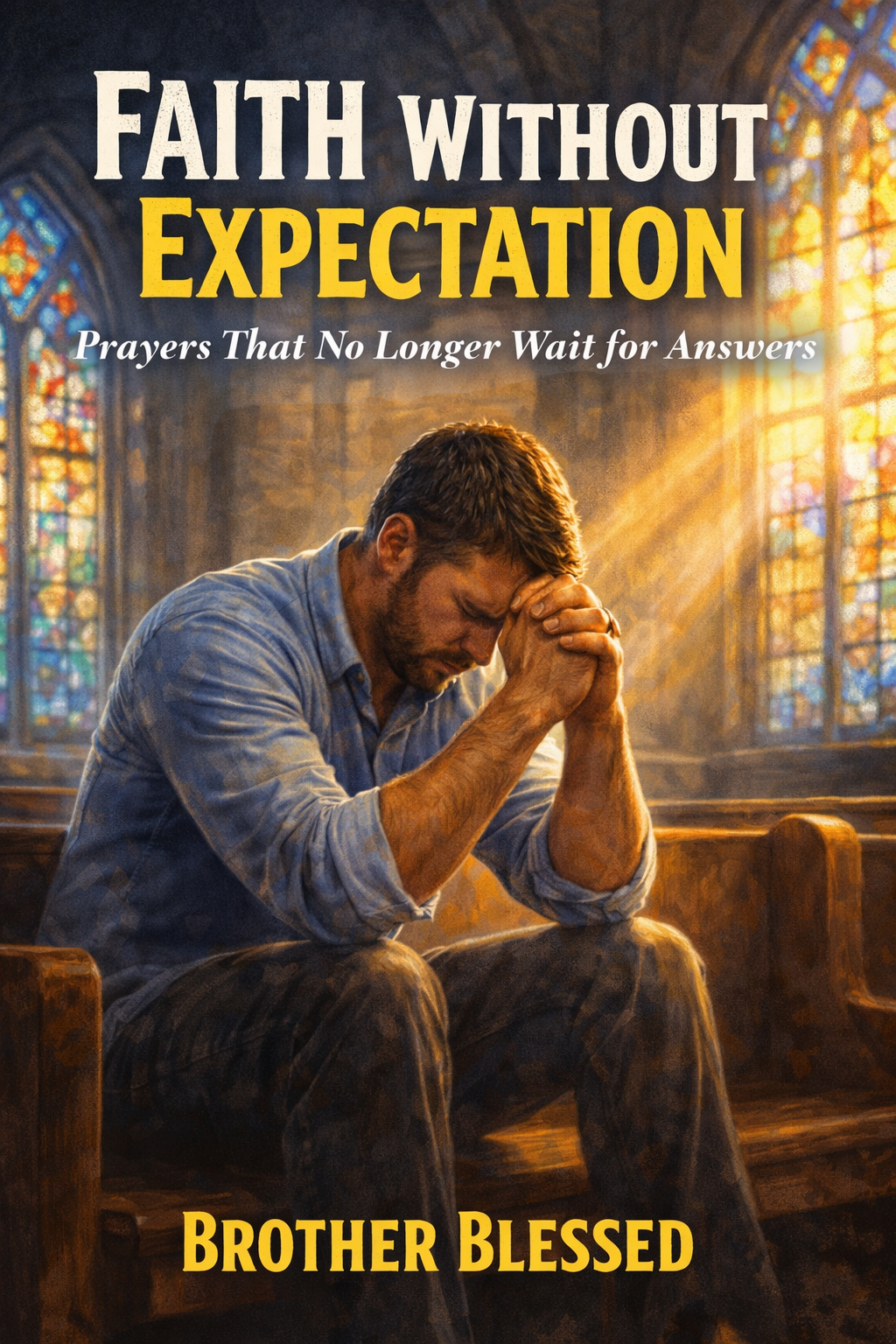
Introduction
There is a subtle spiritual shift that often goes unnoticed.
It is the moment when a believer continues religious activity—but quietly stops expecting anything from God.
You still pray, but without anticipation.
You still believe, but without excitement.
You still read Scripture, but without expectation of change.
On the surface, this may look like maturity. But in many cases, it is a quiet form of disappointment that has slowly reshaped the heart.
Faith without expectation turns prayer into a routine conversation instead of a living connection.
When Faith Becomes Passive Instead of Alive
At some point, many believers stop actively looking for answers and start simply going through the motions.
Prayer continues, but expectation fades.
This often sounds like:
- “I’ve prayed about it, but I’m not expecting much.”
- “I still believe God can do it, but I’ve stopped hoping.”
- “I’ll pray, but I’ve learned not to get my hopes up.”
This is not always intentional rebellion. Often, it is emotional exhaustion disguised as wisdom.
But over time, expectation disappears—and with it, spiritual anticipation begins to weaken.
Living Cautiously Instead of Living by Faith
Caution is not a weakness. In fact, wisdom is important in every area of life.
However, there is a subtle shift where caution begins to replace trust.
Faith starts sounding like:
- “I can’t risk disappointment again.”
- “I’ll trust God, but only up to a certain point.”
- “I’ll believe, but I won’t expect too much.”
Faith, by its very nature, involves stepping beyond comfort. Many moments in Scripture required people to act before they saw results.
When caution becomes dominant, obedience becomes selective—you only obey where it feels safe.
The Hidden Danger of Quiet Spiritual Distance
Not all spiritual drift is loud or obvious.
Some of the most dangerous shifts are quiet:
- You still attend, but your heart feels distant
- You still pray, but without emotional engagement
- You still believe, but without expectation
These changes do not feel like rebellion. They feel like “protection.”
But slowly, dependence on God weakens—not all at once, but gradually.
Eventually, belief remains, but surrender fades.
Why This Form of Faith Is So Subtle
The most dangerous spiritual conditions rarely feel dangerous.
They feel reasonable.
They sound like wisdom, self-protection, or emotional maturity. But underneath, they often reveal a heart that has learned to stop hoping in order to avoid pain.
This creates a quiet separation between belief and expectation.
You are still committed—but no longer fully open.
The Invitation Back to Expectant Faith
God is not intimidated by your disappointment. He is not confused by your hesitation. And He is not frustrated by your process.
But He continually invites you back into trust.
Restoration begins when you:
- Acknowledge where disappointment replaced expectation
- Allow your heart to hope again, even carefully
- Pray with renewed openness instead of emotional distance
- Take small steps of obedience where fear once controlled you
Faith is not recklessness. It is a restored relationship.
It is learning to trust again while still healing.
Expectation Is Not Denial of Reality
Expectant faith does not ignore pain or past disappointment.
Instead, it chooses not to let those experiences define the future.
Expectation simply means:
- “God is still able.”
- “God is still present.”
- “God can still respond.”
Even when emotions are weak, expectation keeps the heart connected.
God Is Not Asking for Perfect Faith—Only Honest Faith
God is not demanding emotional perfection.
He is inviting honesty.
Even a small, fragile expectation is still faith when it is directed toward Him.
You do not need to manufacture a strong belief. You only need to stop closing your heart completely.
Conclusion: Leaving Survival Mode Behind
God never designed your faith to become an emotional survival mode.
He designed it to be a living relationship marked by trust, openness, and expectancy.
If you recognize areas where expectation has faded, this is not condemnation—it is awareness. And awareness is the beginning of healing.
You do not have to live guarded forever.
You do not have to pray without hope forever.
You do not have to expect nothing forever.
You are invited back into trust.
And sometimes, the first step of revival is simply this:
to hope again.