
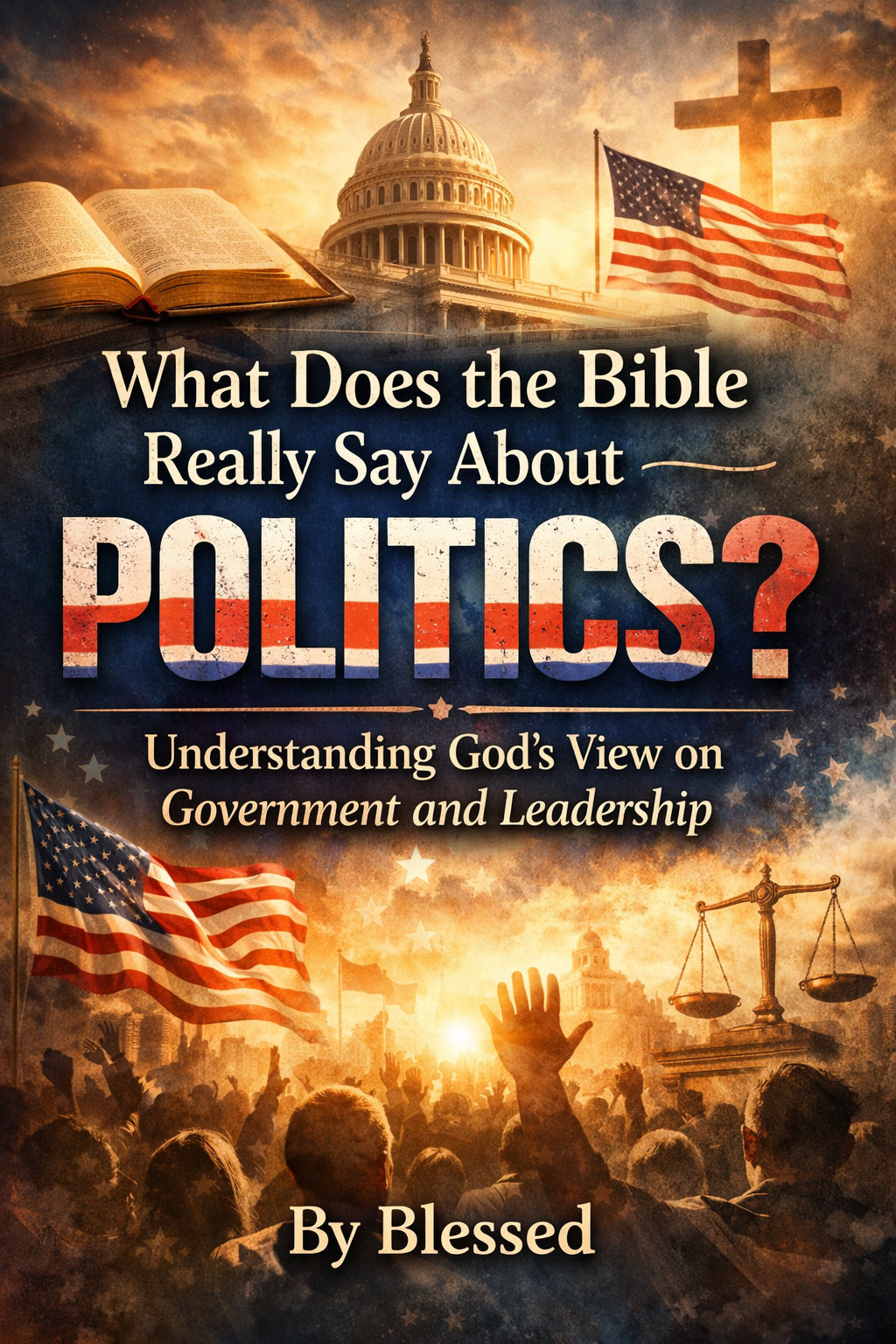
Introduction
Politics is one of the most emotional subjects in the world today. It shapes nations, influences laws, affects families, and often stirs deep feelings of hope, fear, frustration, and division. For many believers, the question is not simply who should lead, but rather: What does God think about politics? What does the Bible really teach about government, leadership, power, and the responsibility of Christians in public life?
This is an important question because, as followers of Christ, our faith should guide every part of life—including how we view leadership, justice, authority, and national direction.
The Bible may not use the modern word politics in the way we do today, but it speaks extensively about kings, rulers, governments, justice, laws, and the conduct of leaders. Scripture gives us timeless principles that remain deeply relevant in today’s world.
1) Government Is Not Outside God’s Control
One of the clearest biblical teachings about government is that God is sovereign over human authority.
The Apostle Paul writes in Romans 13 that governing authorities exist under God’s permission and order. The passage teaches that authority itself is part of God’s design for human society, primarily to maintain order, promote justice, and restrain evil.
This means that leadership positions—whether presidents, governors, senators, kings, or judges—do not ultimately exist outside God’s awareness.
This truth is emotionally powerful because it reminds us that even when politics feels chaotic, God has not lost control.
Elections may surprise people.
Governments may change.
Leaders may fail.
But God remains King above every earthly throne.
This does not mean every political decision is godly.
It means no ruler is greater than God.
When the world feels unstable, Scripture invites believers to anchor their hearts in divine sovereignty rather than human systems.
2) The Purpose of Government in the Bible
According to Scripture, government has a moral purpose.
The Bible presents leadership as a tool for:
- preserving order
- protecting citizens
- punishing wrongdoing
- rewarding what is good
- promoting justice
Romans 13 describes rulers as servants for the public good when they uphold justice and restrain evil.
This is transformative because it helps believers see government not merely as a political machine, but as a stewardship responsibility.
Leadership is not meant for oppression.
It is meant for service.
Power in God’s eyes is never just about control.
It is about responsibility.
A leader who uses power for selfish gain, corruption, pride, or oppression stands against the very purpose for which authority was given.
3) God Cares Deeply About Justice
One of the strongest political themes in the Bible is justice.
Throughout Scripture, God repeatedly calls leaders to defend the poor, protect the vulnerable, and rule with fairness.
The prophets constantly challenged kings and rulers who abused power.
God’s heart in leadership is clear:
- defend the weak
- protect widows and orphans
- uphold truth
- punish corruption
- reject oppression
This means politics, from a biblical perspective, cannot be separated from justice.
A government that ignores suffering, celebrates corruption, or oppresses the innocent is far from God’s heart.
This is where the Bible becomes deeply actionable for modern life.
As Christians, our political views should not be built only on party loyalty.
They should be shaped by biblical values such as:
- truth
- mercy
- justice
- righteousness
- compassion
4) Leadership Is Service, Not Self-Exaltation
Jesus completely transformed the world’s understanding of leadership.
The world often sees politics as a ladder to power.
But Christ taught that true leadership is service.
The greatest leader is not the one with the loudest voice.
It is the one with the humblest heart.
A biblical leader serves people rather than using people.
This principle is revolutionary.
God does not measure leadership by status.
He measures it by stewardship.
A leader who serves the people, protects peace, and promotes justice reflects God’s heart more than one who seeks personal glory.
5) Should Christians Be Involved in Politics?
This is one of the most emotional questions for believers.
The answer is: Christians should be guided by biblical wisdom, not political idolatry.
Believers can vote, advocate for justice, support righteous policies, and speak truth in public life.
However, the Bible warns against placing ultimate hope in human rulers.
Politics must never replace faith.
No political party is the kingdom of God.
No leader is a savior.
This is where many believers struggle emotionally.
Sometimes people begin to trust politicians more than God.
The Bible calls us to be responsible citizens while remembering that our highest allegiance belongs to God’s kingdom.
As Jesus taught, there are things owed to earthly authorities and things owed only to God.
This balance is crucial.
6) When Government Conflicts With God’s Will
The Bible also shows that obedience to government is not absolute.
When earthly authority directly commands what is against God’s truth, believers are called to obey God first.
This principle is clearly evident in the biblical teaching that obedience to God takes precedence over human commands.
This means Christians are called to:
- respect authority
- Pray for leaders
- To obey laws
- and stand for the truth
But never at the expense of conscience before God.
This is a powerful and emotionally courageous truth.
Faith sometimes requires moral courage.
7) Pray for Leaders
One of the most actionable biblical teachings about politics is prayer.
The Bible encourages believers to pray for rulers and those in authority.
Pray for:
- wisdom
- justice
- peace
- compassion
- integrity
Even when you disagree with leadership, prayer remains a powerful spiritual responsibility.
Prayer keeps the heart from hatred.
It replaces rage with intercession.
It transforms frustration into faith.
Final Reflection: God’s Kingdom Above Every Government
Politics changes.
Parties rise and fall.
Leaders come and go.
But God’s kingdom remains forever.
This is the deepest truth the Bible teaches about politics:
Earthly governments are temporary, but God’s reign is eternal.
So engage wisely.
Vote prayerfully.
Speak truth courageously.
Seek justice faithfully.
But never forget where your deepest trust belongs.
Your hope is not in government.
Your hope is in God.