
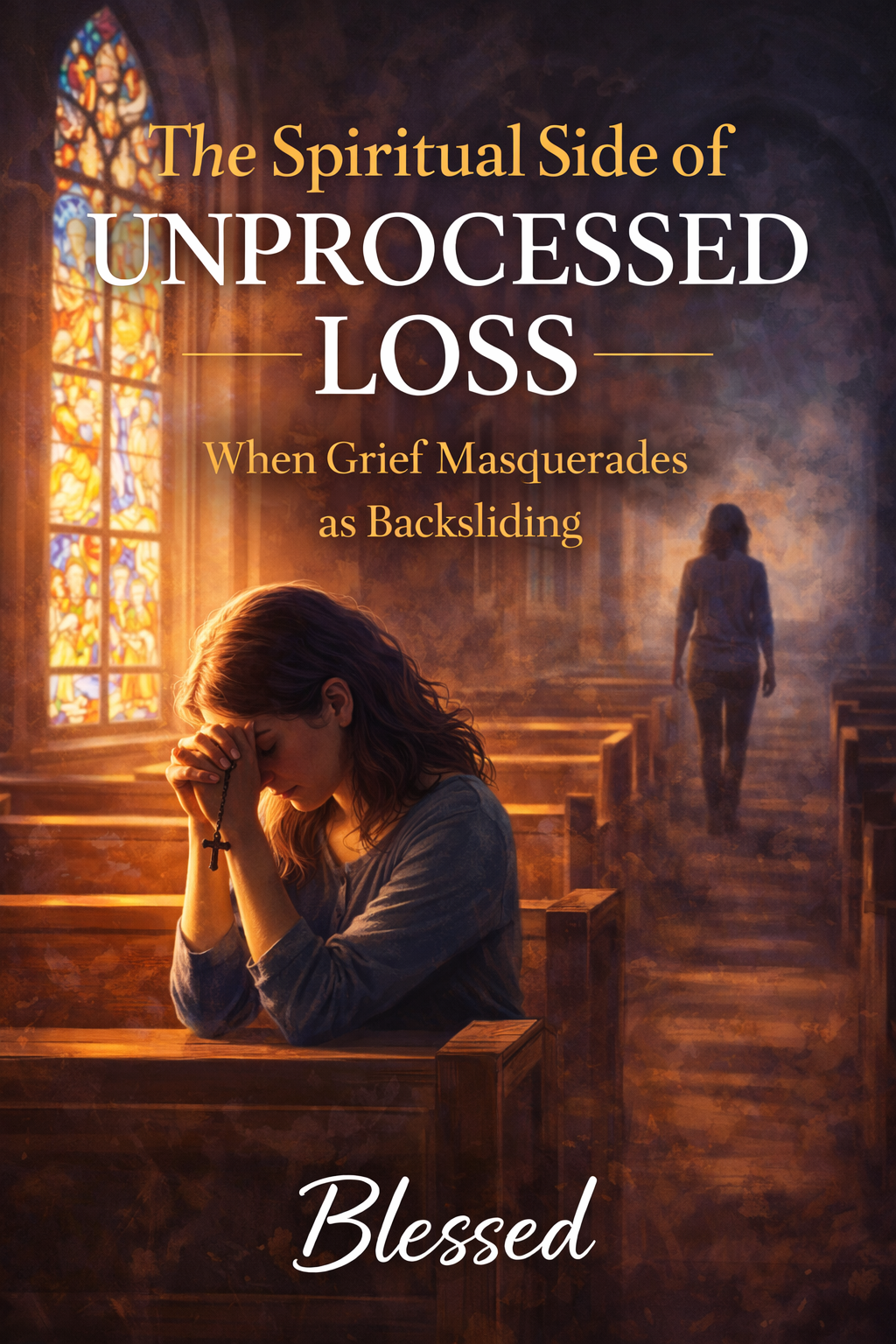
The Spiritual Side of Unprocessed Loss
There comes a season when your spiritual life feels weaker—quieter, less passionate than it once was. You don’t pray the way you used to. Scripture feels heavy. Worship no longer lifts you. And slowly, a painful thought forms:
Maybe I’m backsliding.
But what if you’re not drifting from God at all?
What if you’re grieving?
Many believers mislabel grief as spiritual failure, especially when the loss wasn’t dramatic or publicly acknowledged. Yet unprocessed loss often shows up spiritually long before we recognize it emotionally.
Loss Is Not Always Loud
When we think of grief, we imagine funerals and final goodbyes. But some of the deepest losses never come with closure.
You can grieve:
- The life you expected but never received
- A relationship that changed without explanation
- A calling that didn’t unfold as planned
- A season when God felt close and now feels distant
These losses don’t announce themselves. They settle quietly in the heart.
How Grief Disguises Itself as Backsliding
Unprocessed grief doesn’t only affect emotions—it affects spiritual engagement.
It can look like:
- A loss of motivation to pray
- Withdrawal from fellowship
- Feeling numb during worship
- Avoiding spiritual disciplines you once loved
Not because you stopped believing—but because grief is heavy, and spiritual effort feels harder when the soul is tired.
Why Grief Affects Your Relationship With God
Grief raises difficult questions:
- Why did this happen?
- Why didn’t God stop it?
- Why do I feel abandoned when I’m trying to be faithful?
When these questions go unspoken, they create distance. You don’t stop trusting God—you stop bringing your whole heart to Him.
God becomes someone you respect, but hesitate to be honest with.
The Danger of Spiritually Bypassing Grief
Many believers are taught to “pray it away,” “stay strong,” or “move on in faith.” While often well-intended, this can lead to spiritual bypassing—using spiritual language to avoid emotional truth.
Faith does not require denial.
Healing does not require silence.
Grief acknowledged is not faithlessness—it is faith practiced honestly.
Grief Is Not the Opposite of Faith
Scripture is filled with faithful people who grieved openly. Lament, questioning, and sorrow were not signs of rebellion; they were expressions of relationship.
Grief says, This mattered.
Faith says, I’m bringing it to God.
The two were never meant to be separated.
How to Recognize Unprocessed Grief
You may be grieving if:
- You feel spiritually tired, not rebellious
- You avoid quiet moments because they feel heavy
- You feel disappointed but can’t name why
- You feel distant from God yet still desire Him
These are not signs of backsliding. They are invitations to healing.
Practical Steps Toward Healing—Not Guilt
1. Name the Loss
Grief loses power when it is named. Be honest about what you lost, even if it feels small or “unspiritual.”
2. Give Yourself Permission to Mourn
You don’t need a tragedy to grieve. The loss of expectation still hurts.
3. Talk to God Without Editing
God can handle your questions, confusion, and disappointment.
4. Stop Measuring Faith by Productivity
Spiritual quietness during grief is not failure—it is recovery.
5. Seek Safe Community
Healing often requires being seen, not performing strength.
God Is Near to the Grieving—Not Disappointed
If you feel spiritually distant, it may not be because you walked away—but because you are carrying something unhealed.
God is not waiting for you to “get it together.”
He is near to the brokenhearted—even when they are tired, confused, or quiet.
Conclusion: Grief Is a Chapter, Not a Verdict
You are not spiritually weak.
You are not failing God.
You are not backsliding.
You are grieving.
And grief, when acknowledged, becomes a pathway—not away from God, but deeper into His presence.
Healing doesn’t require pretending.
It requires honesty.
And God meets us there.