
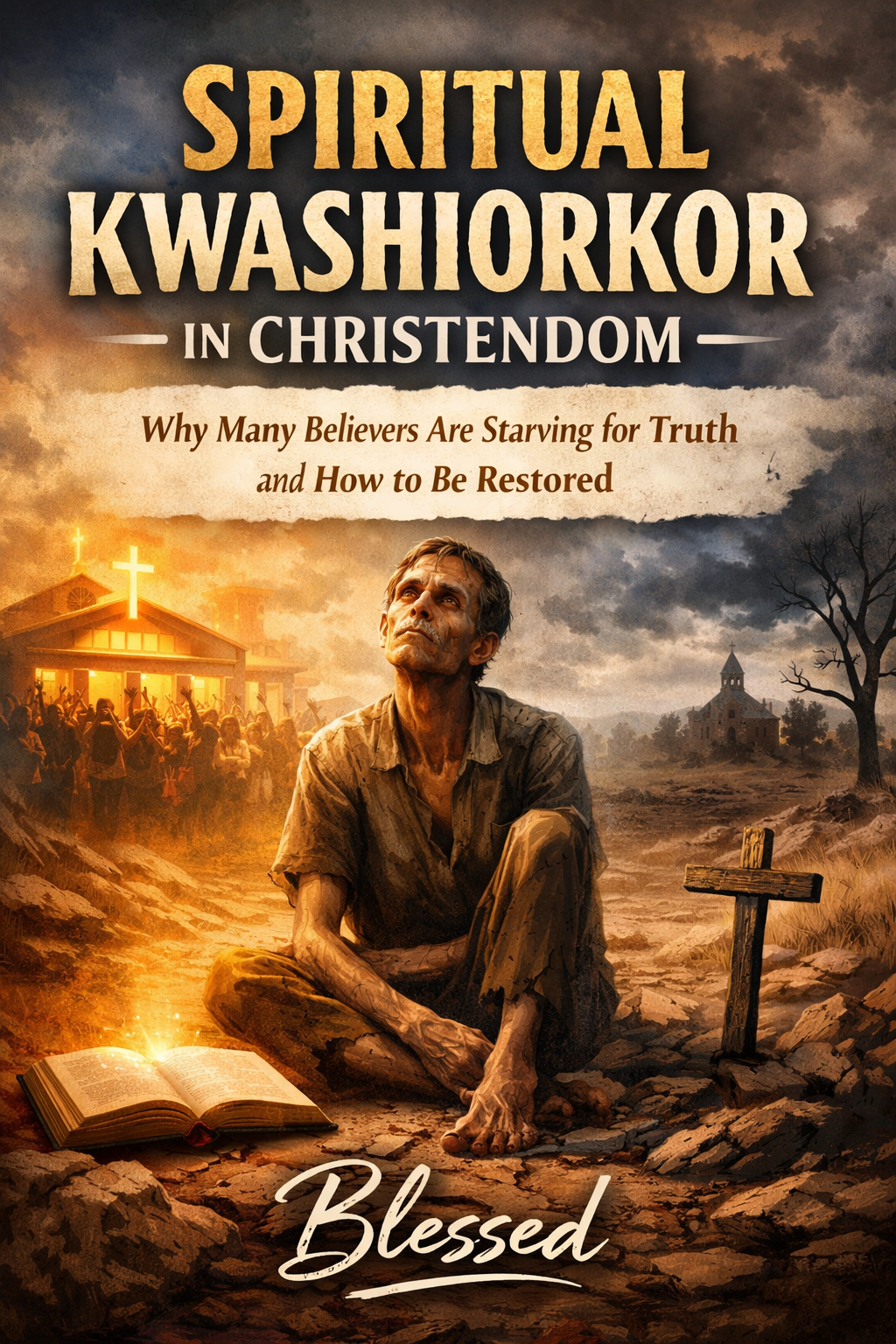
Introduction: A Hidden Spiritual Hunger
In many parts of the world, kwashiorkor is recognized as a severe form of malnutrition caused by a deficiency of protein. On the outside, the body may still appear presentable, but internally it becomes weak, swollen, and dangerously unhealthy.
Now imagine that same condition—but in a spiritual sense.
This is what can be described as spiritual kwashiorkor in Christendom: a condition where believers appear active in church, involved in religious programs, and vocal about faith, yet remain deeply undernourished in the truth of God’s Word.
They attend services, but remain spiritually hungry.
They sing in choirs, but feel empty within.
They quote scriptures, but lack true understanding.
This is more than a personal struggle—it is a growing spiritual concern in the body of Christ.
What Is Spiritual Kwashiorkor?
Spiritual kwashiorkor refers to a state of spiritual malnutrition in which a believer lacks a deep, balanced, and consistent intake of God’s Word. The result is weakness, confusion, and instability in faith.
Just as physical kwashiorkor is caused by an improper diet, spiritual kwashiorkor is caused by:
- Surface-level Christianity without depth
- Dependence on sermons without personal Bible study
- Emotional faith without solid biblical grounding
- Entertainment-driven spirituality instead of truth-centered discipleship
The outcome is a generation that appears spiritually active but is internally weak and unstable.
Signs of Spiritual Kwashiorkor in Believers
Many believers do not realize they are spiritually undernourished. Here are common signs:
1. Shallow Understanding of Scripture
They are familiar with popular verses but struggle to interpret or apply deeper biblical truths.
2. Emotion-Driven Faith
Their spiritual life is controlled by feelings—when emotions rise, faith rises; when emotions fall, faith collapses.
3. Over-Reliance on Others
They depend heavily on pastors, teachers, or online content without developing personal Bible study habits.
4. Weak Spiritual Discernment
It becomes difficult to identify false teachings, manipulation, or spiritual error.
5. Inconsistent Prayer Life
Prayer is practiced occasionally rather than becoming a daily lifestyle.
6. Low Resistance to Temptation
Without spiritual strength, they fall easily into compromise and sin.
Causes of Spiritual Malnutrition
Understanding the root causes is essential for healing.
1. Neglect of Personal Bible Study
Many believers prefer “instant revelation” instead of personally studying the Scriptures.
2. Excessive Entertainment Consumption
Long hours are spent on social media, films, and trends, while time with God’s Word is neglected.
3. Superficial Church Experience
Some church environments emphasize performance and activity more than transformation and depth.
4. Lack of Discipleship
Many believers are converted but never truly discipled into spiritual maturity.
5. Spiritual Laziness
Growth requires discipline, but many avoid the consistent effort needed for spiritual development.
The Danger of Remaining Spiritually Malnourished
Spiritual kwashiorkor is dangerous because it leads to:
- Weak faith during trials
- Confusion about doctrine and truth
- Increased vulnerability to deception
- Loss of spiritual identity
- Gradual coldness toward God
A believer may still appear “Christian” on the outside, yet internally, they are slowly losing strength, depth, and stability.
How to Recover from Spiritual Kwashiorkor
The good news is this: spiritual malnutrition is reversible. Healing is possible.
Here are practical steps for restoration:
1. Return to Daily Intake of God’s Word
Treat the Bible as daily spiritual nourishment, not occasional reading.
Start small but stay consistent:
- 10–20 minutes daily Bible reading
- Focus on understanding, not speed
- Meditate deeply on key verses
2. Build Personal Study Discipline
Do not rely solely on sermons or teachings.
Ask meaningful questions:
- What does this passage truly mean?
- How does it apply to my life?
- What is God revealing to me here?
3. Strengthen Your Prayer Life
Prayer is not a religious activity—it is spiritual nourishment and communion with God.
Develop consistency:
- Morning prayer routines
- Short prayers throughout the day
- Honest, personal conversations with God
4. Reduce Spiritual “Junk Food.”
What you consume spiritually matters.
Limit:
- Excessive social media usage
- Content that distracts your focus from God
- Negative or faith-draining influences
5. Connect with Healthy Discipleship Communities
Surround yourself with people who encourage growth, accountability, and depth in Christ.
Growth is stronger in a community.
6. Practice What You Learn
Spiritual strength is built through obedience, not just information.
Do not only hear the Word—live it consistently.
A Call to Deep Spiritual Renewal
God is not seeking merely active believers—He is seeking those who are deeply rooted, spiritually nourished, and grounded in truth.
Spiritual kwashiorkor is not a final condition. It is a warning signal calling believers back to depth, discipline, and devotion.
You were never created to survive on fragments of truth.
You were designed to be strengthened by the fullness of God’s Word.
Conclusion: It’s Time to Be Restored
The body of Christ does not need more shallow excitement—it needs deep transformation.
If you feel spiritually dry, weak, or disconnected, the answer is not far away.
Return to the Word.
Return to prayer.
Return to truth.
Because healing begins the moment you stop starving and start feeding your spirit again.