
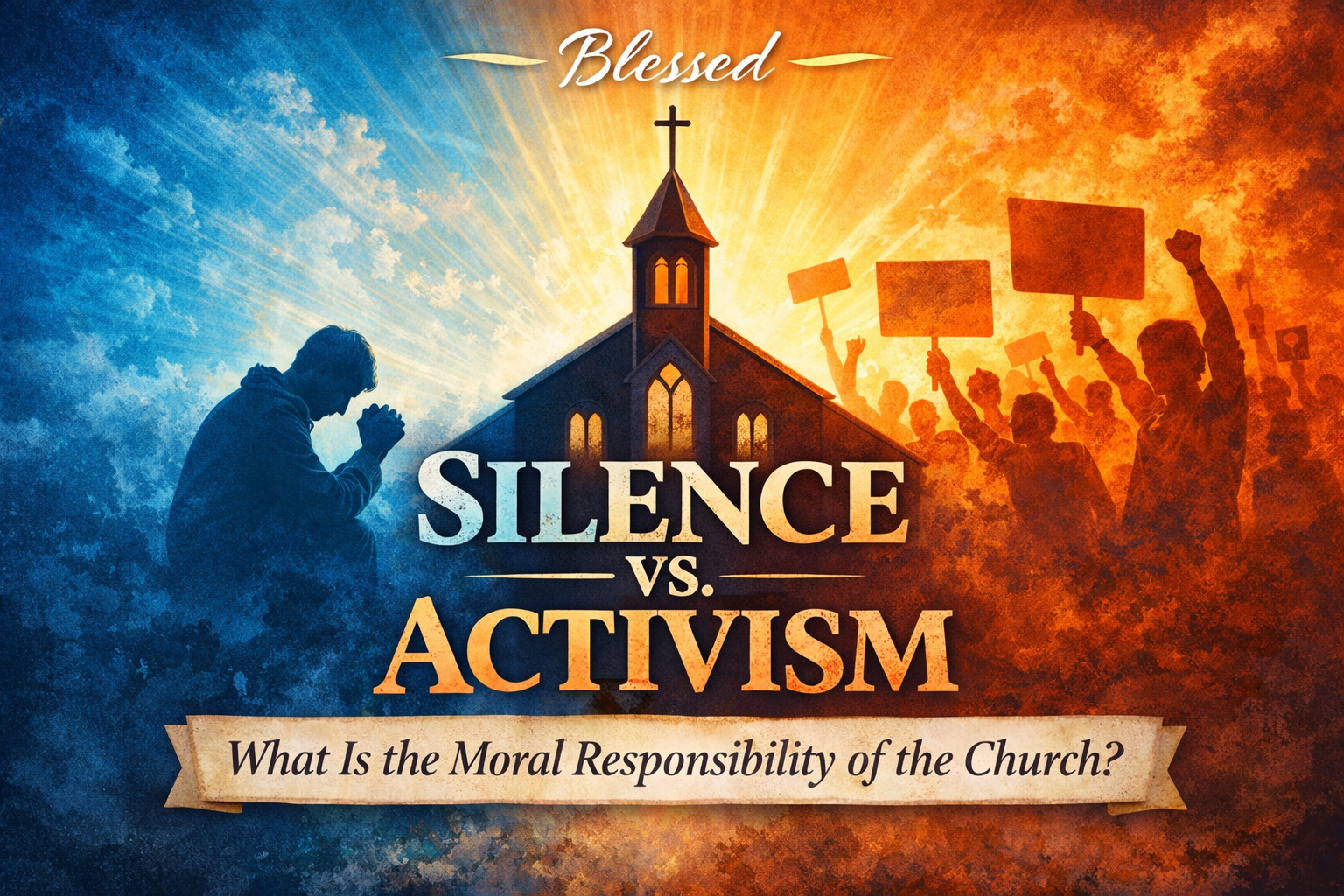
Silence vs. Activism: What Is the Moral Responsibility of the Church?
In every generation, the Church is confronted with a defining question:
Should it remain silent, or should it rise and speak?
This is more than a social issue; it is a deeply spiritual one.
When injustice spreads, communities suffer, truth is distorted, and the vulnerable are ignored, many believers begin to ask:
What does God expect from His Church?
Is silence a sign of wisdom?
Or can silence become complicity?
Is activism a distraction from the gospel?
Or can it be a true expression of the gospel?
These are difficult questions, but they are necessary.
The moral responsibility of the Church has never been merely to exist within society.
It has always been called to be light in darkness, truth in confusion, and hope in moments of pain.
The Church Was Never Called to Be Passive
The Church was never designed to be a silent witness to moral decline.
Jesus said:
“You are the light of the world. A city set on a hill cannot be hidden.” — Matthew 5:14
Light is meant to shine.
It exposes darkness, guides the lost, and brings clarity where confusion reigns.
When the Church chooses silence in moments that demand truth, it risks dimming the very light Christ called it to carry.
There are times when silence reflects wisdom, patience, and discernment.
But there are also times when silence becomes fear.
Sometimes silence protects comfort rather than conscience.
In such moments, the Church must ask itself:
Are we preserving peace, or are we avoiding responsibility?
When Silence Becomes a Moral Failure
There is a clear difference between being prayerful and being passive.
Throughout Scripture, God calls His people to stand against injustice.
The prophet Isaiah declared:
“Learn to do good; seek justice, correct oppression; bring justice to the fatherless, plead the widow’s cause.” — Isaiah 1:17
This is not optional.
It is a moral responsibility.
When people are oppressed, exploited, abused, or silenced, the Church cannot hide behind neutrality.
Neutrality in the face of evil often favors the powerful.
Silence during moments of suffering can deepen the wounds of those already in pain.
A church that never speaks against injustice may unintentionally communicate that suffering does not matter.
This is where the issue becomes deeply emotional.
Many hurting people have walked away from faith—not because they rejected God, but because they felt abandoned by those who claimed to represent Him.
That reality should move the heart of every believer.
But What About Activism?
This is where many Christians struggle.
Some fear that activism pulls the Church away from the gospel.
That concern is understandable.
The Church must never become merely political, ideological, or reactionary.
Its mission is greater than trends and public opinion.
However, true biblical activism is not about noise.
It is about righteous action rooted in truth, compassion, and love.
Jesus Himself actively confronted wrong.
He defended the marginalized.
He challenged corrupt leadership.
He stood with the broken.
He exposed hypocrisy.
When He entered the temple and drove out those exploiting worshippers, He took visible action against corruption.
“My house shall be called a house of prayer, but you have made it a den of thieves.” — Matthew 21:13
This teaches us a powerful truth:
holy activism is not rebellion against God’s order; it is obedience to God’s heart.
The Church’s Responsibility Is Both Spiritual and Practical
The Church’s calling is not limited to preaching sermons.
It must also embody the message it proclaims.
Faith without visible compassion loses credibility.
James writes:
“Faith by itself, if it does not have works, is dead.” — James 2:17
This means the Church must respond both spiritually and practically.
That includes:
- praying for healing and justice
- speaking truth boldly
- caring for the vulnerable
- supporting the poor
- defending those who are mistreated
- promoting peace and reconciliation
- standing for righteousness
The Church is not called to perform for applause.
It is called to serve faithfully.
This fits beautifully with the spiritually transformative and practical content you have been building for your audience.
The Danger of Loud Activism Without Christ
While silence can be dangerous, activism without spiritual grounding can also become destructive.
The Church must not speak from rage alone.
Its voice must be shaped by:
- truth
- wisdom
- love
- humility
- discernment
The Bible reminds us:
“Speaking the truth in love.” — Ephesians 4:15
Truth without love becomes harsh.
Love without truth becomes compromise.
The Church’s moral responsibility is to hold both together.
This is what makes Christian activism different from worldly outrage.
It is not driven by hatred.
It is driven by redemption.
What Should the Church Do Today?
This is where the message becomes practical and actionable.
The Church should honestly ask:
- Where are people hurting in our community?
- What injustice needs our voice?
- Who is being ignored?
- Are we speaking truth with compassion?
- Are we acting from fear or from faith?
Practical actions may include:
- organizing community support
- helping struggling families
- speaking against abuse and corruption
- creating spaces for healing and dialogue
- mentoring young people
- advocating for justice rooted in biblical values
Sometimes moral responsibility begins with one courageous voice.
Sometimes it begins with refusing to stay silent.
Final Thought: The Church Must Be Both Voice and Hands
The real question is not simply silence versus activism.
The deeper question is:
Does our response reflect the heart of Christ?
The Church must be a voice for truth.
It must also be hands for healing.
There are times to pray quietly.
There are times to speak boldly.
There are times to act visibly.
Wisdom lies in discerning what love requires in each moment.
The Church was never called to be absent from human pain.
It was called to bring Christ into it.
That is its moral responsibility.
That is its witness.
That is its power