
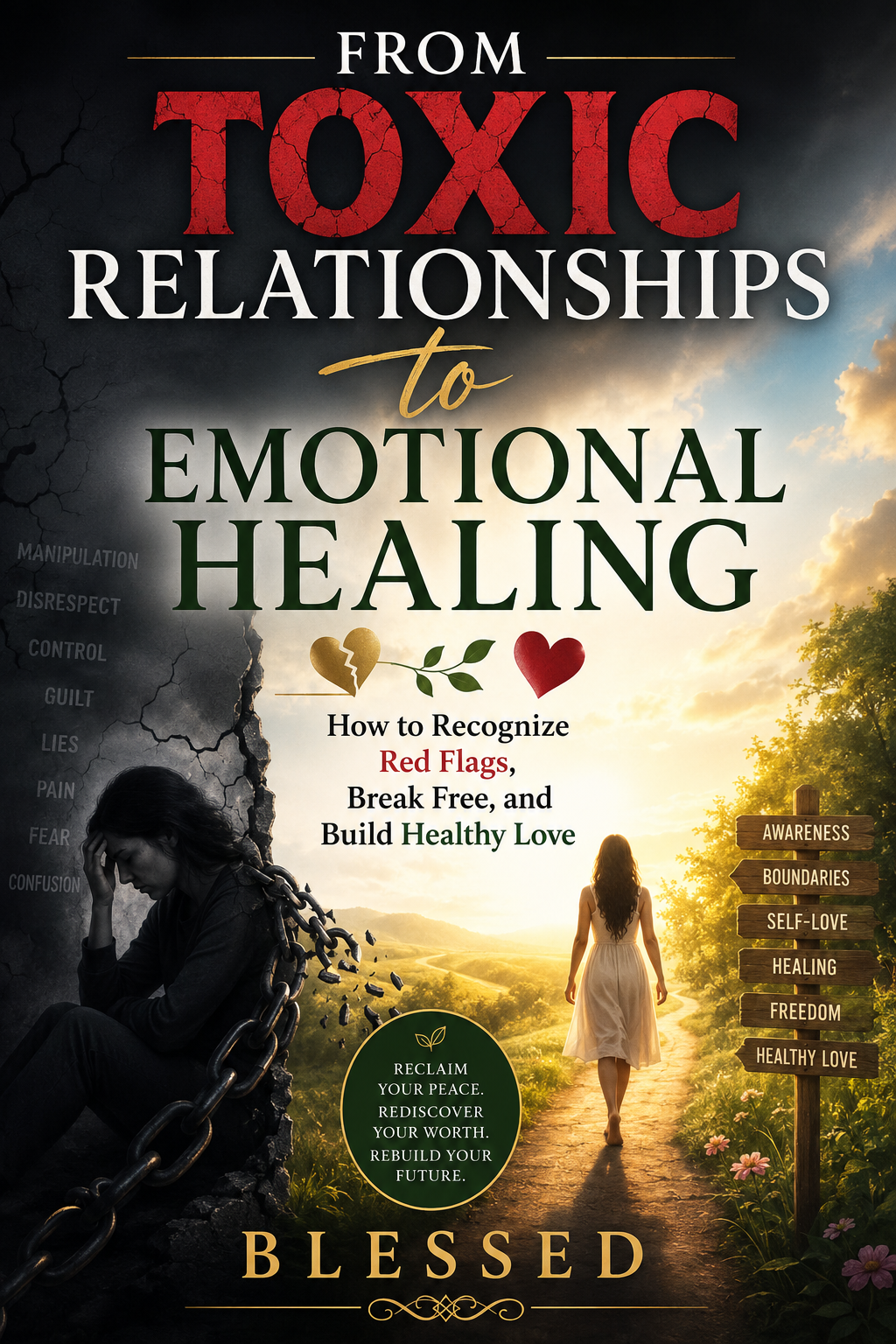
Recognize the danger, reclaim your peace, and rebuild your life
Introduction
A healthy relationship should bring peace, trust, support, and emotional safety. It should help you grow, feel valued, and become a better version of yourself.
But toxic relationships do the opposite.
Instead of bringing happiness, they create confusion, stress, emotional pain, and mental exhaustion. Over time, they slowly damage your confidence, peace of mind, and emotional well-being.
Many people remain in unhealthy relationships because of:
- Fear of being alone
- Emotional attachment
- Hope that things will change
- Guilt
- Low self-esteem
- Fear of starting over
Sadly, toxic behavior rarely changes without true accountability and serious effort.
The good news is this:
- You can recognize unhealthy behavior.
- You can walk away from emotional pain.
- You can heal emotionally and mentally.
- You can build healthier relationships in the future.
This guide will help you:
- Identify the signs of a toxic relationship
- Understand how toxic relationships affect your life
- Learn practical ways to break free safely
- Heal emotionally after leaving
- Avoid repeating unhealthy relationship patterns
- Build healthier, stronger relationships in the future
What Is a Toxic Relationship?
A toxic relationship is any relationship that consistently harms your emotional, mental, or physical well-being.
Instead of helping you grow, it drains your energy, weakens your confidence, and steals your peace.
Toxic relationships can exist in:
- Romantic relationships
- Friendships
- Family relationships
- Workplace relationships
The common sign is simple:
You constantly feel emotionally unsafe, manipulated, disrespected, stressed, or emotionally exhausted.
10 Major Signs of a Toxic Relationship
1. Constant Criticism and Blame
Toxic people rarely take responsibility for their actions.
Instead, they constantly blame others.
You may hear things like:
- “Everything is your fault.”
- “You made me angry.”
- “You’re the problem.”
Over time, this destroys self-confidence and creates emotional confusion.
2. Manipulation and Guilt-Tripping
Manipulation often hides behind fake love or concern.
Examples include:
- Making you feel guilty for setting boundaries
- Using emotions to control your decisions
- Twisting situations to avoid responsibility
- Constantly playing the victim
Healthy love does not rely on guilt, fear, or emotional control.
3. Disrespect for Boundaries
A toxic person may ignore your emotional or personal boundaries.
Examples include:
- Reading your messages without permission
- Demanding all your time and attention
- Ignoring your need for privacy
- Pressuring you into uncomfortable situations
Respect is necessary in every healthy relationship.
4. Emotional Unpredictability
One moment, they seem loving and caring.
The next moment, they become cold, angry, or cruel.
This emotional instability creates anxiety and keeps you constantly nervous or emotionally drained.
You may begin walking on eggshells to avoid conflict.
5. Isolation From Friends and Family
Toxic individuals often try to separate you from supportive people.
They may:
- Criticize your loved ones
- Create unnecessary drama
- Demand all your attention
- Make you feel guilty for spending time with others
Isolation increases emotional dependence and weakens your support system.
6. Gaslighting
Gaslighting is emotional manipulation that makes you question your own reality.
Examples include:
- Denying things they clearly said or did
- Saying you are “too sensitive.”
- Making you doubt your memory or judgment
Over time, gaslighting damages confidence and increases emotional confusion.
7. Controlling Behavior
Control is not love.
Toxic control may include:
- Monitoring your movements
- Checking your phone constantly
- Controlling finances
- Telling you what to wear
- Controlling who you talk to
Healthy relationships allow freedom, trust, and individuality.
8. Lack of Emotional Support
In toxic relationships, your emotions, goals, and needs often feel ignored.
Instead of encouragement, you experience:
- Criticism
- Dismissal
- Emotional neglect
- Indifference
A healthy relationship supports your growth instead of weakening your confidence.
9. Repeated Broken Promises
Toxic cycles often include repeated apologies without real change.
They may promise to improve after every conflict, but continue the same harmful behavior.
Real change requires action—not empty words.
10. Emotional Exhaustion
One of the clearest signs of toxicity is how you feel after spending time with the person.
You may feel:
- Drained
- Anxious
- Unhappy
- Confused
- Emotionally overwhelmed
Healthy love should bring peace more often than pain.
Why Toxic Relationships Are Hard to Leave
Leaving a toxic relationship is emotionally difficult for many reasons.
You may still:
- Love the person
- Hope they will change
- Fear loneliness
- Worry about starting over
- Feel emotionally dependent
- Fear judgment from others
Toxic relationships often create unhealthy emotional attachment through cycles of pain and temporary affection.
This emotional confusion can make leaving extremely difficult.
However, staying in constant emotional pain slowly damages your mental and emotional health.
How to Break Free From a Toxic Relationship
1. Accept the Reality
Healing begins with honesty.
Stop making excuses for repeated emotional harm.
Acceptance gives you clarity, wisdom, and strength.
2. Reach Out for Support
Do not isolate yourself.
Talk to people you trust, such as:
- Friends
- Family members
- Counselors
- Faith leaders
- Support groups
Healing becomes easier when you are surrounded by supportive people.
3. Create Strong Boundaries
Boundaries protect your emotional peace and mental well-being.
Clearly define:
- What behavior will you not tolerate?
- How do you expect to be treated?
- What happens if disrespect continues
Healthy boundaries are necessary—not selfish.
4. Build a Safe Exit Plan
Some situations require careful preparation before leaving.
Helpful steps may include:
- Saving emergency funds
- Gathering important documents
- Finding a safe place to stay
- Protecting passwords and personal accounts
- Informing trusted people
Preparation creates safety and confidence.
5. Limit or Cut Off Contact
Continued communication can restart unhealthy emotional cycles.
Toxic individuals may try to:
- Manipulate you emotionally
- Make false promises
- Use guilt or fear
- Pull you back into unhealthy patterns
Distance helps emotional healing begin.
How to Heal After Leaving a Toxic Relationship
1. Allow Yourself to Feel
Healing requires emotional honesty.
You may experience:
- Sadness
- Anger
- Relief
- Fear
- Loneliness
- Confusion
These emotions are normal.
Do not judge yourself for grieving.
2. Rebuild Your Identity
Toxic relationships often damage self-esteem and personal identity.
Reconnect with yourself by:
- Exploring hobbies
- Learning new skills
- Spending peaceful time alone
- Rediscovering forgotten dreams
- Setting new life goals
You are more than your past pain.
3. Practice Daily Self-Care
Healing improves when you care for your emotional, mental, physical, and spiritual health.
Simple self-care habits include:
- Getting enough rest
- Eating healthy meals
- Exercising regularly
- Spending time in nature
- Journaling
- Prayer and meditation
- Reading uplifting books
Small healthy habits rebuild emotional strength over time.
4. Replace Negative Thoughts With Positive Truths
Toxic relationships often leave painful mental scars.
Replace harmful thoughts like:
- “I’m not enough.”
- “Nobody will love me.”
- “Everything was my fault.”
With healthier truths like:
- “I deserve respect.”
- “I am healing.”
- “My peace matters.”
- “I can build a better future.”
- “Healthy love exists.”
Your thoughts influence your recovery.
5. Forgive Yourself
Many people blame themselves after toxic relationships.
You may regret:
- Ignoring red flags
- Staying too long
- Believing false promises
But healing requires self-compassion.
Learn from the experience without condemning yourself.
How to Avoid Another Toxic Relationship
1. Take Time Before Dating Again
Rushing into another relationship before healing often repeats unhealthy patterns.
Give yourself enough time to recover emotionally and mentally.
2. Learn the Red Flags Early
Past experiences can become valuable lessons.
Watch out for:
- Excessive jealousy
- Manipulation
- Disrespect
- Dishonesty
- Emotional instability
- Controlling behavior
Early awareness protects your peace.
3. Strengthen Your Self-Worth
People with healthy self-worth are less likely to tolerate emotional mistreatment.
Remind yourself daily:
- My feelings matter.
- My boundaries matter.
- My peace matters.
- I deserve healthy love.
Confidence protects emotional health.
4. Take Relationships Slowly
Time reveals character.
Pay attention to:
- How they handle conflict
- How they treat other people
- Whether their actions match their words
- How they respond to boundaries
Healthy people respect patience, honesty, and emotional safety.
5. Maintain Your Independence
A healthy relationship should add value to your life—not control it.
Continue pursuing:
- Personal goals
- Friendships
- Career growth
- Spiritual growth
- Self-care routines
Balance helps prevent emotional dependence.
Qualities of a Healthy Relationship
Healthy relationships are built on:
- Respect
- Honesty
- Trust
- Emotional safety
- Good communication
- Mutual support
- Accountability
- Healthy boundaries
- Peace and stability
True love should help you grow—not destroy your confidence.
Final Thoughts
Healing from a toxic relationship takes time, courage, patience, and intentional growth.
Some days may feel difficult, but every step forward matters.
Remember:
- Your past does not define your future.
- Walking away from emotional harm is strength—not weakness.
- Healing is possible.
- Healthy love begins with self-respect.
- Peace is more valuable than toxic attachment.
The right relationship should protect your heart—not constantly break it.
Conclusion
Toxic relationships can leave deep emotional wounds, but they do not have to control your future.
By recognizing unhealthy patterns, setting firm boundaries, prioritizing healing, and strengthening self-worth, you can break free from emotional pain and build healthier relationships.
Your healing journey may take time, but every step toward peace, clarity, and emotional freedom is worth it.
Choose relationships that bring:
- Respect
- Growth
- Safety
- Trust
- Genuine love
Because you deserve peace—not pain.