
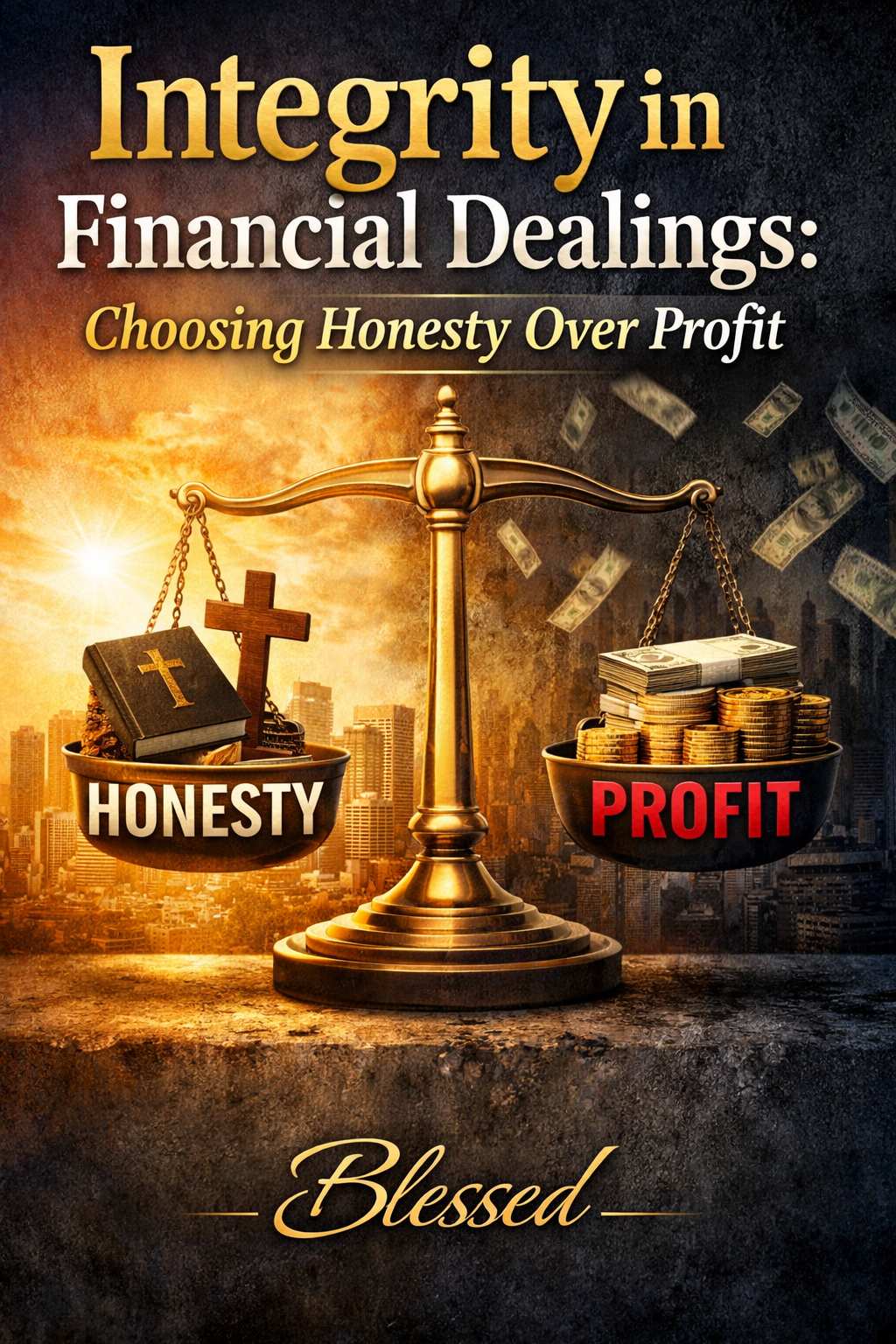
Introduction: When Money Reveals Character
Money has a unique way of exposing who we truly are.
When financial pressure rises, the temptation to take shortcuts, hide the truth, manipulate figures, or chase profit at any cost can become overwhelming. For some, the lure of quick money can seem more appealing than doing what is right. For others, fear, desperation, or urgent needs may make dishonest choices feel almost justifiable.
Yet one truth remains constant: money gained without integrity often comes with a heavy price.
It may offer temporary comfort or short-term success, but it can silently destroy trust, damage relationships, stain reputations, and rob a person of inner peace.
Integrity in financial dealings goes far beyond avoiding theft or fraud. It is about choosing honesty, fairness, accountability, and transparency in every decision involving money.
In a world where many celebrate outcomes without questioning the methods used to achieve them, choosing honesty is a powerful reflection of character and maturity.
Why Integrity Matters in Financial Dealings
Integrity means doing what is right even when no one is watching.
Whether in business transactions, personal finances, salary negotiations, contracts, borrowing, lending, or everyday exchanges, honesty builds a solid foundation that can stand the test of time.
Dishonest gain may appear attractive in the moment, but trust once lost is often difficult to recover.
People may forget words, but they rarely forget how someone handled money matters.
They remember whether you were truthful, fair, dependable, and transparent.
Trust is a form of wealth far more valuable than money itself.
Once broken, it may take years to rebuild.
The Hidden Cost of Dishonest Profit
Sometimes the desire for financial gain can cloud judgment.
This can show up in different ways, such as:
- falsifying records
- overcharging clients
- hiding important financial details
- misrepresenting product quality
- refusing to repay debts
- taking advantage of vulnerable people
At first, these actions may seem small or harmless.
But small compromises often grow into destructive habits.
What begins as “just this once” can gradually become a pattern of dishonesty.
Sooner or later, the consequences follow.
These consequences may include:
- a damaged reputation
- legal consequences
- broken trust in relationships
- lost opportunities
- emotional guilt and mental burden
Dishonest profit may increase your bank balance for a while, but it often decreases your peace of mind.
Honesty Builds Lasting Success
True success is sustainable.
Businesses and individuals who practice financial integrity build loyal customers, trusted partnerships, and stronger communities.
People naturally return to those they trust.
A business owner who is transparent about pricing earns respect.
An employee who manages funds responsibly becomes reliable.
A leader who refuses corruption inspires confidence.
Integrity may not always produce instant financial rewards, but it builds long-term credibility.
And credibility opens doors that money alone cannot unlock.
Integrity in Personal Financial Life
Financial honesty is not limited to the workplace or business environment.
It also applies to everyday personal life.
This includes:
- repaying borrowed money on time
- being honest in shared expenses
- honoring financial promises
- avoiding manipulation for personal gain
- being transparent in family finances
Even among family members and close friends, money issues can become a major source of pain when honesty is missing.
Financial truthfulness strengthens relationships and helps prevent unnecessary conflict.
Choosing Integrity Under Pressure
The real test of character often comes during difficult seasons.
When bills begin to pile up, opportunities become scarce, or economic hardship increases, the temptation to compromise may become stronger.
But this is exactly when integrity matters the most.
Choosing honesty in hard times is a sign of strength.
It means believing that doing what is right is more valuable than a temporary advantage.
Sometimes honesty may cost you an immediate opportunity.
But it protects your reputation, your conscience, and your future.
The Emotional Reward of Honest Living
There is something deeply powerful about living with a clear conscience.
When your financial dealings are honest, you rest better.
You speak with confidence.
You do not live in fear of being exposed.
Peace comes from knowing that your success is built on truth.
Money earned with integrity carries dignity.
It brings confidence instead of anxiety.
A Faith-Based Perspective on Financial Integrity
For Christians, financial integrity is also a spiritual responsibility.
Money should never become an excuse to compromise values.
Choosing honesty reflects faith, discipline, and reverence for God.
A true blessing is not merely having wealth.
It is having wealth without sacrificing character.
Integrity honors both God and people.
Practical Ways to Maintain Financial Integrity
Here are practical ways to remain honest in financial matters:
1. Be Transparent
Always communicate clearly about prices, fees, terms, and expectations.
2. Keep Accurate Records
Whether for personal use or business, maintain truthful and well-organized documentation.
3. Avoid Greed-Driven Decisions
Ask yourself:
Am I doing this because it is right, or simply because it is profitable?
4. Honor Agreements
Keep your promises, especially those involving money.
5. Protect Your Reputation
Never allow short-term profit to destroy long-term trust.
Conclusion: Profit Without Integrity Is Never Worth It
Money can build lives, businesses, and opportunities.
But when it is gained through dishonesty, it often destroys more than it creates.
Integrity in financial dealings is a mark of wisdom, maturity, and lasting success.
Choosing honesty over profit may not always be easy, but it is always worth it.
Because in the end, character outlives cash.
And trust remains one of the greatest assets anyone can possess.