
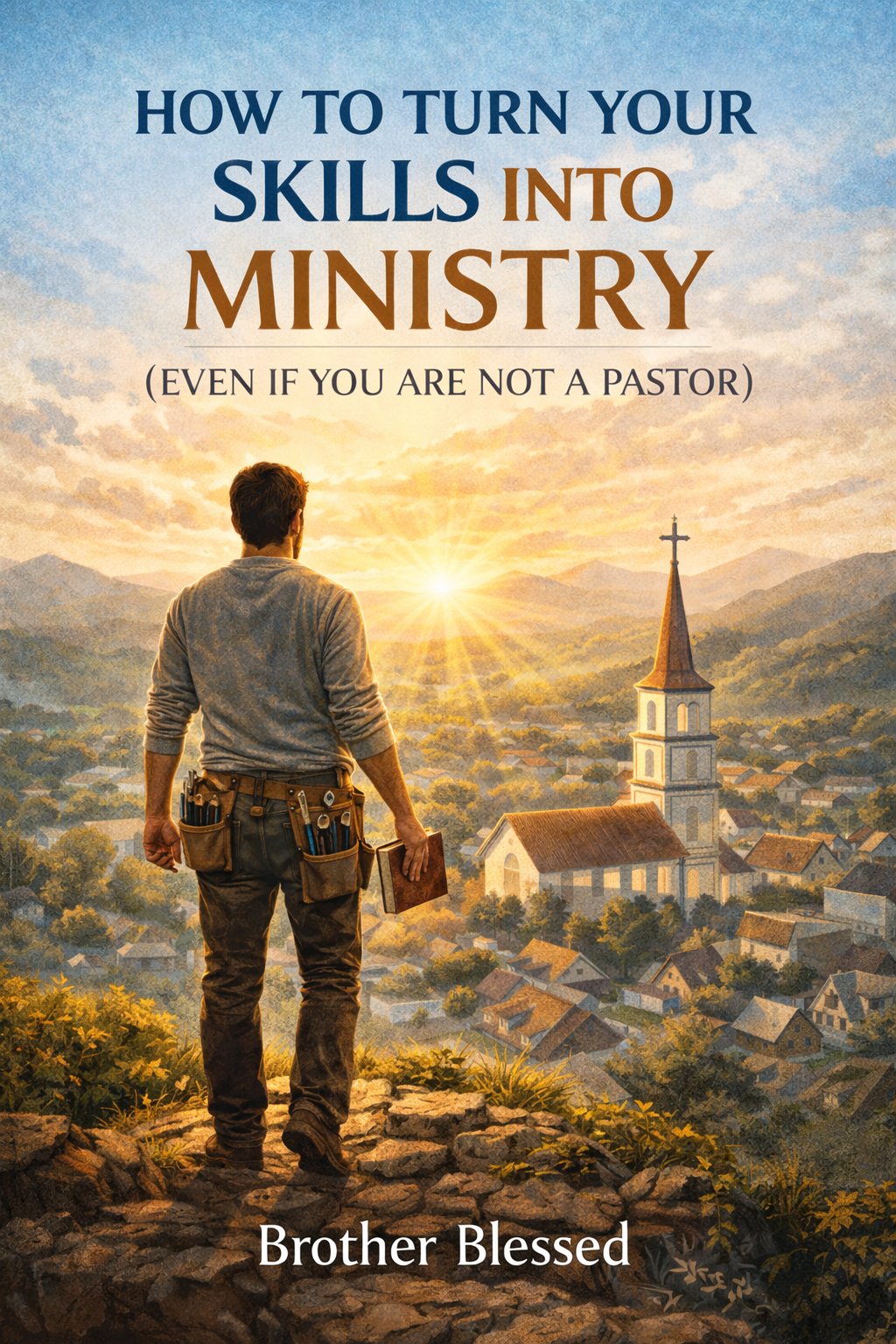
How to Turn Your Skills Into Ministry (Even If You Are Not a Pastor)
Serving God doesn’t require a pulpit—just a willing heart and the gifts He already gave you.
Many Christians feel a deep desire to serve God, but they hold back because they think:
- “I’m not a pastor.”
- “I’m not called to preach.”
- “I don’t know how to minister.”
- “I don’t have the boldness to speak in church.”
But here is the truth:
- Ministry is not limited to preaching. Ministry is using what you have to reveal God where you are.
Your skills—whether simple, professional, technical, creative, or artistic—are not just talents. They are tools God wants to use to bless His kingdom, touch lives, and fulfill your purpose.
This article will show you exactly how to identify your God-given skills and step confidently into ministry, no matter your background.
1. Ministry Is Not a Title — It Is Impact
You don’t need a collar, microphone, or church office to serve God.
- A singer ministers
- A writer ministers
- A business person ministers
- A designer ministers
- A teacher ministers
- A nurse ministers
- A cook ministers
- A tech expert ministers
- A caregiver ministers
Every Christian has a calling.
Not everyone is called to preach—but everyone is called to contribute.
2. Do a Simple “Skill Audit” (What You Already Have Is Enough)
To begin turning your skills into a ministry, start by identifying your strengths.
Use this 3-category audit:
A. Natural Skills (What comes easily to you?)
Examples:
- Encouraging others
- Organization
- Creativity
- Singing
- Fixing things
- Teaching
- Leading
- Hospitality
- Listening
- Writing
These gifts are often the simplest doorway to ministry.
B. Learned or Professional Skills
Skills you gained through:
- School
- Training
- Work experience
- Certifications
Examples:
- Accounting
- Graphic design
- Website development
- Social media management
- Photography
- Law
- Medical skills
- Construction
- IT support
- Engineering
- Marketing
These skills can build, support, or expand church projects and outreach.
C. Spiritual Gifts
These come directly from God:
- Word of wisdom
- Word of knowledge
- Teaching
- Healing
- Prophecy
- Intercession
- Evangelism
- Administration
- Leadership
- Giving
- Mercy
Identifying your spiritual gifts helps you serve effectively and joyfully.
3. How Your Skills Become Ministry: Practical Examples
Let’s make this real. Here’s how ordinary skills turn into powerful ministry:
- A Graphic Designer
Creates church flyers, scripture graphics, and social media content that reaches thousands. - A Teacher
Mentors teenagers, teaches Bible fundamentals, or starts a children’s discipleship class. - A Cook or Caterer
Feeds volunteers, blesses the needy, or supports church events with hospitality. - A Writer
Creates devotionals, testimonies, articles, and study guides that strengthen believers. - A Business Professional
Mentors young entrepreneurs, helps churches with budgeting, or teaches financial stewardship. - A Tech or IT Expert
Handles livestreaming, church websites, audio systems, or cybersecurity. - A Musician or Singer
Leads worship, records gospel covers, or trains children’s choirs. - A Counselor or Listener
Supports hurting members or helps with emotional and spiritual care ministries. - A Social Media User
Shares scripture, creates reels, encourages people online, or leads online prayer rooms. - A Construction Worker or Carpenter
Helps renovate buildings, build altars, or support missionary structures.
Your skill = someone’s answer to prayer.
4. Simple Steps to Turn Your Skills Into Ministry
Follow this actionable pathway:
Step 1: Identify Your Strengths
From the audit, choose:
- Your top 3 natural skills
- Your top 3 learned skills
- Your top 2 spiritual gifts
These become your ministry tools.
Step 2: Ask God Where He Wants You to Serve
Pray:
- “Lord, show me how to use what I have for Your glory.”
God will guide you to the right environment.
Step 3: Start With Small Acts of Service
Examples:
- Offer to help your church with something small
- Volunteer one hour per week
- Send encouraging messages to three people daily
- Create content for your church WhatsApp group
- Help someone for free using your skill
Small seeds become big ministries.
Step 4: Partner With Your Local Church
Tell your pastor or ministry leader:
- “Here are my skills.”
- “How can I help?”
Churches always need tech, media, teaching, children’s ministry, administration, prayer, evangelism, and support roles.
Step 5: Serve Online If You Cannot Serve Physically
You can minister globally through:
- YouTube
- TikTok
- A blog
- WhatsApp broadcasts
- Email devotionals
- Instagram reels
- Podcasts
Your phone can be your pulpit.
Step 6: Remain Teachable and Humble
God uses people with:
- Availability
- Teachability
- Faithfulness
Not perfection.
Step 7: Build Consistency
Ministry grows through daily, weekly, or monthly commitment.
Consistency builds impact.
Impact builds influence.
Influence expands ministry.
5. Ministries You Can Start Right Now (No Title, No Permission Needed)
Here are immediate ministry ideas:
- A daily WhatsApp devotional
- A YouTube Bible study channel
- A prayer group (3–10 people)
- A kids’ Bible club in your neighborhood
- A Christian blog
- A social media page for encouragement
- A visitation ministry (hospitals, elderly, prisons)
- A skill-based ministry (design, tech, music, teaching, finance)
- A community outreach team
- A Bible verse challenge
- A charity project for the needy
You already have what God needs.
6. Final Reminder: Ministry Is Who You Are, Not What You Do
You don’t need to be a pastor to serve God.
You only need:
- A skill
- A willing heart
- A love for people
- A desire to glorify God
Your profession can become your pulpit.
Your skill can become your ministry.
Your life can become your message.
And when you use what God placed in your hands, He opens doors you never imagined.