
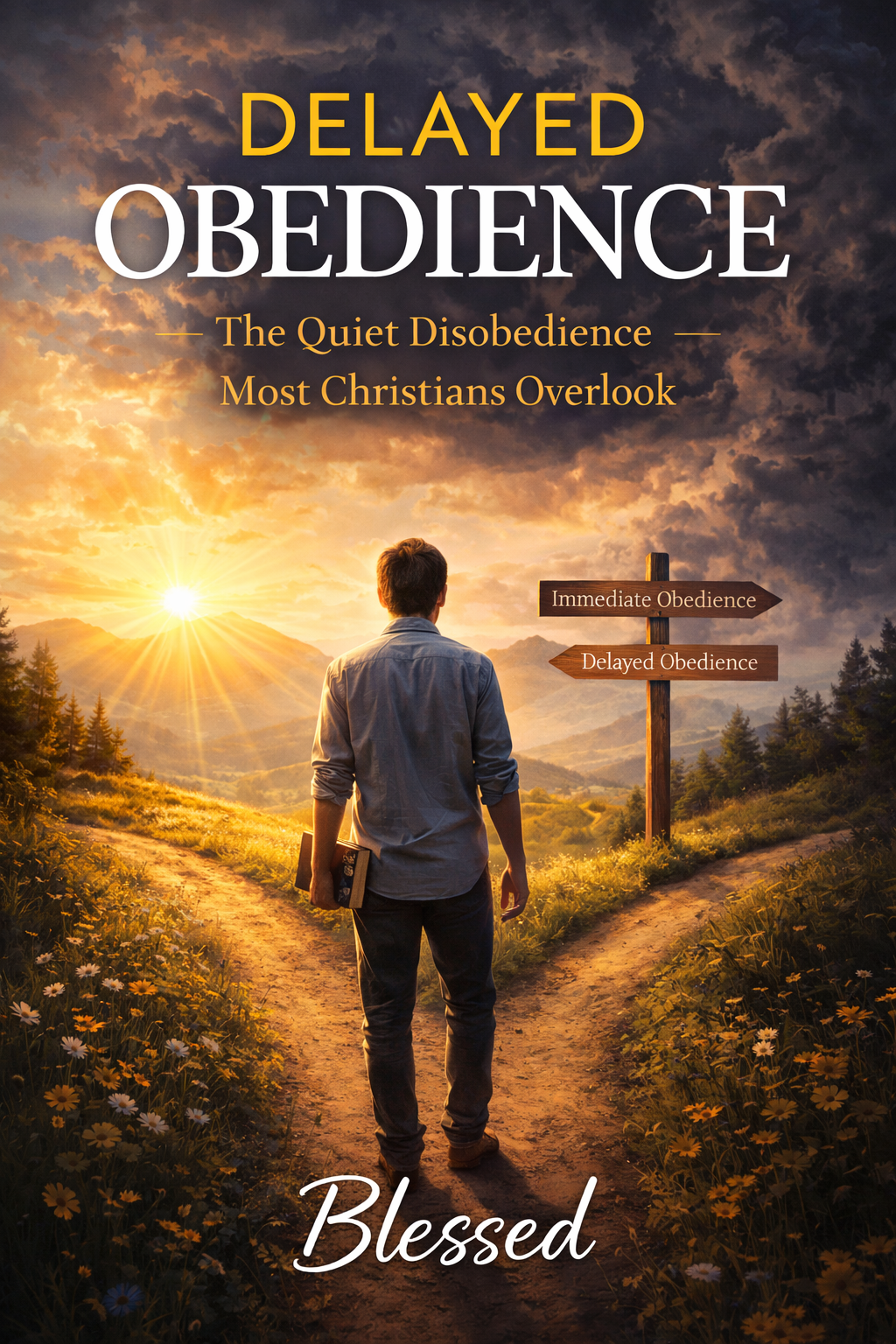
Introduction
Many Christians believe disobedience only occurs when someone openly refuses to obey God. However, there is another form of disobedience that is far more common, subtle, and dangerous—delayed obedience.
Delayed obedience often sounds spiritual. It hides behind phrases like “I’m still praying about it,” “I’ll do it later,” or “I’m waiting for confirmation.” Yet in many cases, God has already spoken, and the delay itself becomes disobedience.
This article exposes delayed obedience, explains why it happens, and shows how to break free from it.
1. What Is Delayed Obedience?
Delayed obedience occurs when God gives clear instruction, conviction, or direction, but we postpone acting on it.
It can involve:
- Delaying forgiveness
- Delaying repentance
- Delaying obedience to a calling
- Delaying reconciliation
- Delaying generosity
- Delaying steps of faith
Scripture is clear:
“Today, if you hear His voice, do not harden your hearts.” — Hebrews 3:15
God emphasizes timing. Obedience is meant to be immediate, not convenient.
2. Why Delayed Obedience Is Dangerous
A. It Gradually Hardens the Heart
Every delay makes the heart less sensitive to God’s voice. What once felt urgent begins to feel optional.
B. It Creates Spiritual Stagnation
Many believers wonder why their spiritual lives feel stuck. Often, progress is blocked by unfinished obedience.
C. It Opens the Door to Fear and Doubt
Delay allows fear, excuses, and overthinking to grow. The longer obedience is postponed, the heavier it feels.
D. It Can Cost Opportunities
Some instructions are time-sensitive. Delayed obedience can result in missed blessings, connections, or assignments.
3. Biblical Examples of Delayed Obedience
Jonah
God instructed Jonah to go to Nineveh. He delayed and ran in the opposite direction. His delay led to storms, danger, and suffering.
King Saul
Saul delayed full obedience and chose partial obedience instead. His delay cost him his kingdom.
The Rich Young Ruler
He desired eternal life but delayed obedience when asked to release his possessions. His hesitation revealed misplaced priorities.
In contrast: Abraham
Abraham obeyed immediately—and entered into covenant blessings.
4. Common Reasons Christians Delay Obedience
- Fear of the unknown
- Fear of people’s opinions
- Comfort and convenience
- Desire for control
- Over-spiritualizing decisions
- Waiting for “perfect conditions”
Obedience rarely feels comfortable—but it always requires faith.
5. Signs You May Be Delaying Obedience
- You feel convicted about the same issue repeatedly
- You know what God is asking, but keep postponing it
- You feel spiritually restless
- You keep asking God the same question
- You experience resistance instead of peace
God often repeats instructions not because He is unclear—but because we are hesitant.
6. How to Break Free from Delayed Obedience
1. Identify the Last Thing God Told You to Do
Ask yourself honestly: What instruction have I been postponing?
Start there.
2. Stop Asking for New Instructions
God rarely gives new directions until previous ones are obeyed.
3. Act in Faith, Not Feelings
Obedience is based on trust, not emotion. You don’t need to feel ready—only willing.
4. Obey in Small Steps
You don’t have to do everything at once. Take one clear step today.
5. Pray for Courage, Not Comfort
Ask God for boldness to obey, not reasons to delay.
6. Accept That Obedience Comes Before Understanding
God often explains after obedience, not before it.
7. What Happens When You Obey Immediately
Immediate obedience produces:
- Spiritual clarity
- Peace of conscience
- Open doors
- Divine alignment
- Accelerated growth
- Deeper intimacy with God
Obedience creates momentum.
Conclusion: Obedience Delayed Is Obedience Denied
Delayed obedience may appear harmless, but it quietly weakens faith and postpones breakthroughs. God speaks clearly—and He expects a response.
If God has been speaking to you about something specific, today is the day to act.
Not tomorrow.
Not later.
Not when it feels easier.
Because obedience is most powerful when it is immediate.