
Introduction
Many Christians understand disobedience as something obvious—open rebellion, deliberate sin, or a direct rejection of God’s commands. But there is another form of disobedience that is far more common, more subtle, and often more dangerous: delayed obedience.
It rarely looks dramatic. It does not always appear as wrongdoing. Instead, it quietly hides inside delay.
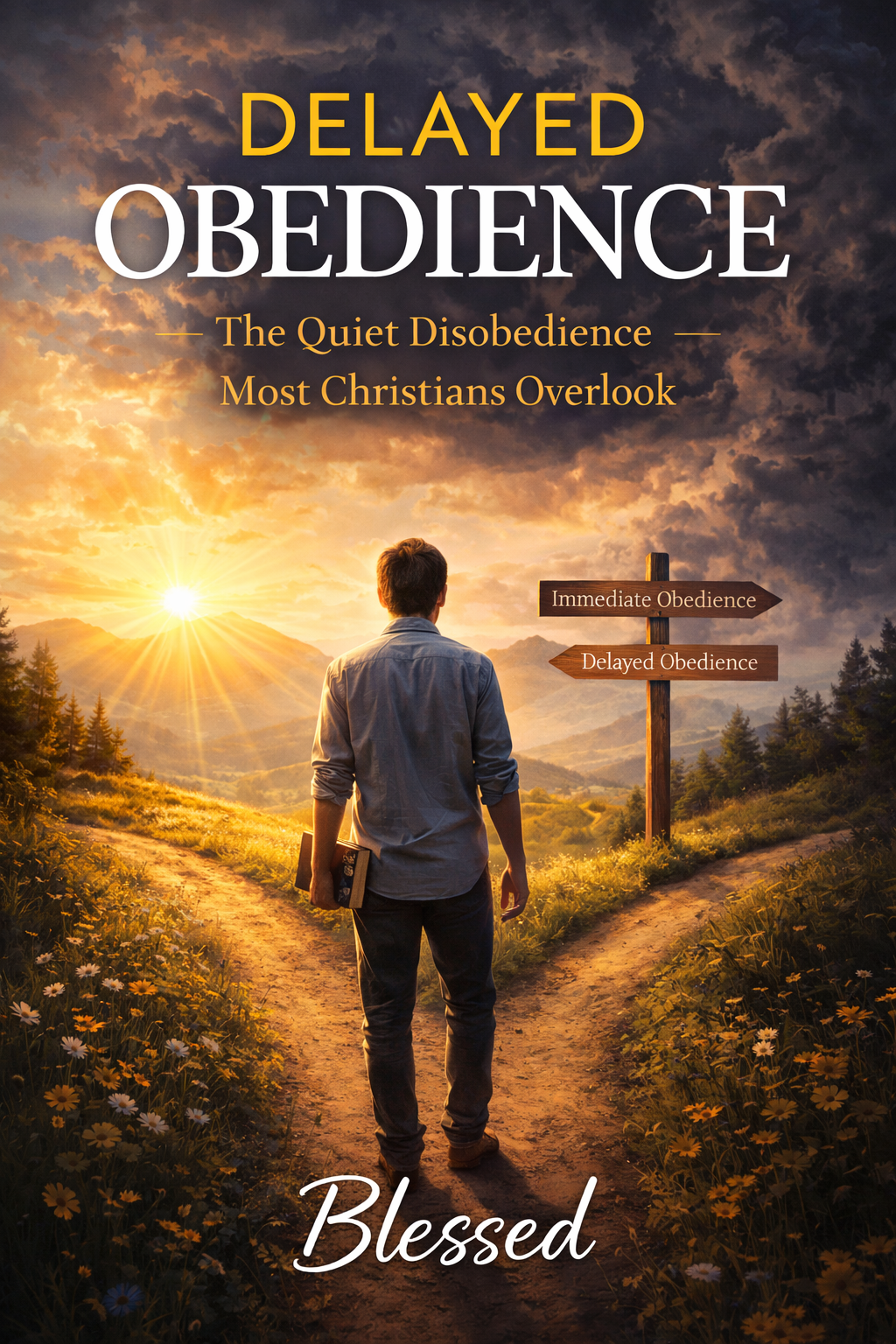
Delayed obedience is the gap between the moment God speaks and the moment we respond. It is the quiet decision to say, “I will do it… just not yet.”
It often disguises itself in spiritual language:
- “I’m still praying about it.”
- “I need more confirmation.”
- “I’m waiting for the right timing.”
While prayer and patience are important, they can slowly become excuses when God has already spoken clearly.
This article explains what delayed obedience is, why it is spiritually dangerous, provides biblical examples, and explains how to break free from it.
1. What Is Delayed Obedience?
Delayed obedience happens when God gives clear instruction, conviction, or direction—but we postpone acting on it.
It is not outright rejection. It is a delayed yes.
In God’s system, timing is not separate from instruction; it is often part of the instruction itself.
Common examples of delayed obedience:
- Delaying forgiveness after conviction
- Postponing repentance from known sin
- Ignoring a call to ministry or service
- Avoiding reconciliation in relationships
- Withholding generosity due to fear
- Refusing steps of faith until everything feels clear
Scripture gives a clear warning:
“Today, if you hear His voice, do not harden your hearts.” — Hebrews 3:15
The word “today” shows that God expects a timely response, not a postponed one.
2. Why Delayed Obedience Is Dangerous
A. It Gradually Hardens the Heart
Every delay weakens spiritual sensitivity. What once felt urgent slowly becomes less important. Over time, conviction fades, and obedience feels optional.
This is how hearts harden—not suddenly, but slowly.
B. It Leads to Spiritual Stagnation
Many believers feel spiritually stuck even while praying and attending church. One hidden cause may be incomplete obedience.
Spiritual growth often works in stages—each act of obedience unlocks the next level. When one instruction is ignored, progress can stall.
C. It Strengthens Fear and Doubt
Delay gives room for fear to grow. What was once clear becomes complicated. Doubt, overthinking, and external opinions begin to replace confidence in God’s voice.
D. It Can Block Time-Sensitive Opportunities
Some instructions are tied to seasons. When that season passes, the opportunity may not return in the same way.
God’s timing is not random—obedience keeps us aligned with it.
3. Biblical Examples
Jonah — Delay Through Avoidance
Jonah avoided God’s instruction to go to Nineveh. His delay led to storms, consequences, and a detour inside a great fish. Even after that, he still had to obey—but the journey became harder.
King Saul — Partial Obedience
Saul obeyed God partially but modified the instruction. Partial obedience is still disobedience, and it cost him his kingship.
The Rich Young Ruler — Delay Through Hesitation
He desired eternal life but walked away sorrowful after Jesus gave him instruction. His hesitation revealed what truly had his heart.
Abraham — Immediate Obedience
Abraham obeyed immediately without full understanding. His quick response led to covenant blessing, divine friendship, and generational impact.
4. Common Reasons Christians Delay Obedience
- Fear of the unknown
- Fear of people’s opinions
- Comfort and attachment to routine
- Desire for control over timing
- Mistaking delay for spiritual waiting
- Waiting for perfect conditions before acting
But faith is not proven in comfort—it is proven in obedience.
5. Signs of Delayed Obedience
You may be delaying obedience if:
- You feel convicted repeatedly about the same issue
- You already know what God is asking, but haven’t acted
- Your spiritual life feels dry or stagnant
- You keep asking questions you already know the answer to
- You feel restless or unsettled inside
- You feel resistance when thinking about obedience
When God repeats Himself, it is often not confusion—it is a call for action.
6. How to Break Free from Delayed Obedience
1. Identify the Last Clear Instruction
Ask honestly: What is the last thing I clearly believe God told me to do?
Start there.
2. Stop Seeking New Direction Before Obedience
New direction often comes after obedience—not before it.
3. Act by Faith, Not Feelings
You don’t need to feel ready. Faith begins with obedience, not emotion.
4. Take the Next Step
Don’t wait for the full picture. Do the next thing you already understand.
5. Pray for Courage, Not Comfort
Ask God for strength to obey even when it feels uncomfortable.
6. Understand That Clarity Often Comes After Obedience
In many cases, understanding follows action—not the other way around.
7. What Happens When You Obey Immediately
Immediate obedience produces spiritual transformation:
- Clearer spiritual direction
- Inner peace and stability
- Open doors and divine alignment
- Accelerated spiritual growth
- Deeper intimacy with God
Obedience is not just duty—it is alignment with God’s purpose.
Conclusion
Delayed obedience is dangerous not because it looks like rebellion, but because it looks harmless.
Yet over time, it quietly affects spiritual growth, clarity, and destiny.
Often, God is not waiting for more prayer—He is waiting for a response.
If God has already spoken, the right answer is not “later,” but “now.”
Because obedience is most powerful when it is immediate.
FAQs
1. What is delayed obedience in Christianity?
It is when a believer postpones acting on a clear instruction from God instead of responding immediately.
2. Is waiting on God the same as delayed obedience?
No. Waiting on God means seeking clarity when direction is not yet clear. Delayed obedience happens when God has already spoken clearly, but we delay action.
3. Why is delayed obedience dangerous spiritually?
It can harden the heart, slow spiritual growth, increase fear, and cause believers to miss divine timing.
4. Can God still fulfill His plan if I delay obedience?
Yes. God remains sovereign, but delay can affect timing, increase difficulty, or lead to missed opportunities.
5. How do I know if I am delaying obedience?
If you repeatedly feel conviction about the same instruction but have not acted on it, you may be delaying obedience.
6. What is the first step to overcoming delayed obedience?
Identify the last clear instruction you believe God gave you and take immediate action.
“What has God been speaking to you about recently? Share your thoughts in the comments.”