
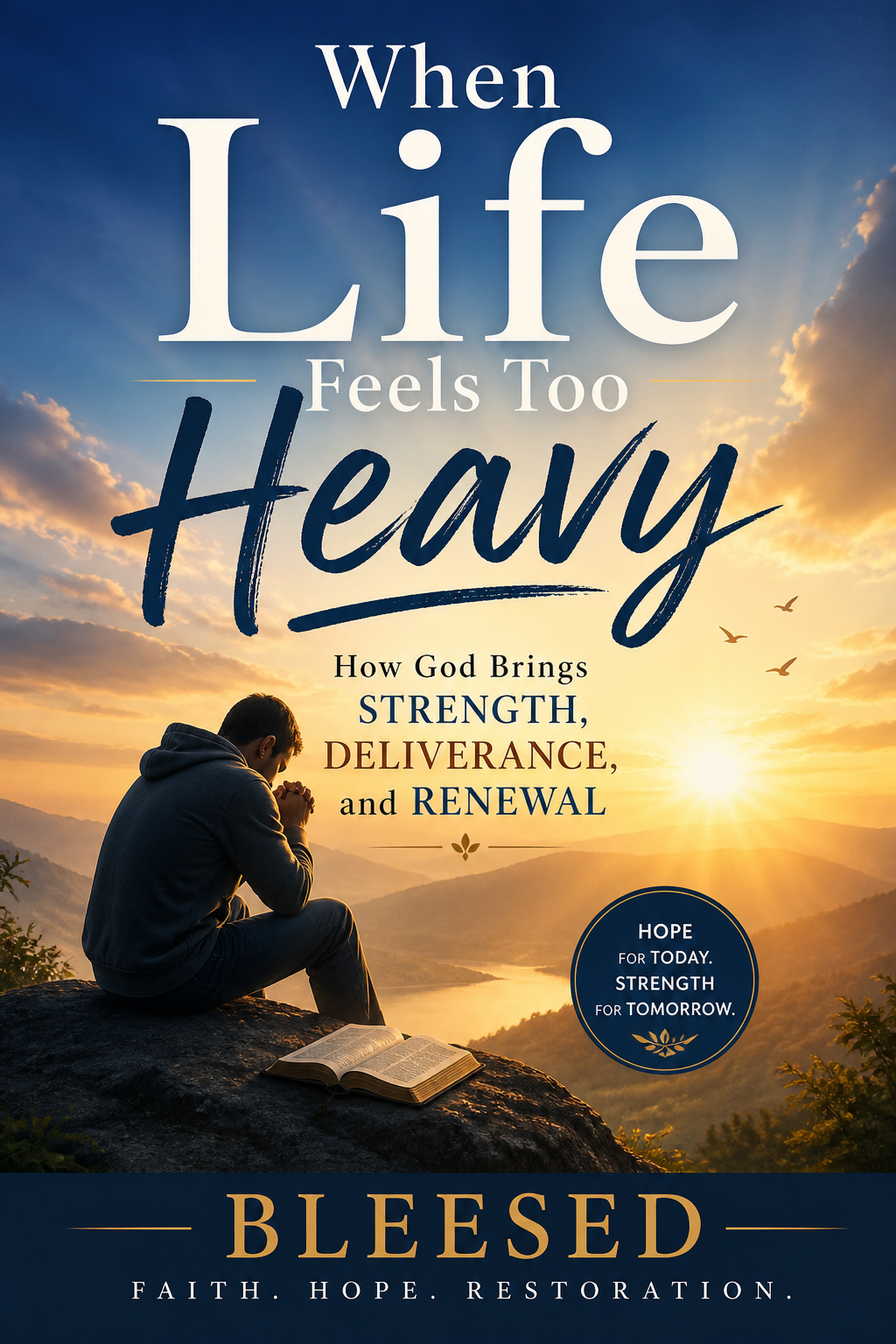
Introduction: When the Weight of Life Feels Too Much
There are seasons in life when everything feels emotionally, mentally, and spiritually exhausting.
You pray sincerely.
You try to remain hopeful.
You believe things will eventually improve.
Yet the challenges continue.
Some people quietly struggle with fear and anxiety. Others battle discouragement, emotional pain, unhealthy habits, confusion, or repeated disappointments. Outwardly, they may appear strong, but inwardly, they are carrying burdens nobody sees.
During difficult moments, many people silently ask questions such as:
“God, why is this happening?”
“Why do I feel stuck?”
“Will things ever change?”
The Bible reminds us that many faithful people experienced seasons of weakness, uncertainty, and struggle. Yet throughout Scripture, God continually met people with strength, wisdom, comfort, and restoration.
Difficult seasons do not always mean God has abandoned you.
Sometimes, the moment when human strength feels exhausted becomes the moment a person begins to depend more deeply on God.
Psalm 46:1 says:
“God is our refuge and strength, a very present help in trouble.”
What Biblical Deliverance Really Means
Biblical deliverance is more than simply escaping problems.
According to Scripture, deliverance involves God helping people move from fear, confusion, hopelessness, destructive patterns, and spiritual darkness into peace, healing, wisdom, and renewed strength.
Throughout the Bible, God helped people in impossible situations:
- He delivered the Israelites from slavery in Egypt.
- He protected Daniel in the lions’ den.
- He rescued Jonah after his rebellion.
- Jesus healed the brokenhearted and restored people who were suffering.
Colossians 1:13 says:
“Who hath delivered us from the power of darkness, and hath translated us into the kingdom of his dear Son.”
True spiritual renewal often begins when a person sincerely turns toward God and allows Him to guide their life.
When It Is Time to Seek God More Deeply
One powerful example is found in the story of Jonah.
After running from God’s instruction, Jonah found himself trapped inside the belly of a great fish. In that dark and desperate moment, he cried out sincerely to God.
Jonah 2:2 says:
“I cried by reason of mine affliction unto the Lord, and he heard me.”
God answered Jonah at his lowest point.
This teaches an important truth: difficult seasons can sometimes lead people into deeper faith, humility, and dependence on God.
Many believers seek God more seriously during seasons such as:
- emotional exhaustion
- fear and anxiety
- spiritual emptiness
- repeated disappointment
- confusion about life direction
- overwhelming pressure
- personal failure
- discouragement after long delays
Psalm 50:15 says:
“And call upon me in the day of trouble: I will deliver thee, and thou shalt glorify me.”
Seeking God during difficult times is not a weakness. It is wisdom.
Signs You May Need Spiritual Renewal
Everyone experiences stress, setbacks, and emotional struggles at times. However, there are moments when a person realizes they need deeper spiritual renewal and inner peace.
Some signs may include:
- constant worry and inner unrest
- loss of motivation or hope
- unhealthy thought patterns
- emotional heaviness
- spiritual dryness
- recurring destructive habits
- feeling disconnected from God
- persistent discouragement
The Bible encourages believers to remain spiritually alert and intentional.
1 Peter 5:8 says:
“Be sober, be vigilant.”
Spiritual alertness means guarding your thoughts, making wise decisions, staying prayerful, and refusing to drift carelessly through life.
While spiritual growth and prayer are important, emotional struggles and mental health challenges may also require support from trusted family members, pastors, counselors, or healthcare professionals.
The Story of Jabez: Refusing to Stay Limited
In 1 Chronicles 4:10, the Bible introduces a man named Jabez.
His life began with pain and difficulty, yet he refused to believe his future had to remain that way. Instead, he prayed boldly and sincerely for God’s help and direction.
Scripture says:
“And God granted him that which he requested.”
The story of Jabez reminds us that painful beginnings do not have to determine a person’s future.
Past mistakes, disappointments, or struggles do not cancel God’s ability to transform a life.
Daniel’s Story: Trusting God in Difficult Situations
Daniel remained faithful to God even when it placed him in danger.
Because of his convictions, he was thrown into a lion’s den. Humanly speaking, the situation appeared hopeless.
But God protected him.
Daniel 6:22 says:
“My God hath sent his angel, and hath shut the lions’ mouths.”
Daniel’s story teaches that God can give peace, strength, and protection even during overwhelming situations.
People cannot always control what happens around them, but they can choose where they place their trust.
Jeremiah 17:7 says:
“Blessed is the man that trusteth in the Lord.”
A Real-Life Lesson About Persistence
There was a family that struggled for many years with financial hardship, limited opportunities, and repeated setbacks. Generation after generation, nobody seemed able to rise beyond a certain level.
Many family members accepted the situation as normal and believed nothing could change.
However, one young man refused to give up. He began praying seriously, improving himself, learning new skills, and connecting with wise and positive people.
Over time, new opportunities opened for him. Through persistence, discipline, faith, and wise decisions, his life gradually changed, and he later became a source of encouragement to others in his family.
This story teaches an important lesson:
A difficult beginning does not mean a person must remain trapped forever.
Galatians 6:9 says:
“Let us not be weary in well doing: for in due season we shall reap, if we faint not.”
Practical Biblical Steps Toward Spiritual Strength
Spiritual growth requires intentional effort. Peace and stability are strengthened through healthy habits, wise choices, and a consistent relationship with God.
1. Build a Consistent Prayer Life
Prayer helps believers stay connected to God’s wisdom and peace.
It is not merely a religious routine but honest communication with God.
Psalm 40:1 says:
“I waited patiently for the Lord; and he inclined unto me, and heard my cry.”
2. Study God’s Word Regularly
The Bible strengthens faith, renews the mind, and provides guidance for daily living.
Hebrews 4:12 says:
“For the word of God is quick and powerful.”
Reading Scripture consistently helps believers grow spiritually and make wiser decisions.
3. Remove Harmful Influences
What people constantly watch, listen to, or entertain can affect emotional and spiritual health.
Toxic relationships, bitterness, dishonesty, and destructive habits can slowly weaken spiritual growth.
Healthy change often requires difficult but necessary decisions.
4. Stay Spiritually and Emotionally Aware
Discernment matters.
Believers should pay attention to their emotional condition, thought patterns, and spiritual habits instead of ignoring warning signs.
Growth often begins when people honestly evaluate their lives and seek God’s direction.
5. Surround Yourself With a Healthy Christian Community
Isolation can increase discouragement.
Healthy friendships, wise mentors, pastors, and supportive Christian communities can encourage growth and accountability.
Ecclesiastes 4:9 says:
“Two are better than one.”
How to Maintain Spiritual Peace and Stability
One important truth many people overlook is this:
Spiritual growth must be maintained consistently.
Jesus warned about spiritual emptiness in Matthew 12:43–45. The lesson is clear: people should not simply remove unhealthy patterns but also fill their lives with truth, purpose, and spiritual growth.
Lasting peace requires daily commitment.
Stay Passionate About Your Relationship With God
A healthy spiritual life grows through prayer, worship, obedience, and consistent fellowship with God.
Romans 12:11 says:
“Fervent in spirit; serving the Lord.”
Pursue Integrity and Holiness
Holiness is not about pretending to be perfect.
It is about sincerely choosing a life that honors God both publicly and privately.
Character matters.
Integrity matters.
Private choices matter.
Fill Your Life With Positive Spiritual Habits
A spiritually empty life easily becomes discouraged.
Fill your daily life with:
- prayer
- worship
- Scripture
- wise relationships
- service
- gratitude
- spiritual discipline
Healthy spiritual habits create stronger emotional and spiritual stability.
Put Your Hope Fully in God
People may disappoint you.
Situations may change unexpectedly.
But God remains faithful.
Jeremiah 17:7–8 says:
“Blessed is the man that trusteth in the Lord.”
Real peace grows when trust is rooted in God rather than temporary circumstances.
God Still Restores Lives
Many people carry hidden burdens.
Some are emotionally tired. Others feel spiritually weak or mentally overwhelmed. Yet the Bible continually points people back to hope.
God still comforts the discouraged.
He still strengthens weary hearts.
He still gives wisdom to those who seek Him sincerely.
No difficult season lasts forever.
Your present struggle is not necessarily your final destination.
Conclusion: Difficult Seasons Can Become Turning Points
Deliverance is not only about escaping hardship. It is also about becoming stronger, wiser, spiritually mature, and more dependent on God.
Sometimes people discover God’s strength most clearly when their own strength feels exhausted.
If you are walking through a difficult season, do not lose hope.
Keep praying.
Keep growing.
Keep trusting God.
Psalm 34:17 says:
“The righteous cry, and the Lord heareth, and delivereth them out of all their troubles.”
With God, restoration is always possible.