
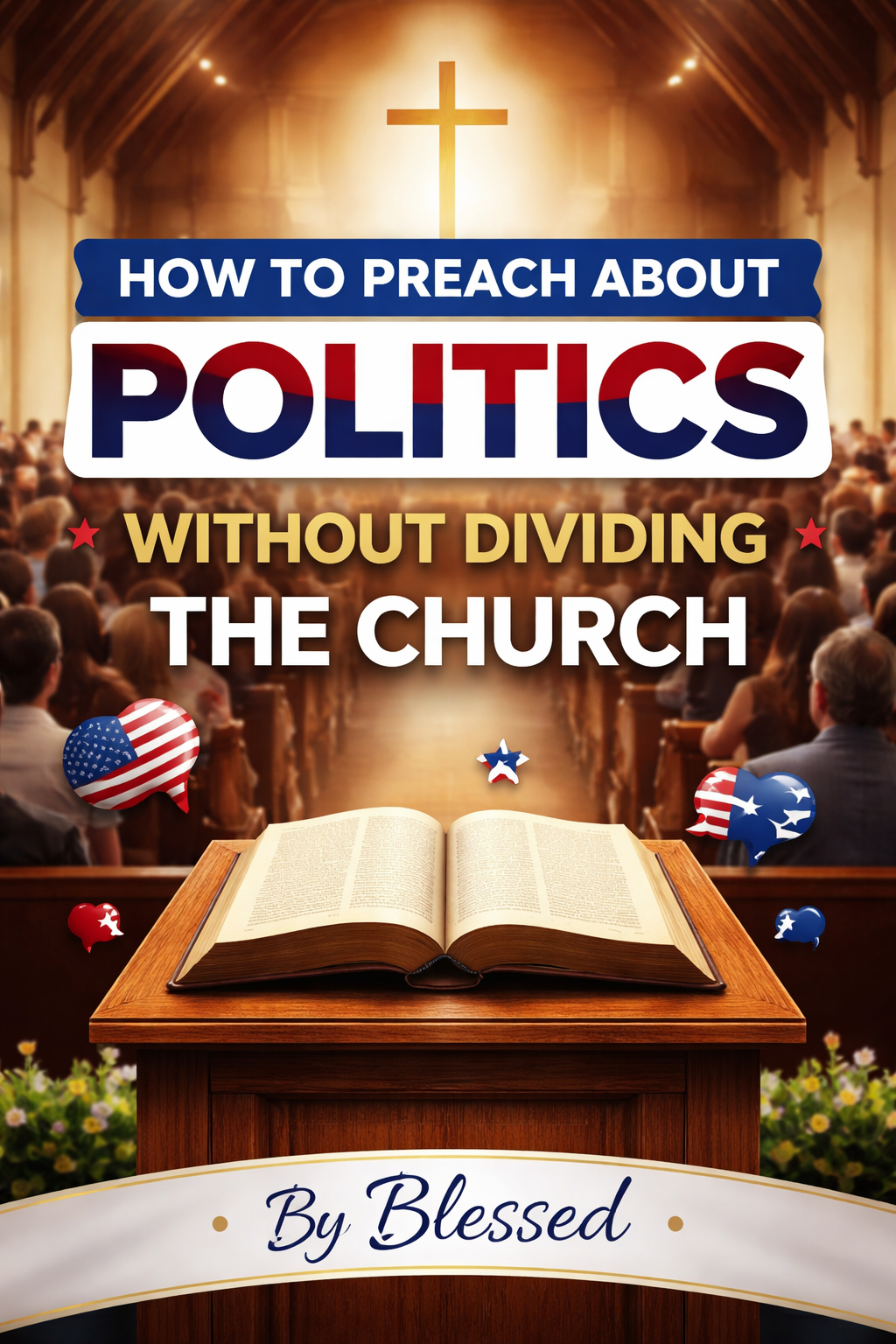
Introduction
In today’s world, few subjects stir emotions as quickly as politics.
The moment political issues enter a conversation, opinions can become deeply personal, voices may rise, and relationships can become strained. Now imagine bringing that same conversation into the church—a place meant for worship, healing, truth, and unity.
This is where many pastors and church leaders face one of the most delicate challenges of modern ministry.
How do you address political realities without turning the pulpit into a battlefield?
How do you speak truth without creating tension among believers?
How do you guide people through issues that affect society while still preserving the unity of the body of Christ?
The answer lies not in silence, but in wisdom.
Preaching about politics does not have to divide the church when it is handled with spiritual maturity, biblical balance, and a genuine heart for unity.
Why Politics Can Easily Divide the Church
Politics is rarely just about policies.
For many people, it is deeply connected to personal experiences, family history, economic struggles, cultural identity, and hopes for the future.
This is why political conversations often carry emotional weight.
Within the church, members may worship side by side while holding very different views on leadership, governance, justice, and public issues.
One sermon may inspire one person and offend another.
One statement may be received as truth by some and as bias by others.
That is why preaching on political matters requires more than intelligence—it requires discernment.
The church must never become a space where people feel spiritually attacked because of their opinions.
Instead, it should remain a place where truth is spoken with grace and where Christ remains above every earthly system.
Keep Jesus at the Center of Every Message
This is the most important principle:
keep Christ at the center.
The moment politics becomes the focus of the sermon, division becomes easier.
People do not gather in church to hear campaign speeches or party slogans.
They come to hear the Word of God.
The role of the preacher is not to promote parties, personalities, or political movements.
The assignment is to lift biblical truth.
Focus on values that Scripture clearly teaches, such as:
- justice
- mercy
- truth
- peace
- righteousness
- compassion
- honesty
- accountability
When Jesus remains the focus, people are more likely to receive the message spiritually rather than defensively.
The church belongs to the Kingdom of God first.
Every other identity must remain secondary.
Preach Biblical Values, Not Personal Preferences
One of the fastest ways to create division is to allow personal political opinions to take over the sermon.
People can quickly sense when a message sounds more like personal frustration than divine instruction.
Instead of telling people what side to take, help them understand the biblical values that should shape their decisions.
Talk about:
- godly leadership
- justice for the oppressed
- honesty in public office
- The importance of truth
- compassion for the vulnerable
- peace and reconciliation
This approach empowers people to think through issues with spiritual maturity.
It leads them toward wisdom rather than pressure.
Let Scripture Lead the Conversation
The pulpit must always stand on Scripture.
Whenever political matters overlap with moral or spiritual issues, begin with the Bible.
Let God’s Word shape the conversation.
Teach passages that speak on:
- justice and mercy
- leadership and responsibility
- truth and integrity
- peace and unity
- caring for the poor
- Praying for those in authority
When Scripture leads, the sermon carries spiritual authority.
This also helps prevent the message from sounding reactionary or emotionally driven by current events.
Avoid Divisive and Condemning Language
Language can either heal or harm.
Words spoken from the pulpit carry enormous weight.
Avoid language that creates an “us versus them” atmosphere.
Do not shame people for holding different views.
Do not mock, insult, or stereotype.
Instead of speaking in ways that corner people, use language that invites reflection.
For example, rather than saying:
“Anyone who believes this is wrong.”
Try saying:
“As believers, we may see issues differently, but we must always return to biblical truth and love.”
This keeps the church atmosphere safe, respectful, and spiritually healthy.
Protect the Unity of the Church
The church is not united by political agreement.
Christ unites it.
People may differ in social opinions, economic perspectives, or national concerns, but their identity in Jesus must remain greater than every political label.
This truth should be emphasized often.
Remind believers that they are brothers and sisters before they are voters, supporters, or critics.
The church must model what the world often struggles to demonstrate:
disagreement without hatred.
Address Moral Issues With Courage and Wisdom
Some public issues cannot be ignored because they directly touch on biblical morality.
Matters such as corruption, injustice, oppression, poverty, violence, and human dignity deserve the church’s voice.
But the focus should always remain on the spiritual and moral principles involved.
Speak boldly about righteousness.
Speak clearly about justice.
Speak compassionately about truth.
Let the message call people higher spiritually rather than pushing them into political camps.
Encourage Prayer Instead of Polarization
One of the healthiest ways to address political tension is to lead people into prayer.
Prayer changes the atmosphere.
It moves hearts away from hostility and toward humility.
Encourage the church to pray for:
- leaders
- nations
- peace
- wisdom
- justice
- healing
A praying church is less likely to become a divided church.
Prayer softens pride and reminds everyone that ultimate authority belongs to God.
Teach Grace in Disagreement
Not every believer will think the same way.
That is reality.
But difference does not have to mean division.
Teach your congregation how to disagree with maturity.
Teach them to listen before reacting.
Teach them to respect one another.
Teach them to keep love above opinions.
This is one of the greatest testimonies the church can offer in a divided world.
Final Thoughts
Preaching about politics without dividing the church is not about avoiding difficult subjects.
It is about approaching them with wisdom, humility, and biblical truth.
When Christ remains the center, Scripture remains the foundation, and unity remains the goal, even sensitive topics can strengthen rather than fracture the church.
The mission of the church is bigger than politics.
It is to raise disciples who think biblically, live truthfully, and love deeply.
In the end, the message should always lead people back to this:
truth with love, conviction with humility, and unity in Christ above all else.