
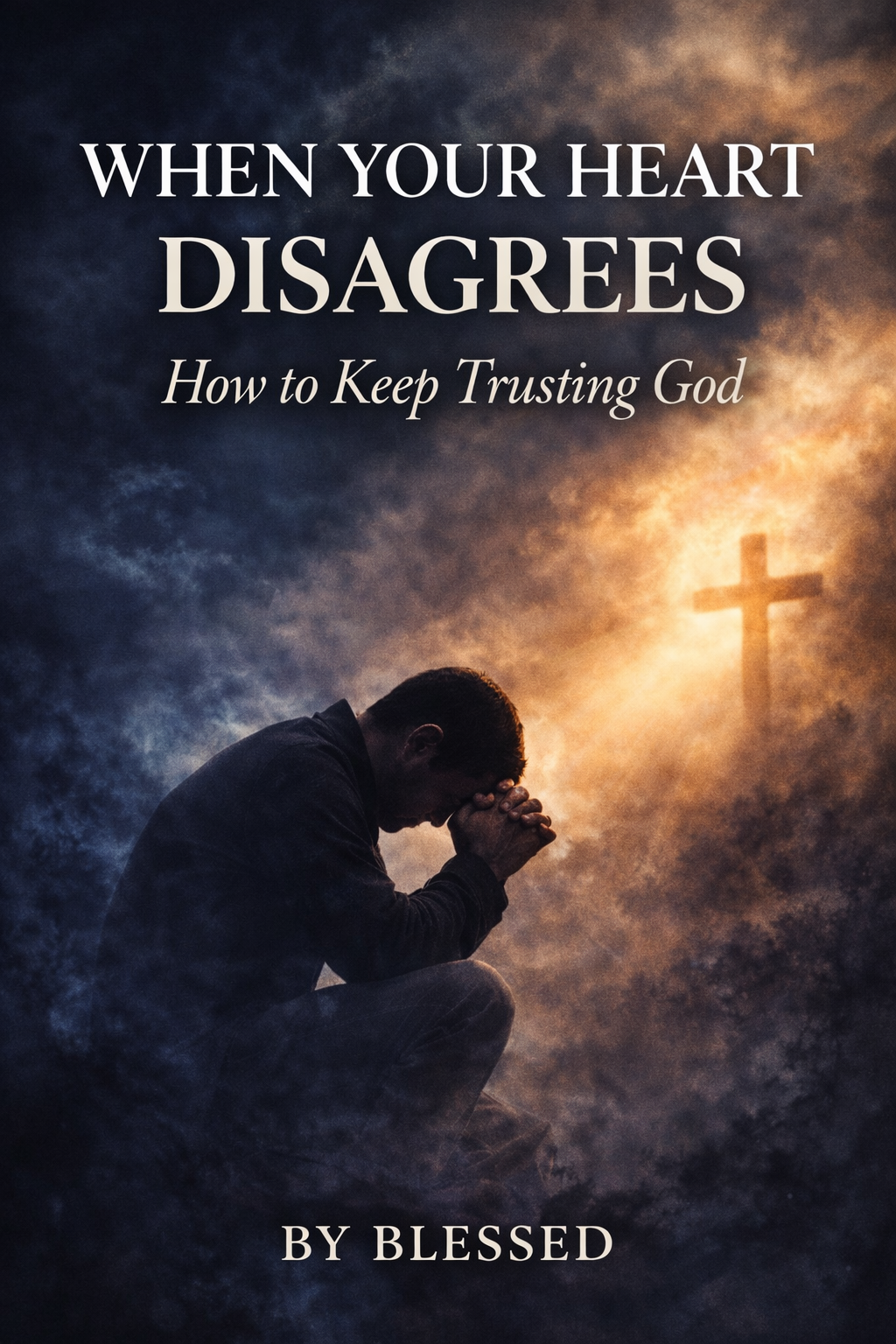
When Your Heart Disagrees: How to Keep Trusting God
There are moments in life when faith and feelings seem to be at war.
Your mind knows what God has said, but your heart struggles to agree. You believe His promises, yet your emotions tell a different story. You pray, you read the Word, and still fear, doubt, disappointment, and pain rise within you.
This inner conflict is one of the most difficult battles in the Christian walk.
You may know that God is faithful, but your heart feels abandoned.
You may believe that He is in control, but your emotions feel overwhelmed.
You may trust His plan, yet everything within you wants to question it.
If you have ever found yourself in this place, you are not alone.
The truth is, trusting God is often tested most deeply when your heart disagrees.
Why the Heart Sometimes Disagrees
The heart reacts to what it feels in the present moment.
Pain, delay, rejection, disappointment, loss, and uncertainty can all create emotional resistance. Sometimes what God is doing in your life does not immediately make sense to your emotions.
Your heart may ask:
- Why is this happening?
- Why is God silent?
- Why has nothing changed?
- Why do I still feel this way?
These questions are real and human.
Sometimes your emotions are shaped by what you see, while faith is built on what God has said.
This creates tension between temporary feelings and eternal truth.
Feelings are powerful, but they are not always reliable.
They can reflect pain without revealing purpose.
Faith Is Not the Absence of Emotion
Many people believe that trusting God means never experiencing fear, sadness, or confusion.
That is not true.
Faith does not mean pretending everything is fine.
Trusting God means choosing to believe Him even when your emotions are unsettled.
You can cry and still trust God.
You can feel confused and still trust God.
You can be afraid and still trust God.
Faith is not emotional perfection.
It is spiritual persistence.
Sometimes the strongest faith is found in the heart that trembles yet still says, “Lord, I trust You.”
The Danger of Letting Feelings Lead
Emotions are an inherent part of being human, but they should not be the foundation of your faith.
When feelings lead, decisions often become unstable.
Today, you may feel close to God.
Tomorrow you may feel distant.
If your trust depends only on feelings, your faith will rise and fall with every emotional storm.
God’s truth remains constant even when your emotions change.
What you feel today may not reflect what God is doing behind the scenes.
Sometimes silence is not absence.
Sometimes delay is not denial.
Sometimes pain is preparation.
This is why faith must rest on God’s character, not only on your current emotional state.
How to Keep Trusting God When Your Heart Disagrees
1. Return to What God Has Already Said
When emotions become loud, go back to the truth.
Remind yourself of God’s promises.
Ask:
- What has God said in His Word?
- What has He done for me before?
- How has He proven Himself faithful in the past?
Truth stabilizes the heart.
What God says is stronger than what feelings suggest.
2. Be Honest With God About Your Emotions
God is not afraid of your honesty.
Tell him exactly how you feel.
Pray honestly:
“Lord, my heart is struggling right now.”
“I want to trust You, but I feel afraid.”
“Help my unbelief.”
Healing often begins with honest prayer.
A surrendered heart grows stronger through transparency.
3. Stop Interpreting God Through Your Mood
This is very important.
Do not measure God’s love by your emotional condition.
A bad day does not mean God has abandoned you.
Feeling weak does not mean your faith is gone.
God’s presence is not determined by how you feel.
He remains faithful beyond emotion.
4. Choose Faith Daily
Trust is often a daily decision.
Sometimes it is not one big moment.
It is choosing every day to believe:
- God is still working
- God still sees you
- God has not forgotten you
- Your pain has purpose
Faith grows through repeated choices.
5. Surround Yourself With Encouragement
When your heart is weak, stay close to voices that strengthen faith.
Read uplifting spiritual content.
Listen to messages that restore hope.
Speak with people who remind you of God’s goodness.
The heart heals in the atmosphere of truth.
The Transformative Truth
Sometimes God allows your feelings and faith to collide so that your trust can mature.
It is easy to trust when life is going well.
But deep trust is formed when your emotions disagree, and you still choose God.
That is where spiritual growth happens.
The heart may shake, but faith can still stand.
This is where trust becomes real.
This kind of trust transforms you from emotional dependence into spiritual stability.
Final Thoughts
When your heart disagrees, do not panic.
It does not mean you are failing spiritually.
It means you are human.
God understands your emotions, your fears, and your silent questions.
Keep bringing your heart back to Him.
Feelings change.
Situations change.
Seasons change.
But God does not change.
Trust Him even when your heart struggles to agree.
Sometimes the greatest testimony of faith is not perfect peace, but a heart that still chooses God in the middle of emotional conflict.
Frequently Asked Questions (FAQs)
1. Is it normal to struggle emotionally while still trusting God?
Yes. Many believers experience emotional battles, fear, doubt, sadness, or confusion while still having genuine faith in God. Trusting God does not mean you will never feel weak emotionally. Real faith often grows during difficult emotional seasons.
2. How can I keep trusting God when my feelings constantly change?
The best way to maintain trust in God is to focus on His truth rather than fleeting emotions. Spend time in prayer, read Scripture regularly, remember God’s past faithfulness, and surround yourself with encouragement that strengthens your faith instead of feeding fear.
Call To Action (CTA)
Have you ever struggled to trust God when your heart felt overwhelmed by fear, pain, or uncertainty?
You are not alone.
If this article encouraged you, share it with someone who may be fighting a silent emotional battle right now. Your share could strengthen a heart that is close to giving up.
Also, leave a comment below:
What has helped you continue trusting God during difficult emotional seasons?
Your testimony may become encouragement for someone else today.