
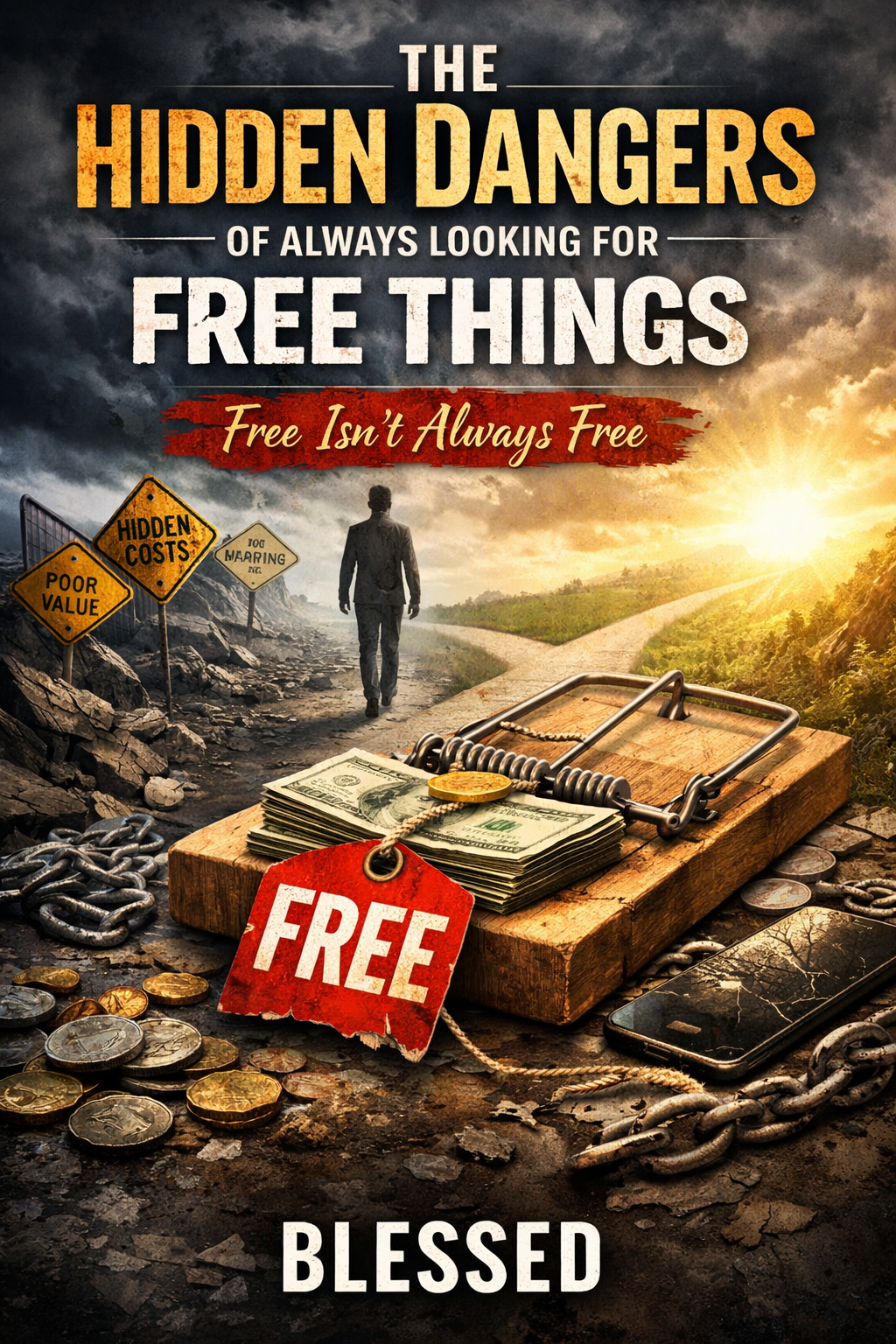
Free Isn’t Always Free
“Free” is one of the most attractive words in the world.
It grabs attention. It creates excitement. It feels like a win.
After all, who doesn’t want something for nothing?
But beneath the surface of “free” lies a truth many people ignore:
Free isn’t always free.
Sometimes, what costs nothing upfront ends up costing you everything in the long run—your growth, your discipline, your value system, and even your future.
Let’s unpack the hidden dangers.
1. Free Can Kill Your Sense of Value
When you constantly look for free things, you begin to lose your value appreciation.
You stop asking:
- Is this useful?
- Is this high quality?
Instead, you ask:
- Is it free?
And that shift is dangerous.
Because when you don’t invest in something, you rarely commit to it. You treat it casually and abandon it easily.
- That free course? You never finish it.
- That free opportunity? You don’t take it seriously.
What costs you nothing often means nothing to you.
2. It Builds a Poverty Mindset
Constantly chasing free things trains your mind to avoid investment.
You begin to think:
- “Why pay when I can get it for free?”
- “I’ll wait until there’s a free version.”
Over time, this mindset limits your growth.
Because success in life often requires:
- Paying the price
- Taking risks
- Investing in yourself
A freebie mindset keeps you in a comfort zone where you avoid commitment.
And growth never happens there.
3. Free Often Comes with Hidden Costs
Here’s the truth most people don’t realize:
If you’re not paying with money, you’re paying with something else.
It could be:
- Your time
- Your attention
- Your data
- Your privacy
- Your peace of mind
Many “free” platforms, tools, and offers are designed to profit from you in indirect ways.
You become the product.
So while it looks free on the surface, you’re still paying—just not in cash.
4. It Attracts Low Quality and Limits Excellence
Not everything free is bad—but consistently choosing free options can expose you to lower standards.
Why?
Because quality often requires:
- Skill
- Time
- Effort
- Resources
And these usually come at a cost.
If you always choose free:
- You may settle for less
- You may miss out on premium value
- You may delay your progress
Sometimes, paying is not an expense—it’s an upgrade.
5. It Reduces Commitment and Discipline
There’s something powerful about paying for something.
It creates:
- Responsibility
- Focus
- Urgency
When you pay, you show up differently.
But when it’s free, it’s easy to procrastinate, ignore, or abandon.
This is why people often:
- Download free books but never read them
- Sign up for free programs but never complete them
Payment creates pressure—and pressure produces performance.
6. You May Miss Life-Changing Opportunities
Some of the best opportunities in life require sacrifice.
If your mindset is always:
“I only want what is free”
You may walk away from:
- Valuable mentorship
- High-level learning
- Business opportunities
- Personal development
And the truth is, the right investment can change your life forever.
7. It Can Make You Look Unserious
In the real world, people notice patterns.
If you’re always:
- Looking for free access
- Avoiding payment
- Negotiating everything down to zero
It can send a message:
You don’t value what others create.
And that affects how people treat you:
- In business
- In relationships
- In opportunities
Value attracts value.
Why “Free” Feels Good—but Can Be Dangerous
Free gives immediate satisfaction.
But growth requires delayed gratification.
Free says:
“Take it now.”
Growth says:
“Invest now, benefit later.”
The danger is choosing short-term comfort over long-term transformation.
When Free Is Actually Good
Let’s be clear—not all free things are bad.
Free is powerful when:
- It introduces you to something valuable
- It helps you get started
- It gives you access you wouldn’t otherwise have
But free should be a starting point, not a lifestyle.
How to Break the Freebie Trap
1. Shift Your Mindset
Stop asking: “Is it free?”
Start asking: “Is it valuable?”
2. Invest in Yourself
Spend on:
- Knowledge
- Skills
- Growth
- Tools that improve your life
The right investment pays for itself many times over.
3. Value What You Receive
Even when something is free, treat it like you paid for it.
Respect it. Use it. Apply it.
4. Be Willing to Pay the Price
Success always has a cost.
The question is:
Are you willing to pay it?
Final Thoughts: Choose Value Over Free
“Free” is not the problem.
But making “free” your standard can quietly limit your life.
Because in reality:
- The best knowledge often costs something
- The best opportunities require commitment
- The best growth demands investment
So don’t just chase what is free.
Chase what is valuable.
Because in the end, the goal is not just to spend less—
It’s to become more.
FAQs
1. Why do people always look for free things?
Many people look for free things because it feels financially safe and immediately rewarding. However, constantly chasing free options can sometimes limit growth and commitment.
2. Is getting free things always bad?
No. Free resources can be very helpful, especially for beginners. The problem starts when “free” becomes a mindset that avoids investment and commitment.
3. How can a freebie mindset affect success?
A freebie mindset can reduce discipline, delay personal growth, and make people avoid valuable investments in skills, education, and opportunities.