
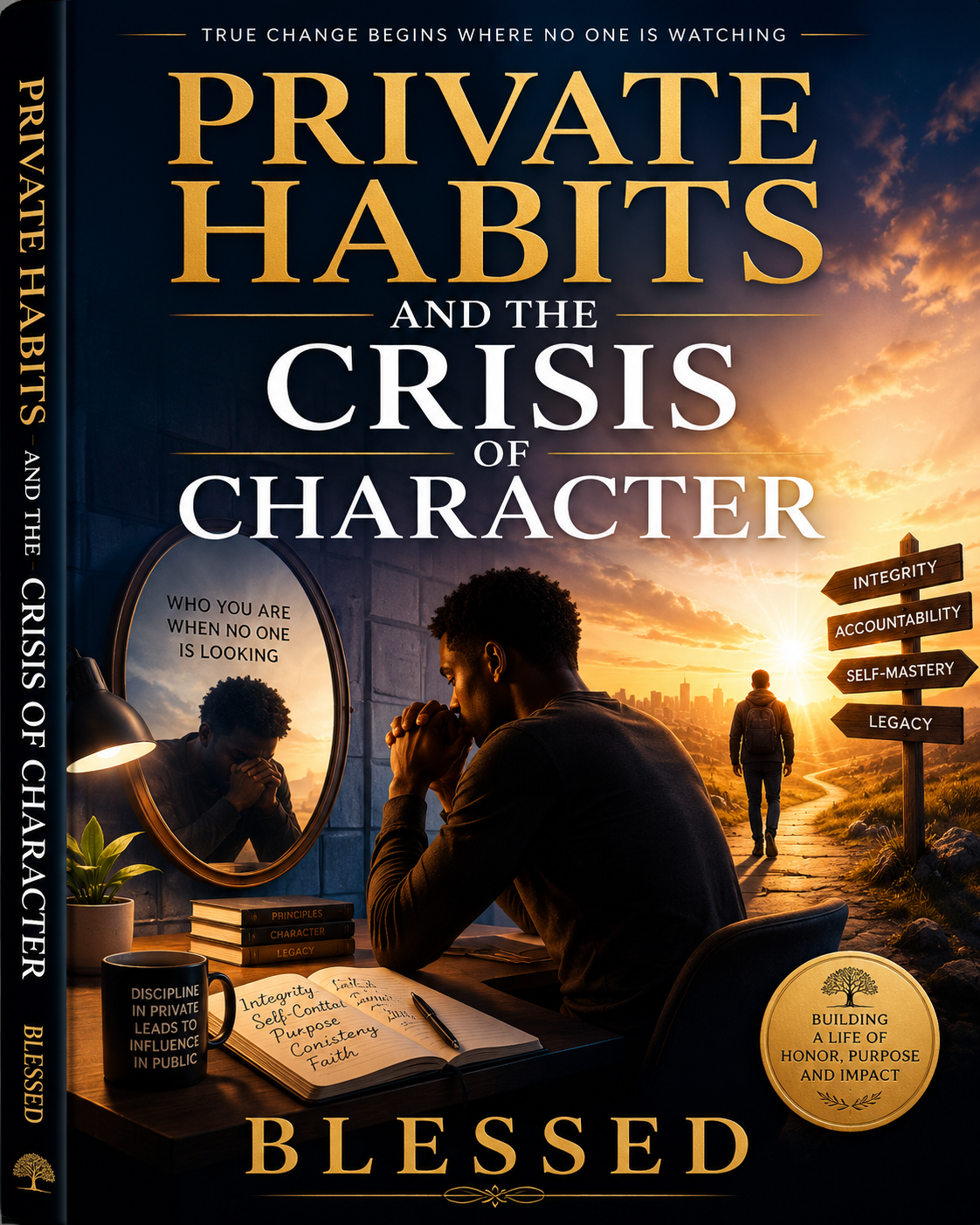
Pornography, Privacy, and the Crisis of Character
We live in a world where temptation no longer knocks on the door. It lives in our pockets, travels with us everywhere, and can appear at any moment with a single tap.
It streams. It scrolls. It whispers through notifications.
What once required secrecy, effort, and risk is now available within seconds — private, personalized, and practically invisible. And because it hides behind screens, many assume it leaves no scars.
But the real damage is not on the screen.
It is in the soul.
This is not just a conversation about morality. It is a conversation about character — and what quietly happens to it when no one is watching.
The Illusion of Privacy
One of the greatest lies of the digital age is this:
“If no one knows, it doesn’t matter.”
Behind passwords and private browsing, people convince themselves their habits are harmless. No witnesses. No embarrassment. No consequences.
But privacy does not remove impact.
Proverbs 4:23 says:
“Above all else, guard your heart, for everything you do flows from it.”
This is a warning that what enters the heart eventually shapes the life.
Character is not what you show in public.
It is who you are in private.
In today’s world, most moral battles happen alone — late at night, in quiet rooms, with a glowing screen.
What you repeatedly consume in secret eventually shapes what you become in public.
Private habits can slowly lead to:
- Distorted expectations in relationships
- Reduced empathy
- Emotional isolation
- Numbness
- Weak self-control
Even if no one sees it, its effects remain.
Pornography and the Erosion of Integrity
Pornography does not just show explicit content.
It trains the mind.
Jesus said in Matthew 5:28:
“Anyone who looks at a woman lustfully has already committed adultery in his heart.”
This shows that sin often begins in the heart long before actions appear.
The story of King David (2 Samuel 11) is a clear example. A single private moment of compromise led to a chain of actions that brought deep regret and pain.
Pornography gradually changes the mind by:
- Turning people into objects
- Replacing patience with instant gratification
- Normalizing unhealthy ideas about intimacy
Over time, it weakens self-control.
And when self-control weakens in one area, it often spreads into others — relationships, finances, anger, and decision-making.
Integrity does not collapse suddenly.
It erodes slowly, one compromise at a time.
The Emotional Cost
There is also a hidden emotional burden.
Many people struggling privately experience:
- Quiet shame
- Lingering guilt
- Fear of exposure
- Inner conflict
- Spiritual dryness
Living a double life creates exhaustion — one version of yourself in public, another in private.
Over time, this gap affects confidence, honesty, and emotional peace.
A Real-Life Example: David’s Story
David was a young professional who believed his private habits affected no one.
He was responsible at work, friendly in social life, and active in church. But privately, a pattern had formed.
What started occasionally became a nightly routine.
Over time, things changed.
He became less patient. Less motivated. Less connected. Even his spiritual life felt empty.
Prayer felt distant. Church felt like a performance.
Shame kept him silent.
Until one day, a mentor asked him how he was really doing.
That conversation changed everything.
David opened up. He received support and accountability. He changed his routines — moved his phone out of his bedroom, exercised in the evenings, and joined a small group.
Change was not instant, but it was real.
Slowly, his confidence returned. His relationships improved. His inner life became steady again.
His story shows something important:
Character is shaped most deeply in private moments.
Why This Is a Crisis of Character
Character is not something you are born with fully formed.
It is built over time through repeated choices.
Private choices shape the inner life.
When secrecy, indulgence, and impulse become habits, they reshape the person from within.
Over time, this leads to:
- Weak trust in relationships
- Emotional distance
- Broken intimacy
- Loneliness
This is not just a technological issue.
It is a human and moral one.
What Scripture Says About the Way Out
1 Corinthians 10:13 says:
“No temptation has overtaken you except what is common to mankind… And God is faithful… He will also provide a way out.”
This means:
- You are not alone in the struggle
- God remains faithful
- There is always a way out
Romans 12:2 adds:
“Be transformed by the renewing of your mind.”
Change begins in the mind.
Psalm 119:9 says:
“How can a young person stay pure? By living according to your word.”
The path forward is grounded in truth and steady renewal.
Practical Steps to Rebuild Character
1. Break the Silence
Speak to someone you trust.
Accountability is a strength, not a weakness.
2. Reduce Access
Make temptation harder to reach:
- Use filters or accountability tools
- Avoid private late-night scrolling
- Keep devices out of the bedroom
3. Replace the Habit
Do not only remove — replace:
- Read meaningful books
- Exercise
- Learn new skills
- Build real relationships
4. Renew the Mind
What you consume shapes your thoughts.
Fill your mind with truth and healthy content consistently.
5. Build Self-Respect
Small daily discipline builds inner strength.
Keep promises to yourself. Stay consistent.
6. Redefine Strength
True strength is self-control in private, not performance in public.
A Message of Hope
You are not defined by your past.
Change is possible.
The same private space where weakness grew can become the place where strength is rebuilt.
One decision at a time, character can be restored.
Final Reflection
Ask yourself honestly:
- Who am I becoming in private?
- Would I be comfortable if my habits were visible?
- Am I building character or losing it?
Proverbs 4:23 says:
“Guard your heart, for everything you do flows from it.”
Character begins in private.
So does change.
Choose wisely.