
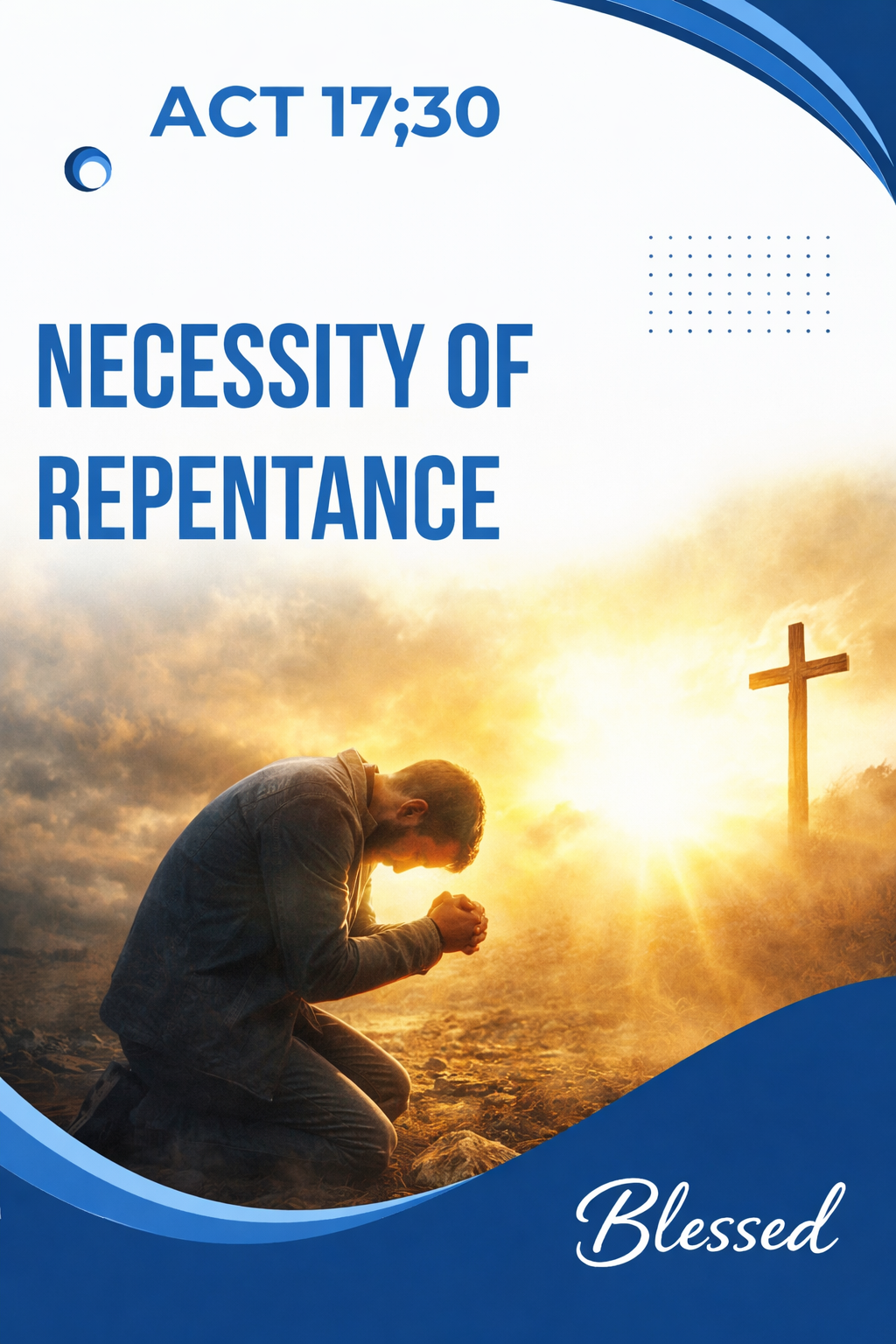
Turning Toward Renewal and Transformation
We live in a world that normalizes excuses.
“It’s not that serious.”
“Everyone is doing it.”
“That’s just who I am.”
But deep down, we know when something is off. We feel it in our conscience. We see it in broken relationships. We experience it in restlessness and lack of peace.
Repentance is not a religious cliché.
It is the gateway to clarity, healing, growth, and restored purpose.
And without it? We remain stuck.
What Repentance Really Means
Repentance is not:
Mere guilt
Public embarrassment
- Emotional regret
- Temporary remorse
Repentance is:
- Taking responsibility
- Turning away from what is wrong
- Realigning with truth
- Choosing transformation over pride
It is not just saying, “I’m sorry.”
It is saying, “I was wrong — and I am changing.”
Why Repentance Is Non-Negotiable
1. It Restores Your Relationship with God
Wrongdoing creates distance. Pride builds walls. Silence hardens the heart.
Repentance tears those walls down.
When you admit your faults honestly, you reopen the flow of grace, direction, and spiritual intimacy. You move from hiding… to healing.
No repentance = spiritual stagnation.
True repentance = spiritual renewal.
 It Frees You from Hidden Guilt
Unaddressed guilt doesn’t disappear. It:
- Drains confidence
- Creates anxiety
- Fuels defensiveness
- Disturbs your peace
Repentance releases what you’ve been secretly carrying.
You cannot walk in freedom while holding onto unconfessed wrongs.
 It Accelerates Personal Growth
Repentance forces honest reflection:
- Where did I go wrong?
- What pattern keeps repeating?
- What needs to change?
Growth begins the moment excuses end.
Pride says, “I’m fine.”
Repentance says, “I can do better.”
 It Repairs Broken Relationships
Most damaged relationships share one root problem:
Someone refused to admit fault.
True repentance includes:
- Honest acknowledgment
- Clear apology
- Changed behavior
When people see consistent change, trust slowly rebuilds.
Without repentance, relationships decay.
With repentance, reconciliation becomes possible.
 It Builds Integrity and Leadership Strength
You cannot lead effectively without accountability.
Repentance develops:
- Humility
- Credibility
- Emotional maturity
- Moral strength
Strong leaders repent quickly. Weak leaders defend endlessly.
The 7-Step Action Plan to Practice Repentance
Repentance must move from theory to practice.
Step 1: Pause and Reflect
Set aside 10–15 minutes of quiet time. Ask yourself:
- What have I ignored?
- Where have I justified wrong?
- Who have I hurt?
Write it down.
Step 2: Own It — No Excuses
Replace:
- “If they hadn’t…”
With: - “I chose to…”
Growth begins when blame ends.
Step 3: Feel the Weight (Without Self-Hatred)
Healthy sorrow leads to change.
Toxic shame leads to paralysis.
Feel conviction — not condemnation.
Step 4: Confess Honestly
Speak clearly in prayer.
If needed, speak to the person involved.
Avoid phrases like:
- “I’m sorry if you felt hurt.”
Instead say:
- “I was wrong. I hurt you. I take responsibility.”
Step 5: Make It Right Where Possible
Real repentance may require:
- Returning what was taken
- Correcting misinformation
- Paying back a debt
- Publicly clarifying a wrong
Restoration is powerful.
Step 6: Replace the Behavior
Stopping is not enough. Replace it.
- Replace dishonesty with transparency.
- Replace anger with patience.
- Replace neglect with intentional effort.
Transformation requires substitution.
Step 7: Create Accountability
Tell a trusted person your commitment.
Set measurable goals.
Track your progress.
Repentance that isn’t guarded will fade.
Real-Life Application Exercises
These exercises make repentance practical — not theoretical.
Exercise 1: The Mirror Audit
Tonight, answer:
- What habit is quietly weakening my integrity?
- What conversation have I been avoiding?
- What truth have I been resisting?
Take one action within 24 hours.
Exercise 2: The Courage Call
Identify one person you need to reconcile with.
Send a message or make a call that says:
“I’ve reflected, and I realize I was wrong. I value this relationship and want to make it right.”
No long explanations. No defending yourself.
Just clarity and humility.
Exercise 3: Daily Alignment Check
Every night, ask:
- Did my actions match my values today?
- Where did I drift?
- What needs correcting tomorrow?
Five minutes daily prevents major damage later.
Exercise 4: Replace One Pattern
Choose one behavior to change this week.
Example:
- If you gossip → Speak positively or stay silent.
- If you procrastinate, → Start tasks within 5 minutes.
- If you react angrily → Pause for 60 seconds before responding.
Small, consistent change builds massive transformation.
The Powerful Rewards of Repentance
When repentance becomes a lifestyle, you gain:
- Inner peace
- Renewed spiritual sensitivity
- Stronger relationships
- Clearer decision-making
- Stronger character
- Sharper life direction
Repentance removes what blocks progress.
It unclogs destiny.
The Hard Truth
Many people pray for change.
Few are willing to repent for it.
Many want blessings.
Few want correction.
But here is the reality:
You cannot heal what you refuse to confront.
You cannot transform what you refuse to acknowledge.
Final Challenge
Take one step today.
Not tomorrow. Not next week.
Today.
Who do you need to call?
What habit must stop?
What truth must you face?
Repentance is not the end of your story.
It is the turning point.
And every turning point begins with one honest decision.
Frequently Asked Questions (FAQs)
1. Is repentance only about feeling sorry for sin?
No. Repentance is more than emotion. It is a conscious decision to turn away from wrong behavior and realign your life with truth, resulting in real change in actions and character.
2. Can someone truly change after genuine repentance?
Yes. True repentance leads to transformation. When a person consistently applies change, seeks accountability, and replaces old habits, lasting growth and restoration become possible.
Call to Action (CTA):
Don’t just read—respond. Take one honest step today: identify what needs to change, take responsibility, and begin your transformation now. Repentance starts with one decision—make it today.