
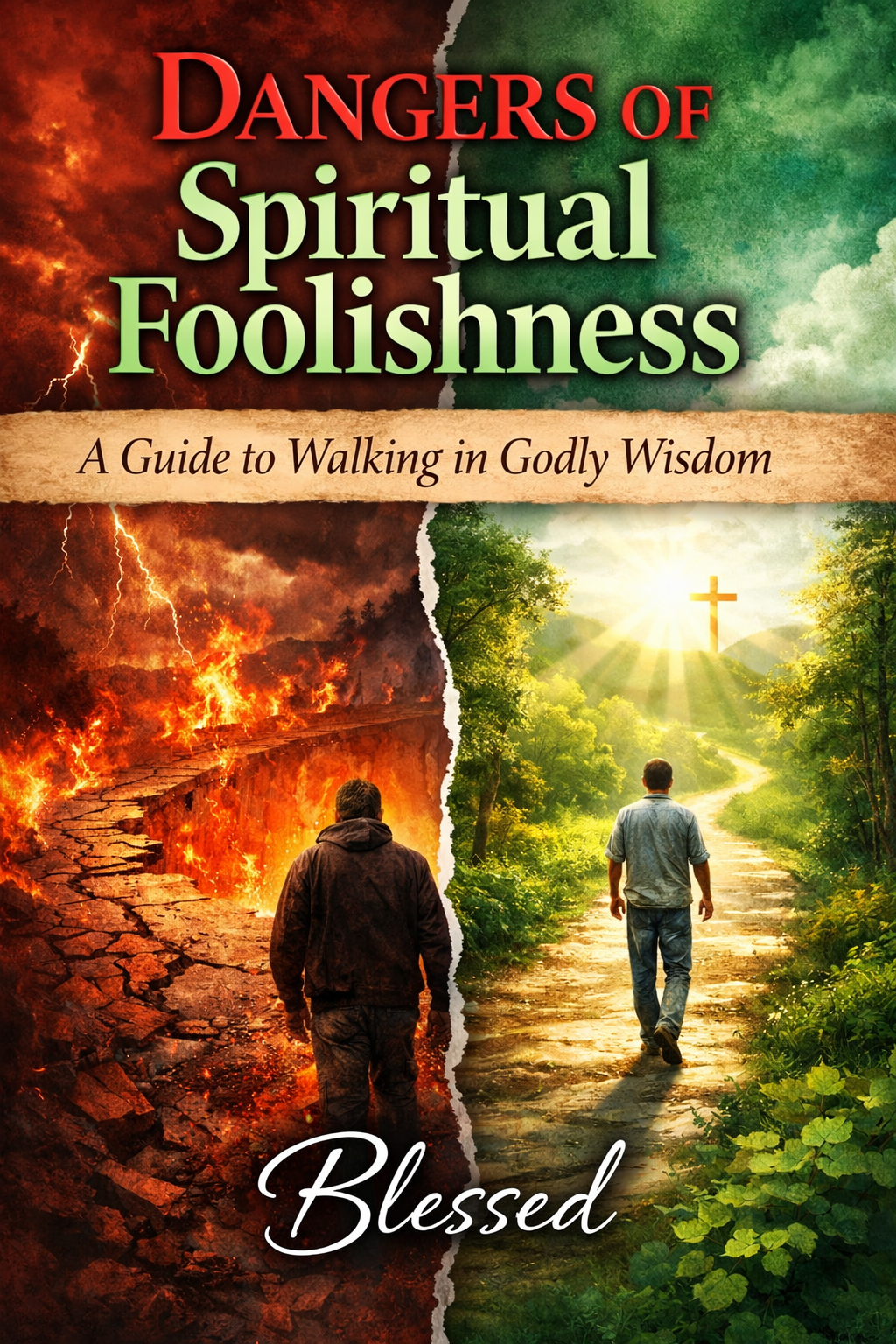
Introduction
There is a silent danger that does not announce itself with alarms. It does not always look like sin. It does not always feel like rebellion. Sometimes, it looks like a delay. Like pride. Like a quiet compromise.
This is the danger of spiritual foolishness.
It is not a lack of intelligence. It is not a lack of church attendance. It is not even a lack of passion for God. Spiritual foolishness is the habit of knowing the truth but postponing obedience. It is resisting correction while claiming maturity. It is choosing comfort over conviction.
And though it may seem harmless at first, it carries serious consequences.
The hopeful truth? It can be confronted. It can be corrected. And wisdom can replace it.
Understanding Spiritual Foolishness
Spiritual foolishness rarely begins dramatically. It creeps in subtly:
- You hear a message that convicts you, but you delay action.
- You pray for guidance — but follow your emotions instead.
- You repeat patterns that hurt you — and blame circumstances.
- You protect your image — while neglecting your character.
It is not loud defiance. It is quiet resistance.
It is the slow drift away from responsiveness to God.
The Real Dangers of Spiritual Foolishness
Spiritual foolishness is dangerous because it weakens you gradually rather than instantly. It erodes your spiritual strength from within.
1. It Dulls Your Spiritual Sensitivity
The more you ignore conviction, the quieter it becomes. Over time, what once disturbed your conscience begins to feel normal. You still pray. You still worship. But the sharpness of discernment fades.
2. It Distorts Your Judgment
When wisdom is absent, emotions take control. Decisions become reaction-based rather than faith-based. And unstable emotions produce unstable outcomes.
3. It Damages Relationships
Spiritual foolishness feeds pride. Pride resists apology. Pride refuses accountability. Pride rejects advice. And broken relationships often follow.
4. It Delays Growth
Spiritual maturity requires humility. When correction is rejected, growth is delayed. When lessons are ignored, they repeat.
What you refuse to learn gently, life may teach firmly.
Why We Fall Into It
No one plans to become spiritually foolish. It happens gradually.
Sometimes it is pride:
“I already understand.”
Sometimes it is procrastination:
“I will change later.”
Sometimes it is fear:
“What if obedience costs me something?”
Sometimes it is a comparison:
“At least I am not as bad as others.”
But spiritual maturity begins when excuses end.
Breaking the Cycle: Practical Steps Toward Wisdom
Overcoming spiritual foolishness requires intentional action. It is not automatic. It is deliberate.
1. Practice Honest Self-Examination
Ask yourself difficult questions:
- Where am I repeatedly making the same mistake?
- Where do I resist advice?
- What truth have I been avoiding?
Growth starts with honesty. Without it, change is impossible.
2. Create Space for Reflection
Wisdom develops in quiet moments.
After major decisions, pause and reflect:
- Was that led by faith or emotion?
- What did I learn?
- What needs adjustment?
Consider journaling regularly. Reflection prevents repetition.
3. Welcome Correction
Correction is a gift disguised as discomfort.
When trusted people point out areas of weakness, listen carefully before defending yourself. Humility transforms correction into growth.
Defensiveness protects the ego. Humility builds wisdom.
4. Slow Down Important Decisions
Hasty choices often produce unnecessary regret.
Before making major commitments:
- Pray intentionally.
- Seek wise counsel.
- Allow time for clarity.
Wisdom thrives in patience. Foolishness thrives in impulse.
5. Anchor Yourself in Scripture
True wisdom is not shaped by trends, opinions, or emotions. It is grounded in truth.
Consistent engagement with Scripture renews your thinking, sharpens your conscience, and strengthens your discernment.
Even a short, focused daily study can reshape your spiritual direction.
6. Choose Humility as a Lifestyle
Humility is not self-rejection; it is self-awareness.
It says:
- “I can improve.”
- “I can learn.”
- “I need guidance.”
Where humility lives, wisdom grows.
What Walking in Godly Wisdom Looks Like
Walking in wisdom is practical and visible.
It shapes:
- Your words
- Your financial decisions
- Your friendships
- Your reactions during conflict
- Your response to success and failure
It produces stability instead of chaos.
Peace instead of confusion.
Growth instead of stagnation.
Wisdom does not make you perfect. It makes you teachable.
When you fall, you adjust.
When corrected, you respond.
When convicted, you act.
The Turning Point
Every believer eventually reaches a defining moment — a quiet realization:
“I cannot continue ignoring what I know is right.”
That moment is not condemnation. It is awakening.
It is the point where responsibility replaces excuses.
Where humility replaces pride.
Where obedience replaces delay.
Transformation begins there.
A Daily Commitment to Wisdom
If you desire change, start small and consistent:
- Pause before reacting emotionally.
- Accept correction without immediate defense.
- Act on conviction promptly, not eventually.
Small daily obedience builds strong spiritual character.
Final Reflection
The dangers of spiritual foolishness are real — but they are not permanent.
You are not defined by past delays.
You are not trapped by previous mistakes.
You are not disqualified by past ignorance.
Wisdom is available.
Growth is possible.
Transformation is within reach.
The difference between spiritual stagnation and spiritual maturity is willingness.
Choose humility.
Choose responsiveness.
Choose obedience.
And as you do, you will not only avoid the dangers of spiritual foolishness — you will begin to walk confidently in godly wisdom.
Frequently Asked Questions (FAQ)
What is spiritual foolishness?
Spiritual foolishness is the habit of ignoring wisdom, resisting correction, or delaying obedience even when you know what is right. It often appears through pride, repeated poor decisions, emotional reactions, or neglecting spiritual growth.
How can I grow in godly wisdom?
You can grow in godly wisdom by studying Scripture consistently, praying for guidance, accepting correction, seeking wise counsel, and practicing obedience in daily life. Wisdom grows through humility, reflection, and teachability.
What causes spiritual stagnation?
Spiritual stagnation is often caused by pride, complacency, unaddressed sin, fear of change, lack of discipline, and ignoring conviction. Growth slows when people stop learning, stop applying truth, or become comfortable resisting correction.
Why is humility important spiritually?
Humility is important because it keeps the heart teachable and open to growth. Humble people are more willing to learn, accept correction, seek guidance, and obey God’s direction. Where humility grows, wisdom and spiritual maturity also grow.