
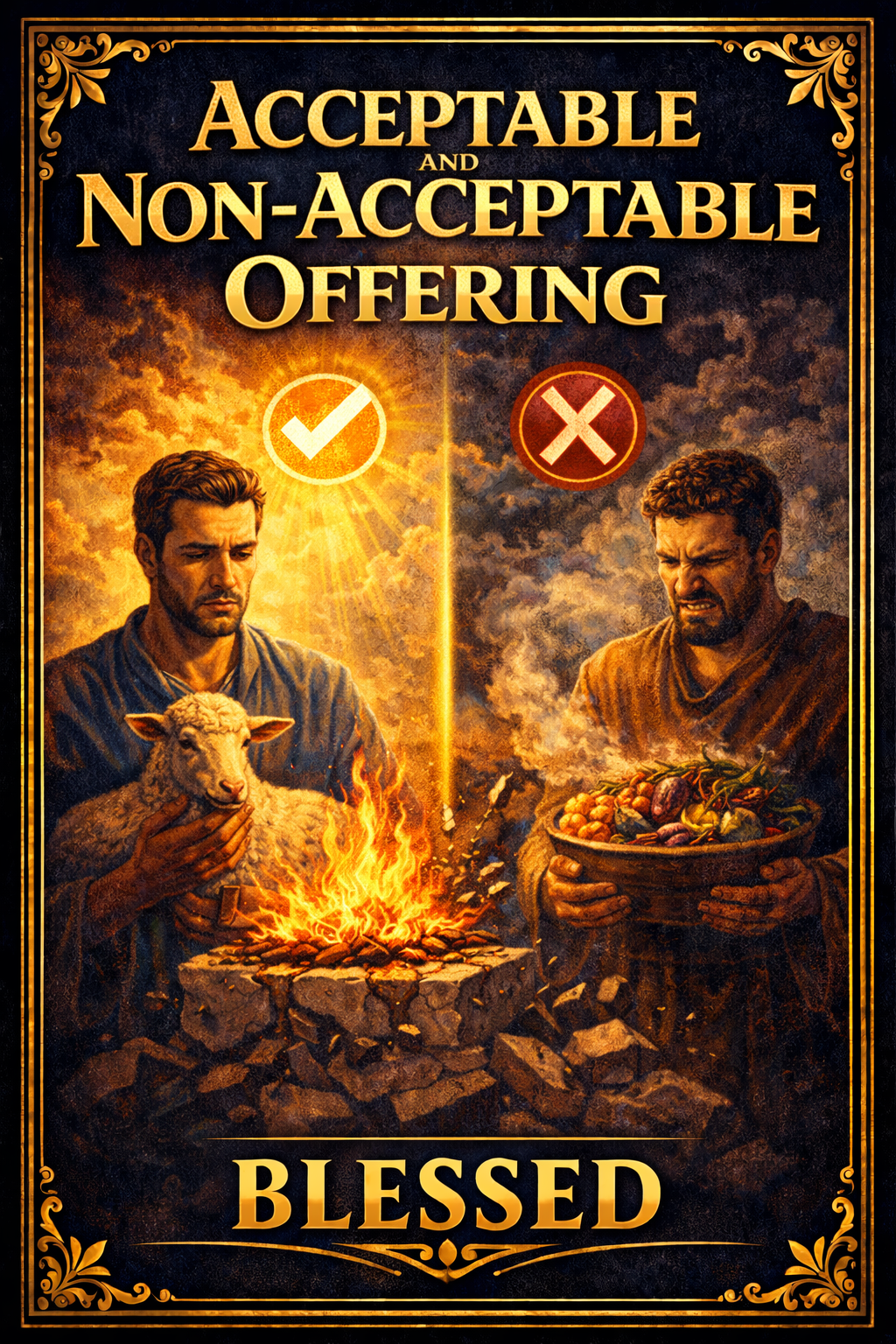
Acceptable and Non-Acceptable Offering
Many people give offerings in church faithfully every week. They drop money in the basket, transfer funds, or make pledges — but rarely pause to ask an important question:
Is my offering acceptable before God?
Giving is common. Acceptable giving is intentional.
From the beginning of Scripture, we see that not all offerings are treated the same. In the story of the Book of Genesis, two brothers — Cain and Abel — both brought offerings to God. One was accepted. The other was not.
The difference was not just in the act of giving — but in the heart, the quality, and the source.
This topic is deeper than money. It is about integrity, honor, and alignment with God.
1. An Acceptable Offering Comes From a Clean Source
An offering is not just about the amount; it is about where it comes from.
Money gained through:
- Fraud
- Exploitation
- Corruption
- Manipulation
- Dishonesty
cannot be purified by dropping a percentage into a church basket.
God cannot be bribed.
An acceptable offering flows from honest labor, clean business, and righteous living. When your income is earned with integrity, your offering carries peace with it.
You cannot live all week wrongly and attempt to balance it with a Sunday gift.
2. An Acceptable Offering Reflects Your True Capacity
Another danger is giving in a way that does not reflect the level of blessing or the capacity God has given you.
Some people:
- Spend generously on fashion.
- Upgrade phones regularly.
- Organize expensive celebrations.
- Eat out frequently.
Yet when it comes to offering, they give casually or without real thought or sacrifice.
An acceptable offering is not necessarily about giving a large amount compared to others. It is about giving in a way that reflects sincerity, gratitude, honor, and personal sacrifice.
God measures the heart and the proportion, not comparison with others.
If your lifestyle reflects abundance, but your giving reflects indifference, it may be time for honest reflection
An acceptable offering reflects sacrifice relative to your level. It may not be equal in amount to someone else’s, but it should reflect sincerity and honor.
God measures proportion, not comparison.
If your lifestyle says “abundance” but your offering says “leftover,” something is inconsistent.
3. An Acceptable Offering Comes With the Right Heart
Giving grudgingly, angrily, or under pressure weakens the spiritual value of the gift.
Questions to ask yourself:
- Am I giving out of love or obligation?
- Am I giving to impress people?
- Am I giving to compete?
- Am I trying to manipulate God into blessing me?
An offering is worship. Worship without sincerity becomes performance.
4. An Unacceptable Offering Is “Leftover Giving.”
Leftover giving is when:
- You give what remains after satisfying every personal desire.
- You give only when convenient.
- You give carelessly without thought or prayer.
Cain’s offering was not rejected because he gave crops. It was rejected because it lacked honor and intentionality. Abel gave his best.
Excellence matters.
God deserves first consideration — not last-minute generosity.
5. An Acceptable Offering Aligns With Obedience
You cannot separate giving from lifestyle.
If a person:
- Harbors unforgiveness,
- Lives in constant disobedience,
- Refuses correction,
- Exploits others,
Then their offering becomes a contradiction.
Giving is not a substitute for obedience. It is an expression of it.
6. An Acceptable Offering Is Consistent, Not Emotional
Some people give only when:
- They need a miracle.
- They are in trouble.
- They are making a vow.
- A preacher delivers an emotional message.
True generosity is disciplined, not seasonal.
Faithfulness in small, regular giving speaks louder than dramatic one-time donations driven by emotion.
7. An Acceptable Offering Includes Your Life — Not Just Your Money
Money is one form of offering. But your time, service, attention, and obedience are also offerings.
Ask yourself:
- Do I serve when needed?
- Do I honor God with my decisions?
- Do I use my talents for good?
- Do I help people quietly without seeking recognition?
A life surrendered is the highest offering.
Practical Steps to Make Your Offering Acceptable
Here are actionable steps you can apply immediately:
1. Examine Your Income Source
Review how you earn money. If anything is questionable, correct it. Clean income leads to confident giving.
2. Set a Giving Standard
Decide intentionally what percentage or amount reflects honor at your current financial level. Let it stretch you slightly.
3. Give First, Not Last
Instead of waiting until everything else is paid, plan your offering first. Priority reveals value.
4. Pray Before You Give
Even a short prayer matters:
“Lord, I give this from a sincere heart. Accept it.”
5. Live in Integrity
An acceptable offering flows from an acceptable life. Align your behavior with your faith.
6. Avoid Public Performance
If your giving depends on recognition, check your motive. True worship does not require applause.
Final Thoughts
Offering is not a transaction. It is not a spiritual payment plan. It is not a way to compensate for wrongdoing.
It is an honor.
An acceptable offering:
- Comes from a clean source.
- Reflects your true capacity.
- Carries the right heart.
- Aligns with obedience.
- Demonstrates sacrifice.
An unacceptable offering:
- Comes from dishonest gain.
- Is given carelessly.
- Is far below your ability.
- Attempts to substitute for righteousness.
Before you give again, pause and ask:
Is this my best?
Is this honest?
Is this from a sincere heart?
Because what matters most is not the size of the offering — but the condition of the giver.
FAQs
1. What is an acceptable offering according to the Bible?
An acceptable offering is a gift given to God with sincerity, obedience, integrity, and genuine honor. It comes from a clean source and reflects a willing heart.
2. Why was Cain’s offering rejected?
Cain’s offering was rejected because it lacked the right heart, honor, and intentionality, while Abel gave his best to God with faith and sincerity.
3. Does God care about the amount of an offering?
God looks more at the heart, sacrifice, and sincerity behind the offering than the actual amount given.
4. Can an offering from dishonest money be acceptable?
Biblically, offerings gained through fraud, corruption, or exploitation do not honor God because the source itself is corrupted.
5. Is offering only about money?
No. Offering also includes your obedience, service, time, talents, and the way you live your daily life.