
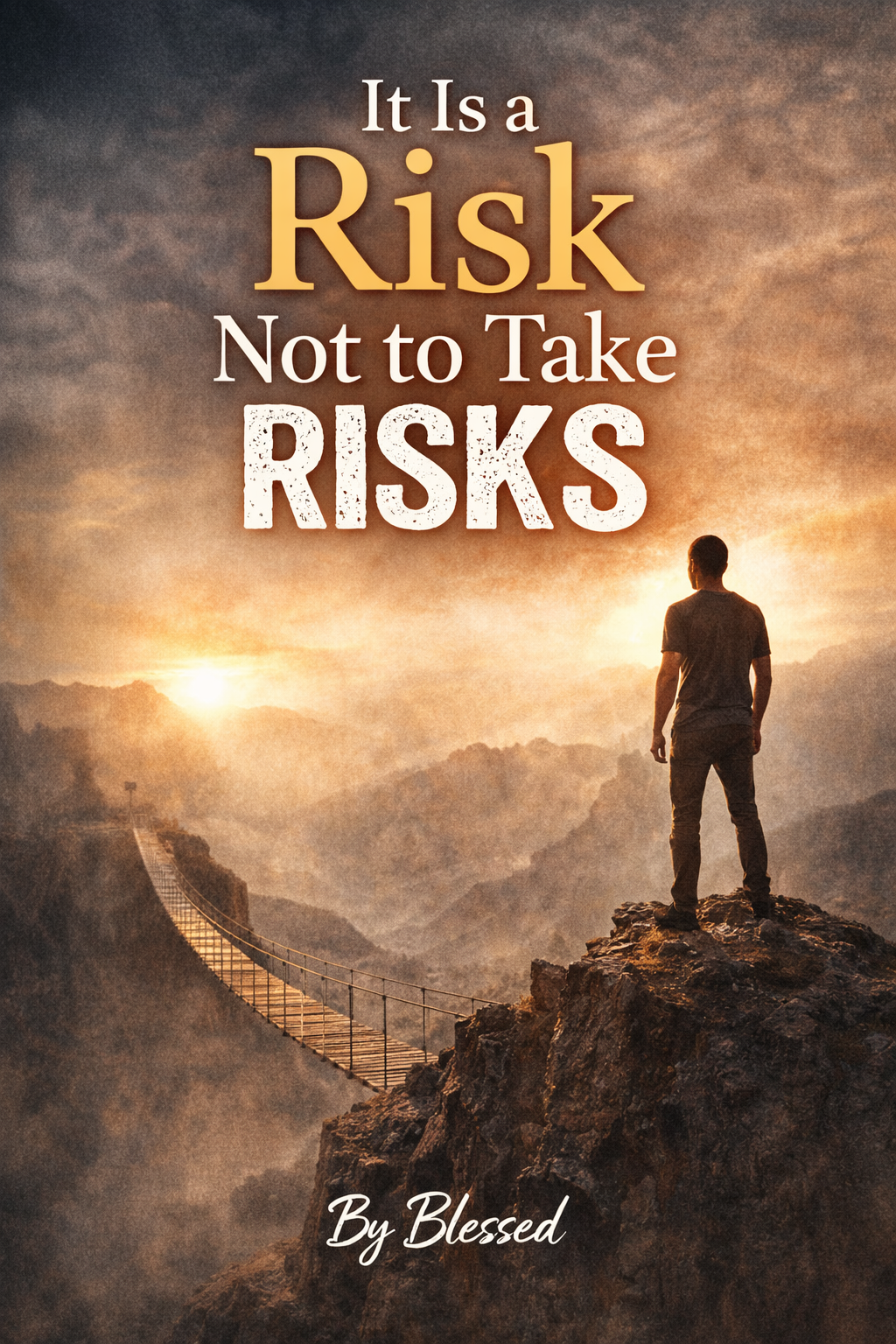
It Is a Risk Not to Take Risks
Many people spend their lives trying to avoid risk. They choose what feels safe, familiar, and predictable. While caution has its place, a life built entirely around avoiding risk often leads to regret, stagnation, and missed purpose. Ironically, the greatest risk is refusing to take any risks at all.
Growth, success, and fulfillment almost always require stepping beyond comfort. When we avoid risk completely, we don’t protect our future — we quietly limit it.
Why Avoiding Risk Feels Safer (But Isn’t)
Avoiding risk feels wise because it promises security: no failure, no embarrassment, no loss. But what it really offers is temporary comfort at the cost of long-term progress.
When you refuse to take risks:
- You stay in situations that no longer help you grow
- You silence ideas that could change your life
- You remain dependent on what is familiar, even if it’s unfulfilling
- You trade potential impact for predictability
Safety without growth eventually becomes a cage.
The Hidden Cost of Playing It Safe
The cost of not taking risks is rarely immediate, which makes it dangerous. It shows up slowly over time:
- Dreams fade because they were never pursued
- Confidence weakens because courage was never practiced
- Opportunities pass because fear delays action
- Regret grows because “what if” questions remain unanswered
Most people don’t regret the risks they took and failed at. They regret the chances they never took at all.
Risk Is the Pathway to Growth
Every meaningful step forward involves uncertainty.
- Starting a business involves risk
- Changing careers involves risk
- Loving deeply involves risk
- Obeying a calling involves risk
But risk is also how you discover the strength you didn’t know you had. You don’t grow by staying comfortable — you grow by stretching.
Failure, when it happens, becomes a teacher. Avoidance teaches nothing.
Faith and Risk Go Together
Faith is not the absence of fear; it is action despite fear. Many people claim faith but avoid risk, forgetting that trust requires movement.
If you wait until everything feels guaranteed, you may never move at all. Faith often requires stepping forward before the full picture is clear.
Courage is not recklessness. It is choosing growth over fear.
Smart Risk vs. Reckless Risk
Not all risks are equal. Taking risks does not mean acting without wisdom.
Healthy risks involve:
- Thoughtful planning
- Prayer or reflection
- Learning and preparation
- Accountability and counsel
Reckless risks involve:
- Impulsiveness
- Ignoring consequences
- Refusing guidance
- Acting from ego or pressure
The goal is not careless living — it is intentional courage.
Signs You May Be Avoiding Risk
You may be avoiding necessary risk if:
- You constantly wait for “perfect timing.”
- You overthink simple decisions
- You stay where you are unhappy but comfortable
- You talk more about ideas than about acting on them
- Fear makes your decisions instead of purpose
These are signals that growth is calling — but fear is answering.
Actionable Steps to Start Taking Healthy Risks
1. Identify one area where fear is holding you back.
Be honest. Is it your career, relationships, creativity, or faith?
2. Start small.
Risk doesn’t have to be dramatic. One brave conversation, one application, one step forward matters.
3. Accept that failure is feedback, not defeat.
Every attempt teaches you something valuable.
4. Detach your identity from the outcome.
Success or failure does not define your worth — obedience and effort do.
5. Commit to action over perfection.
Progress beats waiting endlessly for ideal conditions.
The Reward of Taking Risks
When you take risks, even imperfectly, you gain:
- Confidence through experience
- Clarity through action
- Strength through challenge
- Opportunities you would never access otherwise
Most importantly, you gain a life shaped by intention, not fear.
Conclusion: Choose Growth Over Fear
Avoiding risk may feel safe, but it slowly shrinks your world. Taking risks may feel uncomfortable, but they expand your capacity, your faith, and your future.
If you want a life of meaning, impact, and purpose, you must accept this truth:
It is a risk not to take risks.
The question is not whether risk exists.
The question is whether fear will decide your future — or courage will.
Frequently Asked Questions (FAQs)
Why is taking risks important in life?
Taking risks is important because real growth rarely happens inside your comfort zone. Every major opportunity in life — whether in career, relationships, business, or personal development — usually requires courage and uncertainty. When you avoid all risks, you may avoid failure, but you also miss valuable experiences, progress, and possibilities.
What is the difference between healthy risk and reckless risk?
Healthy risk is thoughtful and intentional. It involves preparation, wisdom, learning, and careful decision-making. Reckless risk, on the other hand, is impulsive and ignores consequences, advice, or responsibility. The goal is not careless behavior, but courageous action guided by wisdom.
How can I overcome the fear of taking risks?
You can overcome fear by taking small, consistent steps forward. Start where you are, learn from mistakes, and stop waiting for perfect conditions. Fear often decreases when action increases. Focus on progress instead of perfection, and remember that every experience — even failure — can teach valuable lessons.
Can taking risks improve confidence?
Yes. Confidence grows through action, not comfort. Each time you face fear and take a step forward, you gain experience, resilience, and belief in your ability to handle challenges. Over time, healthy risk-taking strengthens both courage and self-confidence.
Call to Action
What risk have you been avoiding because of fear?
Maybe it’s starting that business, applying for that opportunity, sharing your ideas, changing direction, or finally stepping out in faith. Whatever it is, don’t let fear quietly decide your future.
You do not need perfect timing to begin.
You only need the courage to take the next step.
Start small.
Start wisely.
But start.
Because the life you want may be waiting on the other side of one brave decision.