
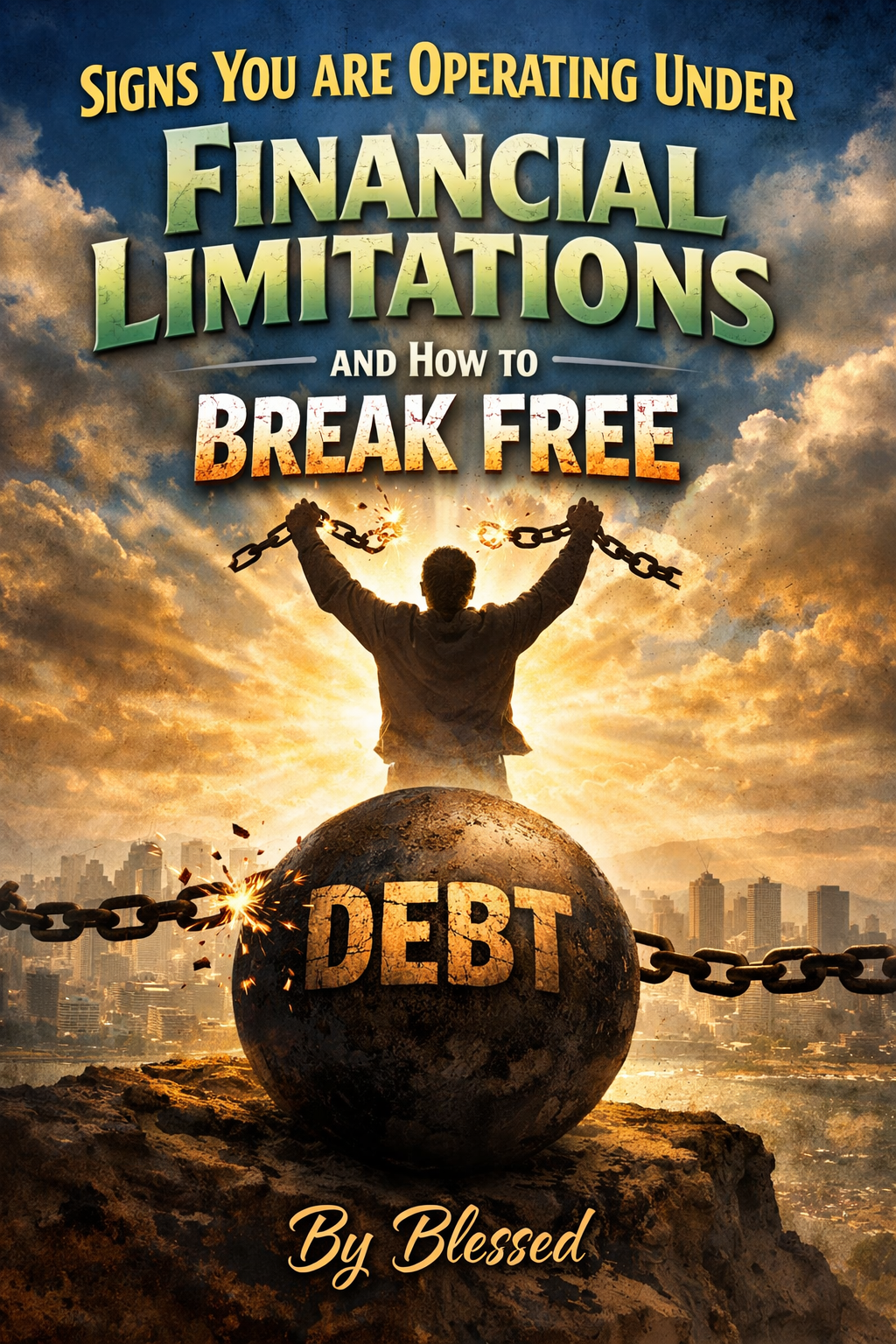
Introduction
Have you ever worked hard, prayed faithfully, made plans, and still felt financially stuck?
It can be frustrating watching years pass without meaningful progress. You pay bills, handle emergencies, and survive each month, yet deep inside, you know you were created for more than constant financial pressure.
Many people silently battle financial limitations without realizing it. These limitations are not always caused by laziness or lack of ambition. Sometimes they are rooted in unhealthy habits, fear, poor financial understanding, negative mindsets, or a lack of direction and discipline.
The good news is this: financial limitation is not a life sentence.
With wisdom, intentional action, spiritual alignment, and renewed thinking, it is possible to break free from cycles of lack and move toward financial stability and growth.
The Bible reminds us in Proverbs 10:22:
“The blessing of the Lord makes rich, and He adds no sorrow with it.”
God desires His people to live with wisdom, purpose, and responsible stewardship—not endless financial bondage.
What Causes Financial Limitations?
Financial limitations often develop from a combination of:
- Poor money management
- Fear-based decision-making
- Lack of financial knowledge
- Undisciplined spending habits
- Negative thinking patterns
- Short-term living without long-term planning
- Refusal to grow, learn, or adapt
Sometimes the issue is not how much money comes in, but how it is managed, multiplied, and sustained.
1. You Are Always Surviving, Never Building
One major sign of financial limitation is constantly living in survival mode. Every income goes toward bills, debts, and emergencies, leaving nothing for savings, investment, or future growth.
When life becomes only about “getting by,” long-term financial progress becomes difficult.
How to Break Free
Start creating a financial plan, even if your income is small. Build the habit of saving consistently and managing money intentionally.
Small financial discipline today can create major stability tomorrow.
2. Your Income Increases, but Your Life Does Not Improve
Some people earn more than they did years ago, yet their financial stress remains unchanged. As income rises, expenses rise even faster.
This usually reveals a lack of financial structure rather than a lack of income.
How to Break Free
Practice disciplined spending and intentional budgeting. Learn to control money before seeking more of it.
Financial freedom is built through wise management, not income alone.
3. Fear Controls Your Financial Decisions
Fear can quietly destroy financial growth.
Fear of failure may stop you from starting a business. Fear of loss may stop you from investing in learning or opportunities. Fear of criticism may keep you from pursuing bigger goals.
How to Break Free
Replace fear with informed faith and wisdom. Learn new skills, seek advice from trustworthy people, and take calculated steps forward.
Growth often requires courage.
The Bible says in 2 Timothy 1:7:
“For God has not given us a spirit of fear, but of power and of love and of a sound mind.”
4. You Work Hard but See Little Progress
Hard work alone does not always produce financial freedom. Many people work tirelessly but remain financially stagnant because their efforts are not creating long-term value.
Being busy is not the same as being productive.
How to Break Free
Ask yourself important questions:
- Is my work building valuable skills?
- Am I creating assets or only surviving?
- Does my effort have long-term potential?
Focus on growth opportunities that build future value instead of temporary relief.
5. Giving Feels Like a Burden
When generosity feels painful or threatening, it may reveal a mindset of scarcity and fear.
From a biblical perspective, giving is an act of trust, faith, and stewardship.
How to Break Free
Practice generosity according to your ability. Giving does not always mean large amounts—it means developing a willing and grateful heart.
Generosity helps break the mentality of lack and fear.
6. Repeated Financial Setbacks Follow You
Constant debt cycles, failed financial plans, impulsive spending, and repeated money problems may point to unhealthy patterns and poor habits.
Without change, cycles often repeat themselves.
How to Break Free
Pause and honestly evaluate your financial habits. Identify recurring mistakes and make deliberate corrections.
Consistency, patience, and discipline are essential for lasting financial growth.
7. You Avoid Financial Knowledge
Many people avoid learning about money because they feel overwhelmed, intimidated, or uninterested.
But financial ignorance can keep people dependent and financially vulnerable.
How to Develop a Financial Freedom Mindset
Commit yourself to learning continuously.
Read books, attend seminars, learn budgeting skills, study investments, and seek wisdom from financially disciplined people.
Knowledge creates confidence, and confidence creates better financial decisions.
A growth mindset is one of the strongest foundations for financial freedom.
Conclusion
Financial limitations are not always caused by a lack of effort. Often, they are connected to mindset, habits, fear, poor planning, and lack of financial wisdom.
The encouraging truth is that change is possible.
When awareness is combined with discipline, wisdom, faith, and intentional action, financial growth becomes achievable and sustainable.
You may not change your financial situation overnight, but every wise step you take today can move you closer to freedom tomorrow.
Frequently Asked Questions (FAQs)
What are financial limitations?
Financial limitations are patterns, habits, beliefs, or circumstances that prevent consistent financial growth and stability.
Can mindset affect financial success?
Yes. Negative thinking, fear, poor discipline, and lack of confidence can greatly influence financial decisions and opportunities.
Does hard work alone guarantee financial freedom?
No. Hard work is important, but financial freedom also requires wisdom, planning, discipline, and strategic decision-making.
How can I improve my financial situation?
You can improve your finances by developing better money habits, learning financial skills, budgeting wisely, reducing unnecessary spending, and making long-term financial plans.
What does the Bible say about financial wisdom?
The Bible encourages wise stewardship, discipline, generosity, and diligence. Proverbs and other Scriptures teach principles that support responsible financial living.
Call to Action
Have you experienced any of these signs in your own financial journey?
Share your thoughts, experiences, or lessons in the comments. Your story may encourage someone else who is struggling financially.
If this article helped you, consider sharing it with friends, family, or anyone seeking financial wisdom and freedom.