
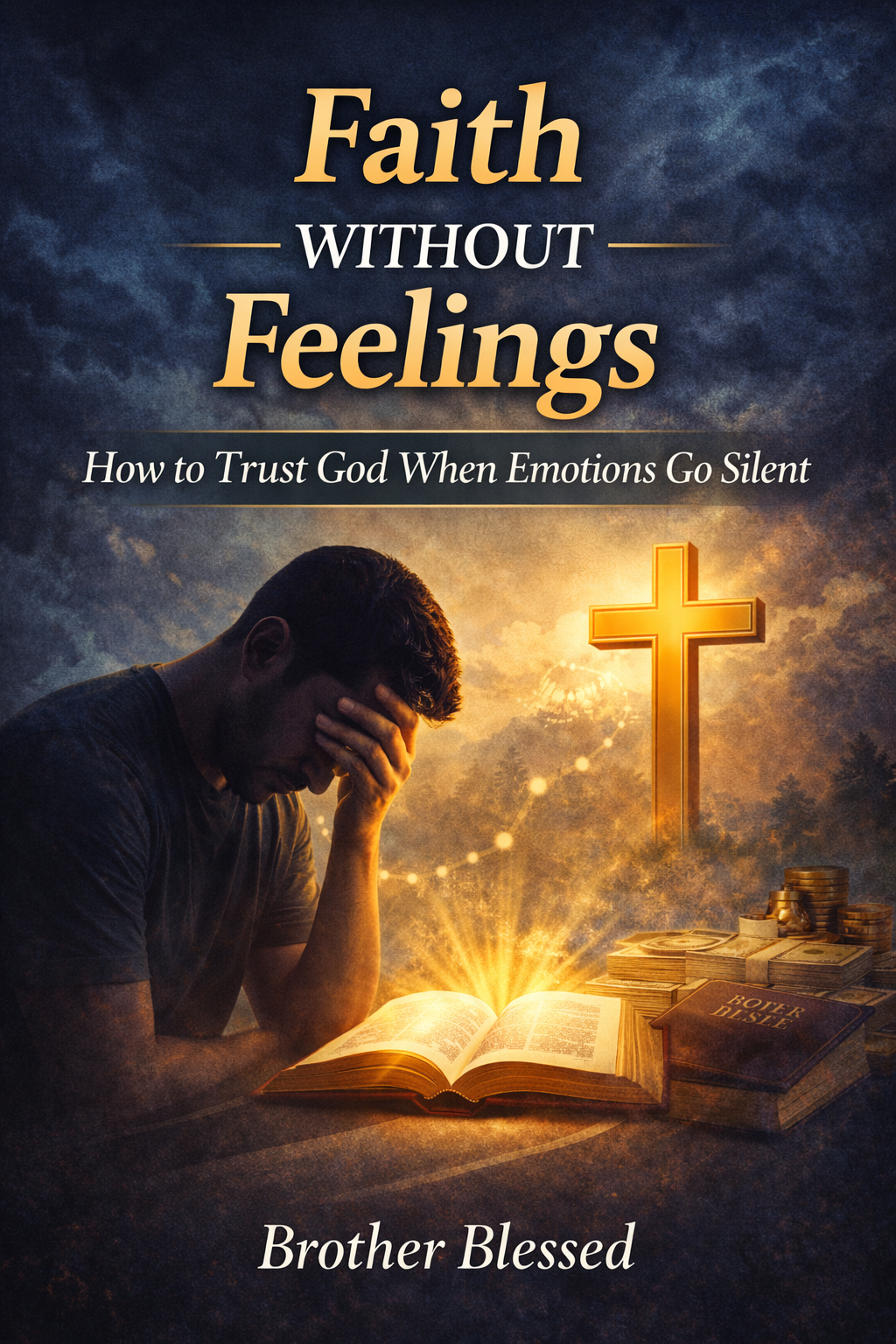
Introduction
Many believers quietly struggle with a painful question they are afraid to ask out loud:
“Why don’t I feel God anymore?”
Prayer feels dry. Worship feels empty. Bible reading feels mechanical. Yet outwardly, everything looks fine. This silent struggle leaves many Christians feeling guilty, confused, or spiritually weak.
But the truth is this: faith was never designed to depend on feelings. Feelings change. God does not.
This article will help you understand why emotions go silent, why it doesn’t mean God has left you, and how to trust Him when you feel nothing.
1. Faith Is Rooted in Truth, Not Emotion
Faith is not built on emotional experience but on God’s unchanging Word.
“For we walk by faith, not by sight.” (2 Corinthians 5:7)
Feelings are temporary and influenced by:
- Stress
- Fatigue
- Mental health
- Circumstances
- Physical condition
God’s promises remain constant—whether you feel them or not.
2. Why Feelings Sometimes Go Silent in the Christian Walk
A. Emotional Silence Builds Mature Faith
God often reduces emotional reassurance to deepen trust. Spiritual maturity means trusting God without constant emotional confirmation.
B. God Is Teaching You Dependence on His Word
When feelings fade, Scripture becomes your anchor.
C. Feelings Can Become a Distraction
If faith depends on emotion, it becomes unstable. God removes emotional dependence to strengthen spiritual stability.
D. Life Pressures Can Numb Emotions
Stress, grief, exhaustion, and disappointment can mute emotional responses—including spiritual ones.
E. God Is Shifting You into a Deeper Relationship
Infants need constant reassurance. Adults grow through responsibility and trust.
3. Biblical Figures Who Trusted God Without Feelings
David
He often wrote about emotional emptiness, yet remained faithful.
Job
He lost everything and felt abandoned, yet declared:
“Though He slay me, yet will I trust Him.”
Jesus
In Gethsemane, Jesus experienced deep distress but still obeyed.
These examples show that faith without feeling is still faith.
4. Common Mistakes Christians Make When Feelings Fade
- Assuming God has left
- Stopping prayer and devotion
- Chasing emotional experiences instead of truth
- Comparing their faith to others
- Judging themselves harshly
Silence is not failure—it is formation.
5. How to Trust God When Emotions Are Silent (Actionable Steps)
1. Anchor Yourself in God’s Word
Read Scripture even when it feels dry. Truth feeds the soul before it touches the emotions.
2. Pray Honestly
Tell God exactly how you feel—or don’t feel. Honesty deepens relationship.
3. Obey Even Without Motivation
Obedience is a powerful expression of faith when feelings are absent.
4. Stop Chasing Emotional Highs
Spiritual depth grows in consistency, not excitement.
5. Guard Your Mind
Replace lies with truth:
- God has not left me
- Silence does not mean rejection
- My faith is still alive
6. Rest When Needed
Physical exhaustion often affects spiritual emotions. Rest restores sensitivity.
7. Stay Connected to Christian Community
Isolation intensifies emotional silence. Fellowship brings balance.
6. What Happens When You Stay Faithful Without Feelings
- Your faith becomes unshakable
- You develop spiritual endurance
- You trust God’s Word over emotions
- You grow in spiritual maturity
- Your relationship with God deepens
God often entrusts deeper responsibilities to those who remain faithful without emotional rewards.
Conclusion: Faith That Survives Silence Is Powerful Faith
Not feeling God does not mean He is absent.
Not sensing emotion does not mean your faith is dead.
Faith that survives silence is stronger, purer, and deeper.
God is not asking you to feel Him—He is asking you to trust Him.
And when the feelings return, they will rest on a foundation that cannot be shaken.
Stay faithful. Your quiet faith is not wasted.
FAQ: Is it normal to stop feeling God emotionally?
Yes. Many Christians experience seasons where emotions fade, and spiritual passion feels quiet. This does not mean God has abandoned you or that your faith is weak. Often, these silent seasons help develop deeper trust, spiritual endurance, emotional maturity, and stronger dependence on God’s Word rather than feelings.