
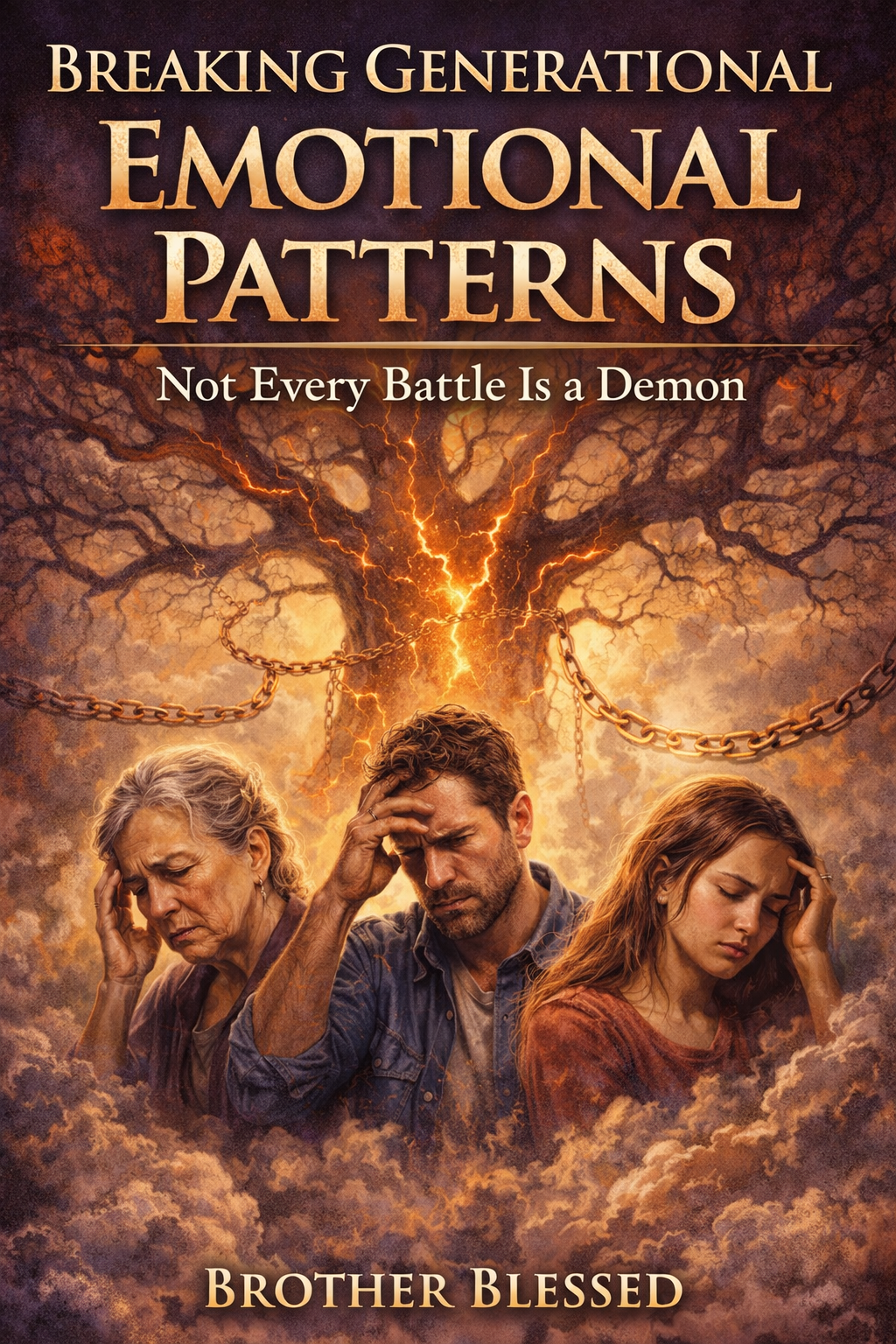
Introduction
In many Christian communities—especially in Africa—life struggles, repeated mistakes, or emotional challenges are often quickly labeled as spiritual attacks. While faith and spiritual understanding remain important, not every challenge is caused by spiritual forces.
A significant number of recurring issues people face are rooted in emotional wounds, learned behaviors, and family patterns passed down through generations.
True transformation happens when faith is combined with self-awareness, emotional healing, and renewed thinking.
This article explores what generational emotional patterns are, how they form, and practical steps to break free from them for lasting emotional and spiritual maturity.
1. What Are Generational Emotional Patterns?
Generational emotional patterns are repeated emotional responses, habits, and behaviors that are passed from one generation to another within families.
They are not necessarily spiritual influences, but learned emotional responses that become normalized over time.
Common examples include:
- Anger or irritability
- Avoiding conflict or silence during disagreements
- Anxiety and constant fear
- Low self-esteem
- Jealousy and comparison
- Overthinking and worry
- Controlling behavior
- Difficulty apologizing
- Emotional withdrawal
- Poor communication habits
How these patterns are passed on:
- Observation of parental behavior
- Family communication style
- Unhealed emotional trauma
- Repeated beliefs and mindset conditioning
- Cultural or environmental influence
Not every repeated struggle requires spiritual explanation—some require emotional healing and personal development.
2. The Bible and Generational Patterns
The Bible acknowledges that behaviors and consequences can repeat across generations.
We see examples in family lineages where certain behaviors reappear:
- Fear and deception patterns across generations
- Repeated relational mistakes in family lines
- Cycles of human weakness before transformation occur
However, Scripture also shows that transformation is possible through renewed thinking, obedience, and growth.
This demonstrates that patterns can continue—but they can also be broken.
3. Spiritual Warfare vs Emotional Patterns
Understanding the difference helps believers respond wisely and avoid misinterpretation.
Possible spiritual influences may include:
- Suddenly, intense spiritual oppression
- Unexplained persistent spiritual heaviness
- Strong repetitive temptations beyond normal struggle
Emotional patterns often look like:
- Predictable reactions during conflict
- Repeating behaviors learned from parents
- Emotional triggers tied to past experiences
- Ongoing relational conflicts
- Automatic responses that feel “inherited.”
Some situations may require spiritual support, while many others require:
- Emotional awareness
- Healing and reflection
- Behavior change
- Renewing the mind
Without addressing root causes, patterns often continue even after emotional relief or prayer experiences.
4. How Generational Emotional Patterns Form
These patterns develop gradually through life experiences:
1. Family Environment
What children consistently see becomes what they assume is normal.
2. Unresolved Emotional Pain
Unhealed trauma often repeats in behavior and relationships.
3. Learned Coping Mechanisms
Avoidance, silence, or anger may be learned responses to stress.
4. Belief Systems
Repeated words and beliefs shape identity and thinking patterns.
5. Social Environment
Friends, culture, and surroundings reinforce emotional habits.
5. Signs You May Be Experiencing Emotional Patterns
- You react similarly to your parents in stressful situations
- You notice repeated relationship cycles
- Emotional responses feel automatic or uncontrollable
- You struggle with behaviors you dislike in others
- Family members share similar emotional challenges
- You feel regret but struggle to change consistently
These signs do not indicate personal failure—they indicate learned emotional programming.
The good news is that patterns can be changed.
6. How to Break Generational Emotional Patterns
Step 1: Identify the Pattern
Awareness is the foundation of change.
Ask:
“What emotional cycles keep repeating in my life or family?”
Step 2: Seek God’s Guidance in Prayer
Bring your awareness to God honestly.
“Lord, help me understand these patterns and guide me into healthier ways of living.”
Step 3: Renew Your Mind
True transformation begins with thinking.
As emphasized in Romans 12:2, renewal involves:
- Studying Scripture
- Replacing negative beliefs with truth
- Challenging unhealthy thinking patterns
Step 4: Build New Emotional Responses
Change requires consistent practice.
Replace:
- Anger → patience
- Fear → trust
- Avoidance → communication
- Control → surrender
- Jealousy → gratitude
Step 5: Set Healthy Boundaries
Emotional growth sometimes requires distance from harmful environments or triggers.
Healthy boundaries protect progress and encourage stability.
Step 6: Seek Emotional Healing
Healing is a key part of transformation.
This may involve:
- Prayer and reflection
- Forgiveness
- Counseling or Christian therapy
- Honest emotional processing
Step 7: Strengthen Your Spiritual Life
Spiritual growth supports emotional maturity.
Key qualities include:
- Self-control
- Peace
- Wisdom
- Emotional stability
7. You Can Break the Cycle
No matter how long a pattern has existed, it does not have to continue in your life.
You can become the first in your family to:
- Respond calmly instead of reacting in anger
- Communicate clearly during conflict
- Build healthier relationships
- Break cycles of emotional instability
- Raise emotionally balanced children
Change is possible through consistent growth and awareness.
Conclusion
Not every repeated struggle is spiritual in nature—many are emotional patterns formed through experience, environment, and upbringing.
When these patterns are identified and addressed with wisdom, healing, and intentional change, transformation becomes possible.
In Christ, you are not bound to repeat the past. You are empowered to grow, heal, and create a healthier legacy.
Freedom begins with awareness and is sustained through consistent change.
FAQs
1. Are generational emotional patterns the same as curses?
No. Many patterns are learned behaviors, not spiritual curses.
2. Can Christians break emotional patterns?
Yes. Through prayer, renewal of the mind, and intentional behavior change.
3. Do I need deliverance to overcome emotional cycles?
Not always. Many cycles are broken through awareness, healing, and discipline.
4. How long does it take to change emotional patterns?
It varies, but consistent practice leads to gradual and lasting transformation.