
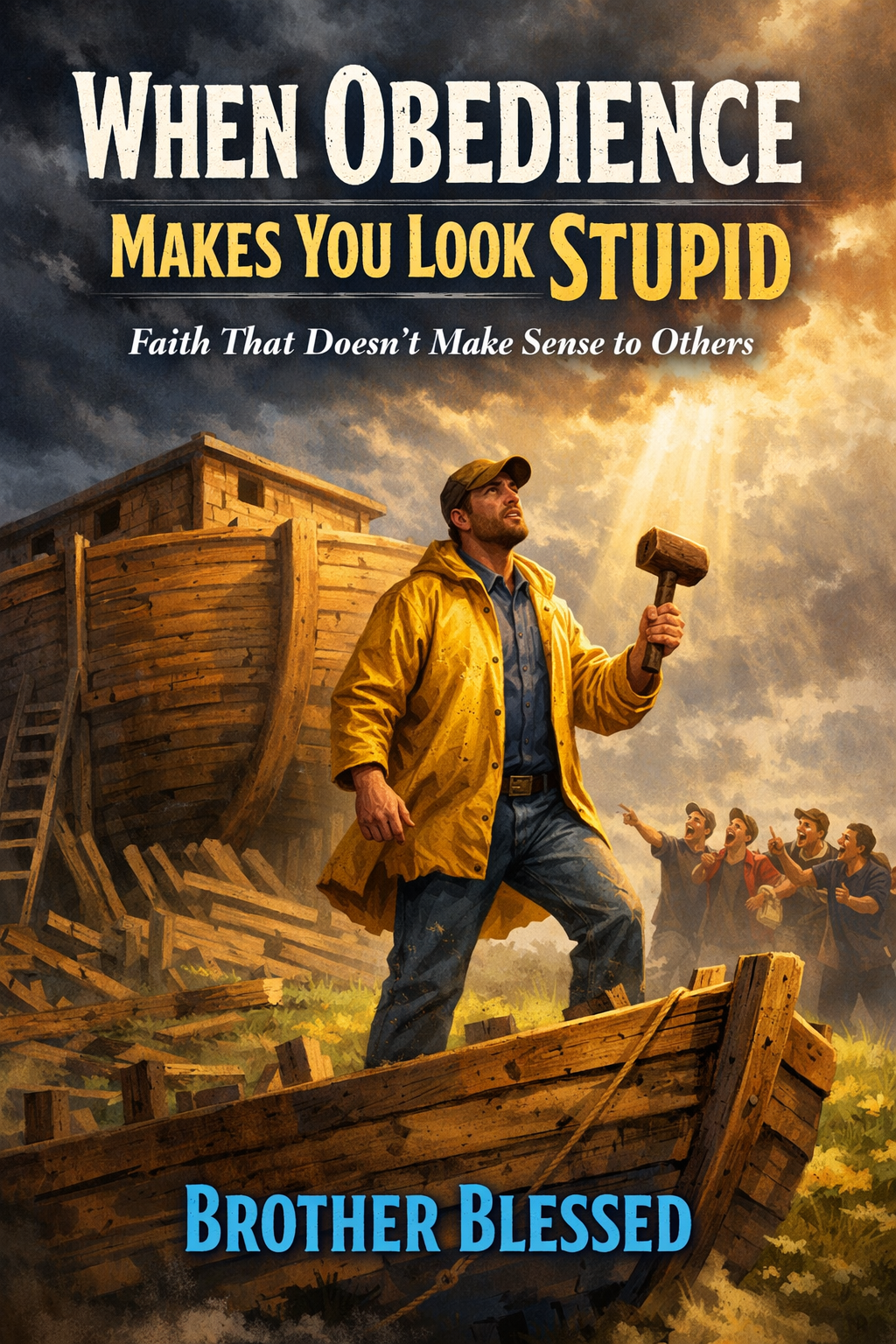
Introduction
There are moments in the life of faith when obedience stops looking admirable—and starts looking foolish.
Not foolish to God, but foolish to people.
You obey, and they question your judgment.
You step out in faith, and they ask for logic.
You follow God’s instruction, and suddenly the room goes quiet.
This is the kind of obedience that does not fit into human reasoning, trends, or common sense. Yet, it is often the kind of faith God honors most.
Obedience Is Not Always Explainable
One of the hardest parts of obedience is that it often comes without full explanation.
God rarely shows the complete picture. Instead, He gives direction—one step at a time.
That instruction may not align with:
- Experience
- Human advice
- Past disappointments
- Public opinion
Obedience requires trust, not agreement.
And often, what is clear in your spirit may sound confusing when explained to others.
Why God Allows Obedience to Look Foolish
If obedience always made sense, faith would not be required.
God allows obedience to look unreasonable because it:
- Reveals where your true trust is placed
- Separates genuine obedience from performance
- Forces dependence on His voice over human approval
When obedience no longer earns applause, it reveals your real motivation.
The Fear of Looking Foolish Is Real
No one naturally enjoys being misunderstood.
The thoughts often sound like:
- “What if I’m wrong?”
- “What if this fails publicly?”
- “What will people think of me?”
This fear leads many people into partial obedience—following God quietly, but hesitating publicly.
Yet faith that avoids risk rarely produces transformation.
Biblical Obedience Often Looked Illogical
Throughout Scripture, many acts of obedience did not make sense in the moment.
People were:
- Questioned
- Misunderstood
- Mocked
- Ignored
Their validation came after obedience—not before it.
Faith that makes sense to everyone usually requires very little courage.
Obedience Tests Identity More Than Ability
When obedience feels embarrassing, it often tests identity, not just faith.
It quietly asks:
- Who defines me—God or people?
- Am I obeying for approval or conviction?
- Can I still follow God without applause?
Obedience that risks reputation often purifies intention.
It removes performance and strengthens authenticity.
What to Do When Obedience Feels Embarrassing
1. Confirm the Voice Before Acting
Ensure your obedience is based on clear conviction, not emotional impulse.
Faith is bold—but it is also grounded.
2. Stop Over-Explaining Yourself
Not every instruction from God is meant for public explanation.
Some obedience is personal before it is understandable.
3. Expect Misunderstanding
People often struggle to support what they do not understand.
Expecting this helps you stay steady when it happens.
4. Take One Step at a Time
God often rewards movement, not perfection.
Focus on the next clear step, not the entire journey.
5. Anchor Yourself in God’s Approval
Human opinion changes quickly. God’s approval does not.
Let His voice remain your strongest confirmation.
When Obedience Finally Makes Sense
One truth remains consistent: obedience often looks foolish before it bears fruit.
What people question today often becomes testimony tomorrow. What seems risky in the moment often reveals wisdom in hindsight.
But by the time it makes sense to others, the courage has already done its work.
Conclusion
If your obedience never risks misunderstanding, it may not truly be obedience—it may simply be agreement.
God still honors faith that trusts Him beyond logic, beyond approval, and beyond comfort.
Faith that moves even when it is not understood.
Faith that obeys even when it is not applauded.
And sometimes, the clearest sign that you are obeying God is that others don’t understand why.