
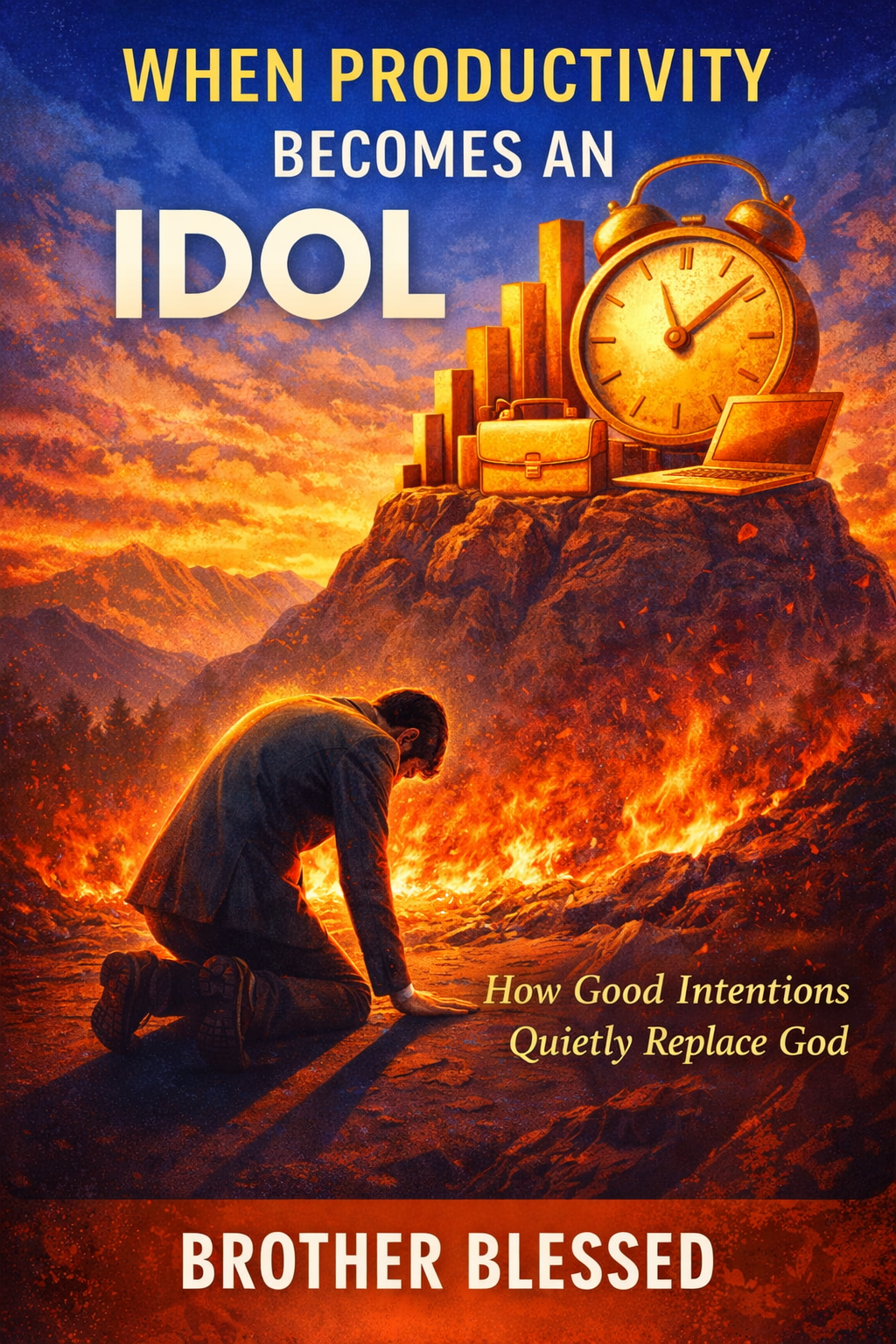
The Most Dangerous Thing About This Idol Is How Good It Looks
Idols rarely appear obvious.
They do not always look like rebellion, greed, or open sin. Sometimes they look responsible. Disciplined. Hardworking. Admired.
Sometimes they look like a packed calendar, unfinished tasks at midnight, and a life constantly driven by pressure to achieve more.
That is what makes this idol so dangerous.
Nobody wakes up one morning intending to replace God with productivity. It happens slowly. Quietly. Gradually.
At first, you simply want to work hard and honor God with your life. You want to steward your gifts wisely. You want to be dependable, productive, and useful.
But over time, something shifts.
Without realizing it, your work stops flowing from trust in God and starts replacing trust in God.
And the difference is difficult to notice until your soul begins to feel exhausted.
How a Good Thing Quietly Becomes a Master
One of the hardest spiritual truths to accept is this:
Anything that begins to take the place God should hold in your heart can become an idol.
Even good things.
Your ministry.
Your career.
Your business.
Your goals.
Your reputation.
Even your calling.
The problem is not necessarily the work itself. The problem begins when your sense of worth, identity, or security becomes attached to what you accomplish.
At first, productivity feels healthy.
Scripture encourages diligence and faithful stewardship.
“Whatever you do, work at it with all your heart, as working for the Lord.” — Colossians 3:23
Hard work is not the enemy.
But productivity becomes spiritually dangerous when:
- Rest feels like failure
- Silence creates anxiety
- Slowing down produces guilt
- Waiting on God feels unproductive
At that point, work is no longer serving you wisely.
It is beginning to rule you.
The Question Most People Avoid
Pause and answer this honestly:
When was the last time you had an unproductive day and still felt completely secure in God’s love?
For many people, that question exposes something uncomfortable.
Because if your peace disappears whenever your productivity decreases, then your identity may be resting on your performance instead of God.
That is not a healthy discipline.
That is misplaced worship.
The heart was never designed to find ultimate value in achievement.
Only God can carry that weight.
What Self-Reliance Looks Like Spiritually
In Christian culture, self-reliance rarely appears prideful on the surface.
It often looks admirable.
A full schedule.
Constant activity.
Always serving.
Always building.
Always producing results.
But underneath all the movement, there is often a hidden fear:
- If I stop, everything will collapse.
- If I slow down, I will fall behind.
- If I am not useful, I lose my value.
That mindset does not come from God.
Scripture says:
“Unless the Lord builds the house, the builders labor in vain.” — Psalm 127:1
Notice what this verse does not say.
It does not condemn work.
It warns against work that moves ahead of God instead of flowing from Him.
There is a difference between being led by God and being driven by pressure.
Many believers are exhausted not because they are obedient, but because they are carrying responsibilities God never asked them to carry.
Busyness Can Become Emotional Avoidance
This truth requires honesty.
Sometimes people stay busy because busyness distracts them from deeper issues.
Stillness forces people to confront questions they would rather avoid.
Questions like:
- Am I enough without achievement?
- Does God still love me when I produce less?
- Why do I feel anxious when life slows down?
Constant activity keeps those questions buried.
As long as the schedule stays full, the soul never has to sit quietly before God.
But endless movement is not spiritual maturity.
Sometimes it is emotional avoidance disguised as responsibility.
Even good things can become spiritually unhealthy when they crowd out intimacy with God.
Martha Was Busy — But Jesus Corrected Her
The story of Mary and Martha reveals this clearly.
Martha was serving.
Working.
Preparing.
Managing responsibilities.
None of those things was sinful.
But while Martha focused on performance, Mary focused on presence.
And Jesus gently corrected Martha:
“Martha, Martha,” the Lord answered, “you are worried and upset about many things, but few things are needed — or indeed only one.” — Luke 10:41–42
Martha’s problem was not laziness.
It was a distraction.
Her activity became more important than simply being with Jesus.
That same pattern still happens today.
Many people spend so much time working for God that they slowly stop spending time with God.
When Your Worth Depends on Your Output
Pay attention to your emotional patterns.
How do you feel on highly productive days?
Successful?
Confident?
Valuable?
Spiritually secure?
Now compare that to slower days.
Do you feel guilty?
Restless?
Ashamed?
Like you wasted your time.
Those emotions reveal where your identity may be rooted.
The gospel teaches that your worth was settled through Christ, not through achievement.
“For it is by grace you have been saved, through faith… not by works.” — Ephesians 2:8–9
Productivity often whispers a false gospel:
You are only valuable when you are useful.
But God never measures your worth by your output.
You are valuable because you belong to Him.
Signs Productivity May Be Becoming an Idol
Ask yourself these questions honestly:
- Do you feel guilty when you rest?
- Do you struggle to slow down without anxiety?
- Does prayer sometimes feel less important than finishing tasks?
- Is your mood controlled by how much you accomplished?
- Do you say yes out of pressure instead of obedience?
- Do you spend more time planning than listening to God?
Answering yes to several of these questions does not mean you are failing.
It means God may be inviting you back into balance.
How to Break Free From Performance-Driven Living
1. Begin your day with surrender, not pressure.
Before checking emails, schedules, or notifications, spend time with God first.
Ask Him to guide your priorities instead of simply blessing your plans.
“Seek first His kingdom and His righteousness.” — Matthew 6:33
2. Treat rest as obedience, not laziness.
Rest is an act of trust.
It reminds your heart that God remains faithful even when you stop working.
“Come to Me, all you who are weary and burdened, and I will give you rest.” — Matthew 11:28
3. Reevaluate your commitments.
Not every opportunity is an assignment from God.
Some responsibilities come from fear, pressure, or the need for approval.
Learn to release what God never asked you to carry.
4. Redefine success spiritually.
A successful day is not simply a productive day.
A successful day is one where you walked closely with God, loved others well, and remained faithful to what He asked of you.
5. Practice intentional stillness.
Spend time with God without an agenda.
Not to produce.
Not to plan.
Not to achieve.
Simply to be with Him.
“Be still, and know that I am God.” — Psalm 46:10
Stillness exposes idols that constant noise keeps hidden.
The Question That Matters Most
Life will always give you more to do than you can possibly finish.
There will always be another goal, another deadline, another responsibility waiting for your attention.
But beneath all the activity, one question matters more than any other:
Who are you truly trusting?
Your answer is revealed not only in your beliefs, but also in your lifestyle, your priorities, and your pace.
“In repentance and rest is your salvation, in quietness and trust is your strength.” — Isaiah 30:15
Productivity is a gift.
Hard work matters.
Diligence honors God.
But none of those things should ever take God’s place in your heart.
Because when achievement becomes your source of identity, peace, or security, exhaustion eventually follows.
Come back to the center.
Let God lead your work instead of simply asking Him to bless your hustle.
That is where peace returns.
That is where spiritual health grows.
And that is where true fruitfulness begins.